Gmap ‑ Store Locator Map vs Mapstore: Store Locator & Maps
Two Shopify apps, side by side: detected stores, momentum, reviews, plans, listed features and who runs each. Store counts as of Sep 24, 2026 for Gmap, Oct 28, 2026 for Mapstore.
The short answer
- Only Mapstore lists a free plan.
- Mapstore lists 18 features Gmap’s listing doesn’t mention, including Analytics, Business hours, Custom branding.
Head to head


Momentum
New reviews each month
Review pace is the clearest public read on how fast an app is winning new merchants.
Basic
- · Bulk geocoding with Google Maps API
- · Lead generation with a customizable form
- · Map usage insights
- · Sync reviews and store hours from Google
- · Sync stores from Google Sheets
- · Up to 5 stores
Grow
- · Everything in Basic and
- · up to 100 stores
Pro
- · Everything in Grow and
- · up to 300 stores
Max
- · Everything in Pro and
- · unlimited stores
Coverage counts what each App Store listing names. Every feature, checked off app by app, is in Shoplist.
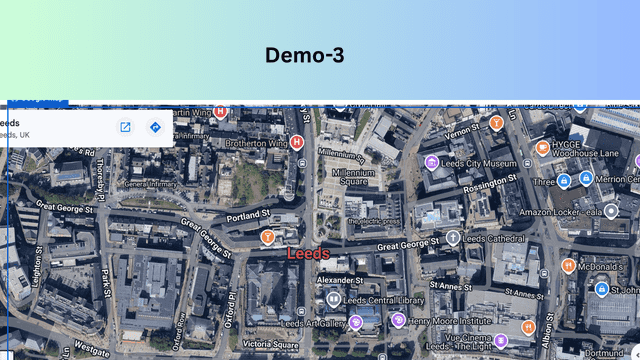
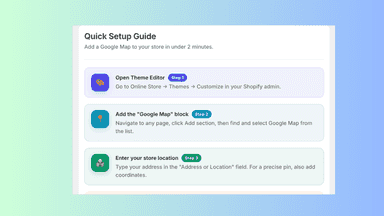
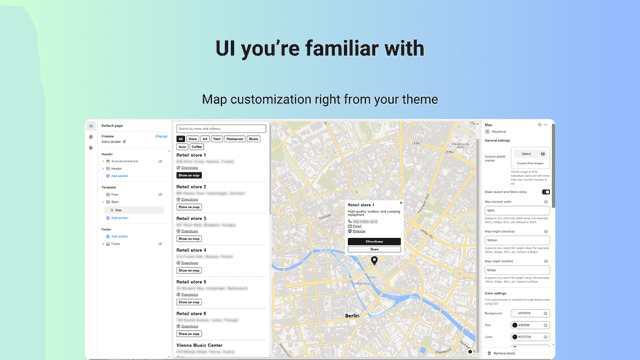
See every featureGmap lets you add a beautiful Google Map to any page of your store with no API key or coding required. Simply add the Google Map block to your theme, enter your store address or coordinates, and your map goes live instantly. The app supports address and coordinate-based location pins, giving you full control over exactly where your map points.
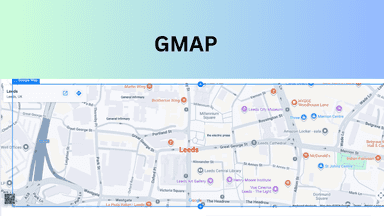
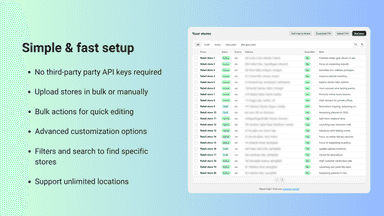
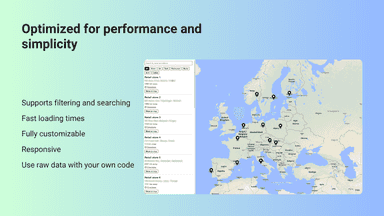
Mapstore helps retail stores, franchises, and brands display locations on a searchable, interactive map. Customers find nearby stores, stockists, or dealers with powerful filters, geolocation, and distance search. Add locations individually or bulk import via CSV or Google Sheets. No API keys needed - set up in minutes. Customize map styles, markers, colors, and branding to match your store.
- Embed Google Maps with no API key required
- Separate map height controls for desktop and mobile
- Supports Roadmap, Satellite, Hybrid and Terrain styles
- Simple Setup - No 3rd party API keys or integrations required
- Interactive Store Map - Display your stores on a searchable, dynamic map
- Easy Store Management - Add, edit, and update store locations in minutes
- Customizable Design - Match map styles and features with your store's branding

All the numbers
Every figure, side by side
A green dot marks the app ahead on a measured figure. Estimates, gaps and apps that leave no storefront trace never take the lead.
Adoption
| Measure |  Gmap |  Mapstore |
|---|---|---|
| Detected stores | Not published | Not published |
| Net store change, 28 days | 0 | 0 |
| Stores added, 28 days | Not enough data | Not enough data |
| Big-brand share | Not enough data | Not enough data |
| Top store categories | Not published | Not published |
| Top store countries | Not published | Not published |
Reviews
| Measure | Gmap | Mapstore |
|---|---|---|
| App Store rating | Not published | 4.9 ★ |
| App Store reviews | Not published | 15 |
| New reviews, 28 days | Not enough data | Not enough data |
| Reviewers a year or more in | Not enough data | Not enough data |
FAQ
Gmap and Mapstore: common questions
- Is Gmap or Mapstore cheaper?
- Only Mapstore lists a free plan. Shoplist compares base prices only between monthly plans in the same currency; usage charges and annual plans vary, so check each plan’s limits.
- What features does each app list that the other doesn’t?
- Mapstore lists 18 the others don’t mention, such as Analytics, Business hours, Custom branding, Custom CSS. A feature missing from a listing may still be supported; this compares what each App Store listing says.
- Where does this comparison’s data come from?
- Shoplist crawls Shopify storefronts to detect which apps each store runs, and reads each app’s Shopify App Store listing for reviews, pricing, features and integrations. Store counts are as of Sep 24, 2026 for Gmap, Oct 28, 2026 for Mapstore; estimated figures are labeled.
How Shoplist compares apps
Store counts come from Shoplist’s crawl of Shopify storefronts, which detects the apps each store runs; they are as of Sep 24, 2026 for Gmap, Oct 28, 2026 for Mapstore. Reviews, ratings, plans, features and integrations come from each app’s Shopify App Store listing. 28-day figures are labeled when estimated, and a figure that is missing or estimated never decides who leads. Read the methodology.