

GEOly: AI LLMs.txt Master vs LLMify
Two Shopify apps, side by side: detected stores, momentum, reviews, plans, listed features and who runs each. Store counts as of Jun 30, 2026 for GEOly, Oct 14, 2026 for LLMify.
The short answer
- LLMify lists 5 features GEOly’s listing doesn’t mention, including Audits, Automations, Local SEO.
Head to head


Momentum
New reviews each month
Review pace is the clearest public read on how fast an app is winning new merchants.
Standard
- · Auto-Regeneration Control
- · Real-Time Analytics
- · Unlimited Blogs
- · Unlimited Collections
- · Unlimited Pages
- · Unlimited Posts
Coverage counts what each App Store listing names. Every feature, checked off app by app, is in Shoplist.
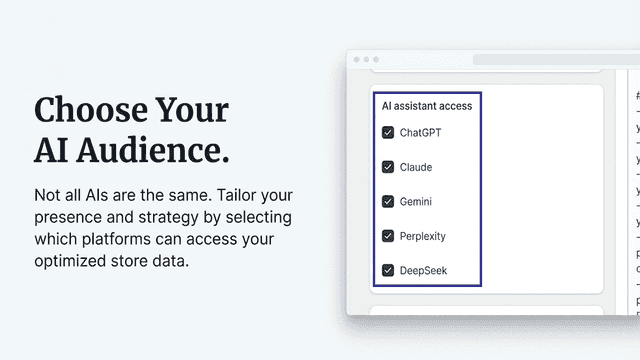
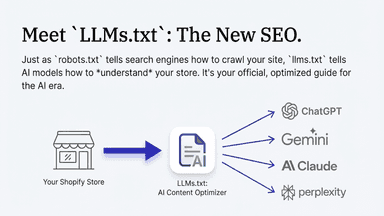
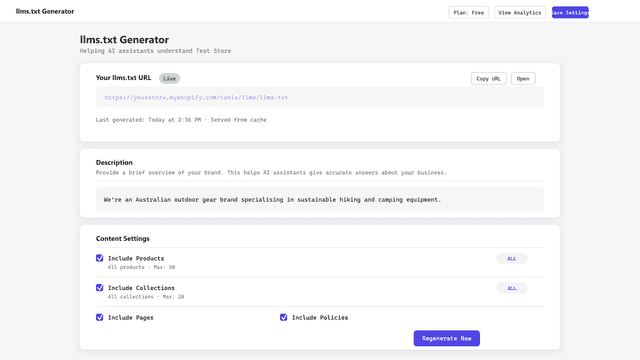
See every featureHelp AI models like ChatGPT and Claude accurately understand your store by generating a structured llms.txt file. Instead of manual coding, this app gives you full control to include or exclude specific products, collections, or pages from AI access. The file automatically syncs with your latest store updates to ensure data accuracy.
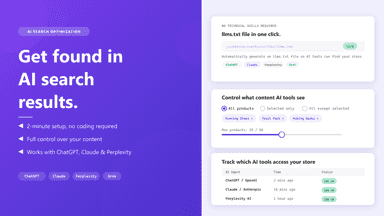
AI assistants like ChatGPT, Perplexity, and Claude are becoming how people discover products online. llms.txt is the standard that lets these AI tools read and understand your store. AIReady automatically generates and hosts your llms.txt file, including your products, collections, pages, and policies. You control exactly what gets included, set filters, and regenerate with one click.
- Create a structured file to help AI angets identify and read store data.
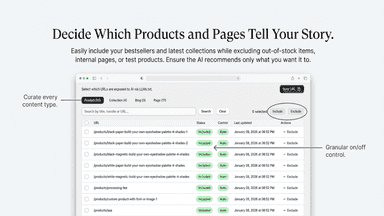
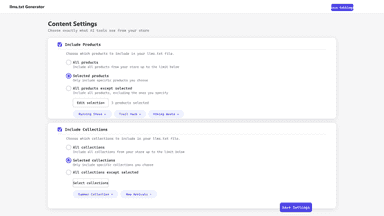
- Choose which URLs are exposed to AI via simple include or exclude toggles.
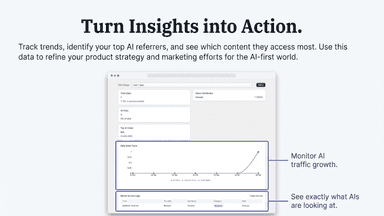
- Monitor real-time logs and trends of AI assistants visiting your store.
- Auto-generate a llms.txt file for ChatGPT, Perplexity, and Claude to read
- Control exactly which products and collections are included or excluded
- One-click regeneration with instant preview before going live
- Built-in analytics to see which AI agents are fetching your file
All the numbers
Every figure, side by side
A green dot marks the app ahead on a measured figure. Estimates, gaps and apps that leave no storefront trace never take the lead.
Adoption
| Measure |  GEOly |  LLMify |
|---|---|---|
| Detected stores | Not published | Not published |
| Net store change, 28 days | 0 | 0 |
| Stores added, 28 days | Not enough data | Not enough data |
| Big-brand share | Not enough data | Not enough data |
| Top store categories | Not published | Not published |
| Top store countries | Not published | Not published |
Reviews
| Measure | GEOly | LLMify |
|---|---|---|
| App Store rating | Not published | 5.0 ★ |
| App Store reviews | Not published | 2 |
| New reviews, 28 days | Not enough data | Not enough data |
| Reviewers a year or more in | Not enough data | Not enough data |
FAQ
GEOly and LLMify: common questions
- What features does each app list that the other doesn’t?
- GEOly lists 2 the others don’t mention, such as Tracking, Website traffic. LLMify lists 5 the others don’t mention, such as Audits, Automations, Local SEO, Page indexing. A feature missing from a listing may still be supported; this compares what each App Store listing says.
- Where does this comparison’s data come from?
- Shoplist crawls Shopify storefronts to detect which apps each store runs, and reads each app’s Shopify App Store listing for reviews, pricing, features and integrations. Store counts are as of Jun 30, 2026 for GEOly, Oct 14, 2026 for LLMify; estimated figures are labeled.
How Shoplist compares apps
Store counts come from Shoplist’s crawl of Shopify storefronts, which detects the apps each store runs; they are as of Jun 30, 2026 for GEOly, Oct 14, 2026 for LLMify. Reviews, ratings, plans, features and integrations come from each app’s Shopify App Store listing. 28-day figures are labeled when estimated, and a figure that is missing or estimated never decides who leads. Read the methodology.