

Fusionify Workflow Automation vs Merchandising Rules
Two Shopify apps, side by side: detected stores, momentum, reviews, plans, listed features and who runs each. Store counts as of Oct 14, 2026 for Fusionify Workflow Automation, Feb 19, 2026 for Merchandising Rules.
The short answer
- Merchandising Rules lists 4 features Fusionify Workflow Automation’s listing doesn’t mention, including Auto-sync data, Custom workflows, Product tags.
Head to head


Pay as you go
- · 120 runs per month
- · All actions
- · All conditions
- · All trigger events
- · Email and Live Chat Support
Basic
- · 1,200 runs per month
- · All actions
- · All conditions
- · All trigger events
- · Email and Live Chat Support
Professional
- · 120,000 runs per month
- · All actions
- · All conditions
- · All trigger events
- · Dedicated Support
- · Personalized Onboarding
Coverage counts what each App Store listing names. Every feature, checked off app by app, is in Shoplist.
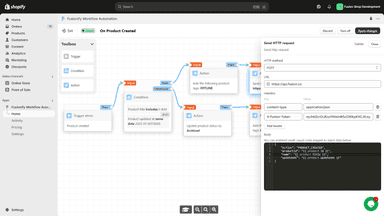
See every featureOur Shopify application empowers merchants to automate tasks with a flexible and intuitive system. Easily set up and manage automation tailored to your business needs. With features like condition-based triggers, timezone support, and user-friendly preview text, you’ll always know exactly when and how your workflows will run.
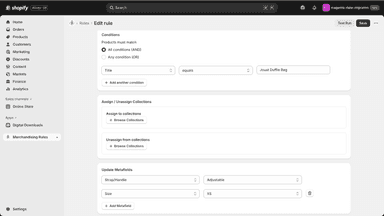
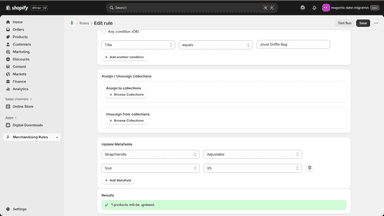
The Merchandise App is a powerful rule-based automation engine designed to help vendors manage and optimise their product catalog with minimal manual effort. Business Benefits, - launch promotions instantly without catalog rework - ensure the right products appear in the right collections - handle sales events, seasonal offers, and flash deals effortlessly - eliminate repetitive manual updates - highlight…
- Automate tags for orders, customers and products
- Automate write notes for orders and customers
- Simplify the conditional logic and actions for your workflows
- Easy connect to external apps via REST API
- Create unlimited merchandising rules to run continuous promotions
- Schedule rules with automatic start and end date execution
- Apply rule priorities to control conflicts across promotions
- Build rules with multiple conditions and multiple actions



All the numbers
Every figure, side by side
A green dot marks the app ahead on a measured figure. Estimates, gaps and apps that leave no storefront trace never take the lead.
Adoption
| Measure |  Fusionify Workflow Automation |  Merchandising Rules |
|---|---|---|
| Detected stores | Not published | Not published |
| Net store change, 28 days | 0 | 0 |
| Stores added, 28 days | Not enough data | Not enough data |
| Big-brand share | Not enough data | Not enough data |
| Top store categories | Not published | Not published |
| Top store countries | Not published | Not published |
Reviews
| Measure | Fusionify Workflow Automation | Merchandising Rules |
|---|---|---|
| App Store rating | Not published | Not published |
| App Store reviews | Not published | Not published |
| New reviews, 28 days | Not enough data | Not enough data |
| Reviewers a year or more in | Not enough data | Not enough data |
Pricing
| Measure | Fusionify Workflow Automation | Merchandising Rules |
|---|---|---|
| Free plan | Not listed | Not listed |
| Lowest paid monthly plan | $14/month | No monthly plan listed |
| Longest free trial | 14 days | Not listed |
| Plans listed | 3 | Not published |
Listing
| Measure | Fusionify Workflow Automation | Merchandising Rules |
|---|---|---|
| Shopify category rank | #506(ahead) | #537 |
| Shopify App Charts | Not on this week’s charts | Not on this week’s charts |
| Built for Shopify | No | No |
| Launched | Jan 6, 2025 | Jan 9, 2026 |
| Languages | 1 | 1 |
| Developer | Fusion Co | AV Focus Software Solutions Pvt Ltd |
FAQ
Fusionify Workflow Automation and Merchandising Rules: common questions
- What features does each app list that the other doesn’t?
- Fusionify Workflow Automation lists 3 the others don’t mention, such as APIs, Customer tags, Order tags. Merchandising Rules lists 4 the others don’t mention, such as Auto-sync data, Custom workflows, Product tags, Scheduled tasks. A feature missing from a listing may still be supported; this compares what each App Store listing says.
- Where does this comparison’s data come from?
- Shoplist crawls Shopify storefronts to detect which apps each store runs, and reads each app’s Shopify App Store listing for reviews, pricing, features and integrations. Store counts are as of Oct 14, 2026 for Fusionify Workflow Automation, Feb 19, 2026 for Merchandising Rules; estimated figures are labeled.
How Shoplist compares apps
Store counts come from Shoplist’s crawl of Shopify storefronts, which detects the apps each store runs; they are as of Oct 14, 2026 for Fusionify Workflow Automation, Feb 19, 2026 for Merchandising Rules. Reviews, ratings, plans, features and integrations come from each app’s Shopify App Store listing. 28-day figures are labeled when estimated, and a figure that is missing or estimated never decides who leads. Read the methodology.