
Fulfield vs FulfilmentMatch
Two Shopify apps, side by side: detected stores, momentum, reviews, plans, listed features and who runs each. Store counts as of Oct 7, 2026 for Fulfield, Nov 3, 2026 for FulfilmentMatch.
The short answer
- Fulfield lists 12 features FulfilmentMatch’s listing doesn’t mention, including Custom packaging, Multi-carrier tracking, Multi-warehouse.
Head to head

Free
Coverage counts what each App Store listing names. Every feature, checked off app by app, is in Shoplist.
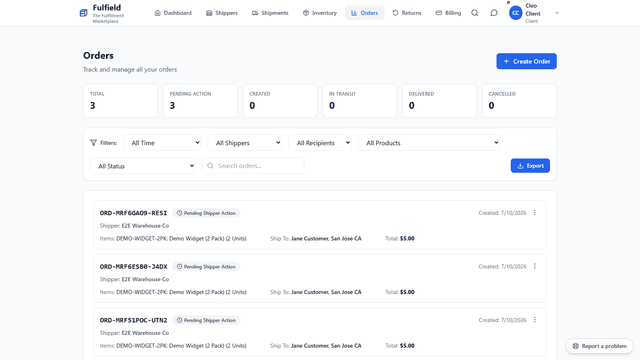
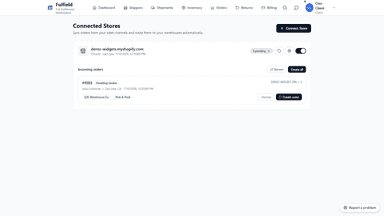
See every featureFulfield connects your Shopify store to a marketplace of vetted third-party fulfillment providers (3PLs). New orders sync into Fulfield automatically. Match with a provider on transparent, contracted terms, then track every order from label to delivery in one dashboard. Manage inbound shipments, the stock your providers hold for you, and customer returns in the same place.
FulfilmentMatch reads your orders of the last 60 days (counts, items per order, weights and destination countries; no customer names or addresses) and builds your shop profile: orders per month, parcel sizes, destinations, sectors and peaks.
- Connect your stores, let orders flow to local shippers
- Buy, upload, or have your shipper purchase shipping labels for you
- Contract-backed fulfillment with service deadlines tied to shipper performance
- Contract-locked terms, transparent automatic billing, flexible payment options
- Shop profile from your real Shopify orders in under a minute
- Match score per fulfilment provider, with plain-language reasons
- Cost indication based on your parcel sizes and destinations
- One quote request to up to five providers
All the numbers
Every figure, side by side
A green dot marks the app ahead on a measured figure. Estimates, gaps and apps that leave no storefront trace never take the lead.
Adoption
| Measure |  Fulfield | |
|---|---|---|
| Detected stores | Not published | Not published |
| Net store change, 28 days | 0 | 0 |
| Stores added, 28 days | Not enough data | Not enough data |
| Big-brand share | Not enough data | Not enough data |
| Top store categories | Not published | Not published |
| Top store countries | Not published | Not published |
Reviews
| Measure | Fulfield | |
|---|---|---|
| App Store rating | Not published | Not published |
| App Store reviews | Not published | Not published |
| New reviews, 28 days | Not enough data | Not enough data |
| Reviewers a year or more in | Not enough data | Not enough data |
Pricing
| Measure | Fulfield | |
|---|---|---|
| Free plan | Not listed | Not listed |
| Lowest paid monthly plan | No monthly plan listed | No monthly plan listed |
| Longest free trial | Not listed | Not listed |
| Plans listed | 1 | Not published |
Listing
| Measure | Fulfield | |
|---|---|---|
| Shopify category rank | #158 | Not enough data |
| Shopify App Charts | Not on this week’s charts | Not on this week’s charts |
| Built for Shopify | No | No |
| Launched | Oct 2, 2026 | Nov 3, 2026 |
| Languages | 2 | 2 |
| Developer | Fulfield | RYDEE |
FAQ
Fulfield and FulfilmentMatch: common questions
- What features does each app list that the other doesn’t?
- Fulfield lists 12 the others don’t mention, such as Custom packaging, Multi-carrier tracking, Multi-warehouse, Order routing. FulfilmentMatch lists 2 the others don’t mention, such as Analytics, Forecasting. A feature missing from a listing may still be supported; this compares what each App Store listing says.
- Where does this comparison’s data come from?
- Shoplist crawls Shopify storefronts to detect which apps each store runs, and reads each app’s Shopify App Store listing for reviews, pricing, features and integrations. Store counts are as of Oct 7, 2026 for Fulfield, Nov 3, 2026 for FulfilmentMatch; estimated figures are labeled.
How Shoplist compares apps
Store counts come from Shoplist’s crawl of Shopify storefronts, which detects the apps each store runs; they are as of Oct 7, 2026 for Fulfield, Nov 3, 2026 for FulfilmentMatch. Reviews, ratings, plans, features and integrations come from each app’s Shopify App Store listing. 28-day figures are labeled when estimated, and a figure that is missing or estimated never decides who leads. Read the methodology.