
Fraud Control vs MIR
Two Shopify apps, side by side: detected stores, momentum, reviews, plans, listed features and who runs each. Store counts as of Oct 2, 2026 for Fraud Control, Feb 19, 2026 for MIR.
The short answer
- Fraud Control lists 3 features MIR’s listing doesn’t mention, including Chargeback analytics, Chargebacks, Custom rules.
Head to head

Momentum
New reviews each month
Review pace is the clearest public read on how fast an app is winning new merchants.
Coverage counts what each App Store listing names. Every feature, checked off app by app, is in Shoplist.
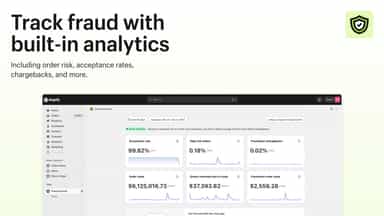
See every featureFraud Control provides you with the tools to automate fraud operations and maximize revenue. Understand your store's fraud risk with analytics, such as acceptance and high-risk order rates. Fraud Control will recommend predefined rules or you can create custom rules to block known fraudsters in the checkout before they become orders.
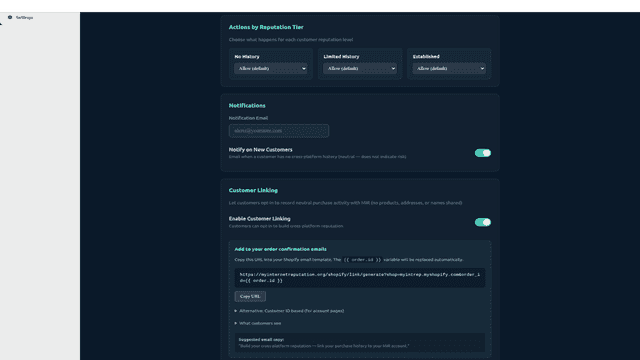
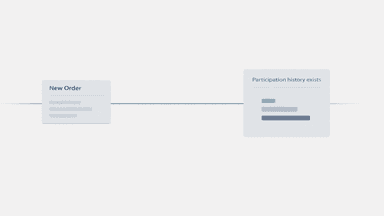
MIR provides merchants with privacy-first, non-identifying participation history signals that persist across platforms. Unlike fraud tools or scoring systems, MIR does not profile users, store personal details, or automate decisions. It simply indicates whether an account is new or established elsewhere, giving merchants added context at key moments while keeping control and judgment entirely in the merchant’s hands.
- Fraud risk reports for your store.
- Analytics to show fraud trends over time.
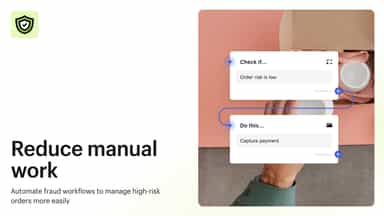
- Automation through Flow to reduce time spent on fraud.
- Block checkouts before they become orders.
- Cross-platform account history context without personal data
- Privacy-first signals with no profiles, scores, or tracking
- Merchant-controlled use with no automated blocking or enforcement



All the numbers
Every figure, side by side
A green dot marks the app ahead on a measured figure. Estimates, gaps and apps that leave no storefront trace never take the lead.
Adoption
| Measure | Fraud Control |  MIR |
|---|---|---|
| Detected stores | Not published | Not published |
| Net store change, 28 days | 0 | 0 |
| Stores added, 28 days | Not enough data | Not enough data |
| Big-brand share | Not enough data | Not enough data |
| Top store categories | Not published | Not published |
| Top store countries | Not published | Not published |
Reviews
| Measure | Fraud Control | MIR |
|---|---|---|
| App Store rating | 2.2 ★ | Not published |
| App Store reviews | 24 | Not published |
| New reviews, 28 days | Not enough data | Not enough data |
| Reviewers a year or more in | Not enough data | Not enough data |
Pricing
| Measure | Fraud Control | MIR |
|---|---|---|
| Free plan | Not listed | Not listed |
| Lowest paid monthly plan | No monthly plan listed | No monthly plan listed |
| Longest free trial | Not listed | Not listed |
| Plans listed | Not published | Not published |
Listing
| Measure | Fraud Control | MIR |
|---|---|---|
| Shopify category rank | Not enough data | Not enough data |
| Shopify App Charts | Not on this week’s charts | Not on this week’s charts |
| Built for Shopify | No | No |
| Launched | May 10, 2023 | Jan 23, 2026 |
| Languages | 14 | 1 |
| Developer | Shopify | phpMyDEV, LLC |
FAQ
Fraud Control and MIR: common questions
- What features does each app list that the other doesn’t?
- Fraud Control lists 3 the others don’t mention, such as Chargeback analytics, Chargebacks, Custom rules. MIR lists 1 the others don’t mention, such as Fake accounts. A feature missing from a listing may still be supported; this compares what each App Store listing says.
- Where does this comparison’s data come from?
- Shoplist crawls Shopify storefronts to detect which apps each store runs, and reads each app’s Shopify App Store listing for reviews, pricing, features and integrations. Store counts are as of Oct 2, 2026 for Fraud Control, Feb 19, 2026 for MIR; estimated figures are labeled.
How Shoplist compares apps
Store counts come from Shoplist’s crawl of Shopify storefronts, which detects the apps each store runs; they are as of Oct 2, 2026 for Fraud Control, Feb 19, 2026 for MIR. Reviews, ratings, plans, features and integrations come from each app’s Shopify App Store listing. 28-day figures are labeled when estimated, and a figure that is missing or estimated never decides who leads. Read the methodology.