

FlowPost: Flow Email via SMTP vs Shopify Flow
Two Shopify apps, side by side: detected stores, momentum, reviews, plans, listed features and who runs each. Store counts as of Oct 15, 2026 for FlowPost, Nov 8, 2026 for Shopify Flow.
The short answer
- Only FlowPost lists a free plan.
- Shopify Flow lists 35 features FlowPost’s listing doesn’t mention, including Abandoned cart, APIs, Browse abandonment.
Head to head


Momentum
New reviews each month
Review pace is the clearest public read on how fast an app is winning new merchants.
Free
- · 1 email provider
- · 7-day log
- · 75 emails/month
Starter
- · 1,000 emails/month
- · All providers
- · Attachments
- · Backup provider fallback
- · Delivery status
Growth
- · 3,000 emails/month
- · 90-day log
- · Multiple senders
- · Priority queue
Scale
- · 180-day log
- · Priority support
- · Unlimited emails
Coverage counts what each App Store listing names. Every feature, checked off app by app, is in Shoplist.
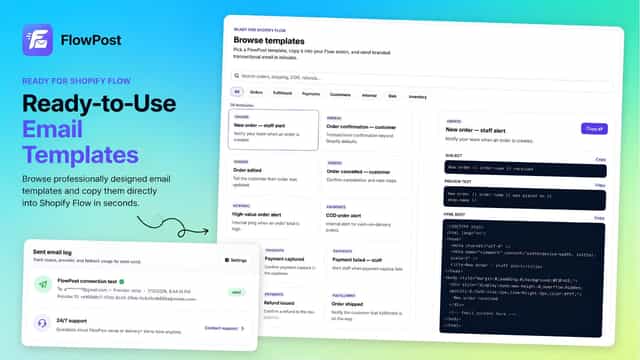
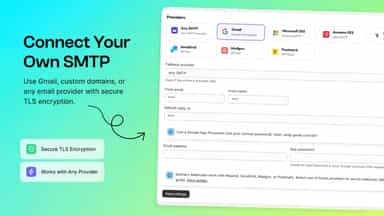
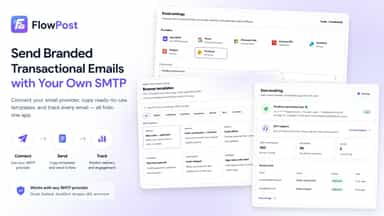
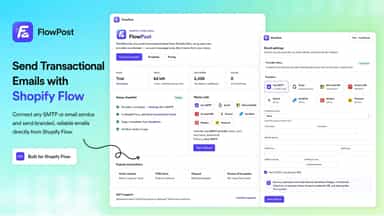
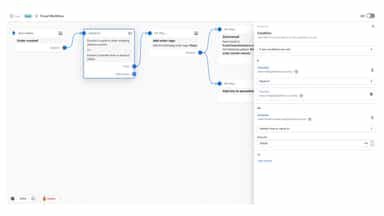
See every featureShopify Flow's built-in email can't send to a customer's address. FlowPost adds a Send transactional email action to Flow, so you can email customers, staff or suppliers when anything happens: order tagged, COD order, B2B approval, low stock or fraud risk. Send from your own domain through SMTP, Gmail, Microsoft 365, Amazon SES, Resend, SendGrid, Mailgun or Postmark.
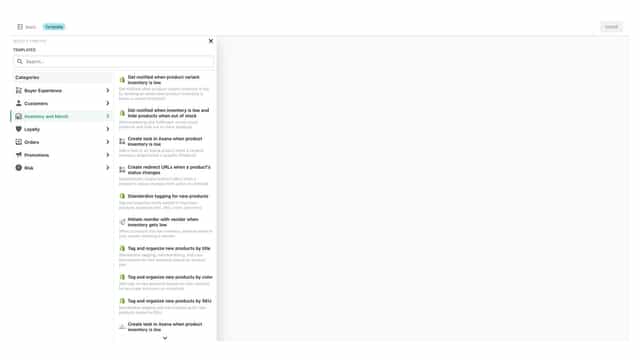
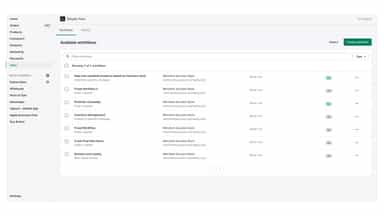
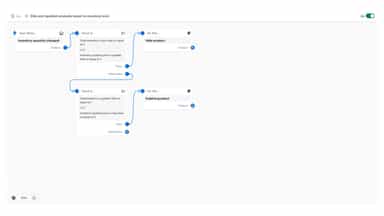
Flow makes it easy to build custom workflows to automate marketing, order fulfillment, inventory management, fraud prevention, and more. Boost productivity and reclaim your time by automating tasks, streamlining business processes, customizing how your store works, or connecting to your favorite apps and external services.
- Send transactional email from Shopify Flow workflows
- Connect SMTP or providers like SES, Resend, SendGrid, and Mailgun
- Optional fallback routing when the primary provider fails
- Templates and sent-email logs for day-to-day operations
- Automate your store with hundreds of example templates for popular use cases.
- Customize by adding conditional logic and as many actions as you need.
- Works with tags, metafields, fulfillment, B2B, Slack, Google Sheets, and more.
All the numbers
Every figure, side by side
A green dot marks the app ahead on a measured figure. Estimates, gaps and apps that leave no storefront trace never take the lead.
Adoption
| Measure |  FlowPost |  Shopify Flow |
|---|---|---|
| Detected stores | Not published | Not published |
| Net store change, 28 days | 0 | 0 |
| Stores added, 28 days | Not enough data | Not enough data |
| Big-brand share | Not enough data | Not enough data |
| Top store categories | Not published | Not published |
| Top store countries | Not published | Not published |
Reviews
| Measure | FlowPost | Shopify Flow |
|---|---|---|
| App Store rating | Not published | 4.7 ★ |
| App Store reviews | Not published | 15,349 |
| New reviews, 28 days | Not enough data | 677 |
| Reviewers a year or more in | Not enough data | 63% |
Pricing
| Measure | FlowPost | Shopify Flow |
|---|---|---|
| Free plan | Yes | Not listed |
| Lowest paid monthly plan | $9.99/month | No monthly plan listed |
| Longest free trial | 7 days | Not listed |
| Plans listed | 4 | Not published |
Listing
| Measure | FlowPost | Shopify Flow |
|---|---|---|
| Shopify category rank | #246 | #1(ahead) |
| Shopify App Charts | #21 on Pricing moves in Email marketing | Not on this week’s charts |
| Built for Shopify | No | No |
| Launched | Jul 20, 2026 | Sep 18, 2017 |
| Languages | 1 | 1 |
| Developer | AVOITS | Shopify |
FAQ
FlowPost and Shopify Flow: common questions
- Is FlowPost or Shopify Flow cheaper?
- Only FlowPost lists a free plan. Shoplist compares base prices only between monthly plans in the same currency; usage charges and annual plans vary, so check each plan’s limits.
- What features does each app list that the other doesn’t?
- FlowPost lists 5 the others don’t mention, such as APIs and webhooks, Cart emails, Checkout emails, Email domains. Shopify Flow lists 35 the others don’t mention, such as Abandoned cart, APIs, Browse abandonment, Conditional logic. A feature missing from a listing may still be supported; this compares what each App Store listing says.
- Where does this comparison’s data come from?
- Shoplist crawls Shopify storefronts to detect which apps each store runs, and reads each app’s Shopify App Store listing for reviews, pricing, features and integrations. Store counts are as of Oct 15, 2026 for FlowPost, Nov 8, 2026 for Shopify Flow; estimated figures are labeled.
How Shoplist compares apps
Store counts come from Shoplist’s crawl of Shopify storefronts, which detects the apps each store runs; they are as of Oct 15, 2026 for FlowPost, Nov 8, 2026 for Shopify Flow. Reviews, ratings, plans, features and integrations come from each app’s Shopify App Store listing. 28-day figures are labeled when estimated, and a figure that is missing or estimated never decides who leads. Read the methodology.