

FitGenius: AI Size Recommender vs Robosize: AI Try‑On & Fit
Two Shopify apps, side by side: detected stores, momentum, reviews, plans, listed features and who runs each. Store counts as of Oct 13, 2026.
The short answer
- Both list a free plan. Paid plans start at $9.99/month for FitGenius and $9.99/month for Robosize.
Head to head


Increase Sales with Fit Recommendation and Smart Size Charts
Momentum
New reviews each month
Review pace is the clearest public read on how fast an app is winning new merchants.
Free
- · 1 size chart, rule-based engine
- · 5 recommendations per month
Basic
- · 500 recommendations, unlimited charts
Pro
- · 5,000 recs, AI engine, photo analysis
Enterprise
- · 25,000 recs, priority support, API
Forever free
- · 4 size charts
- · Automatic product matching
- · Automatic unit conversion
Basic
- · 50 try-on sessions
- · Automatic unit conversion
- · Smart fit recommendation
- · Unlimited size charts
- · Up to 5,000 monthly visitors
Premium plan
- · 400 try-on sessions
- · Advanced analytics
- · All basic plan features
- · Smart fit recommendation
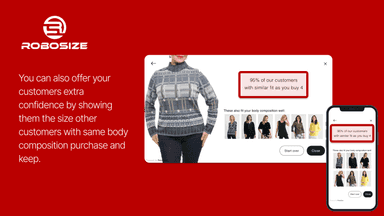
- · Social proof for the size recommendation
- · Up to 10,000 monthly visitors
Ultimate plan
- · 1250 try-on sessions
- · All premium plan features
- · Fully customized experience
- · Mix and match
- · Up to 50,000 monthly visitors
Coverage counts what each App Store listing names. Every feature, checked off app by app, is in Shoplist.
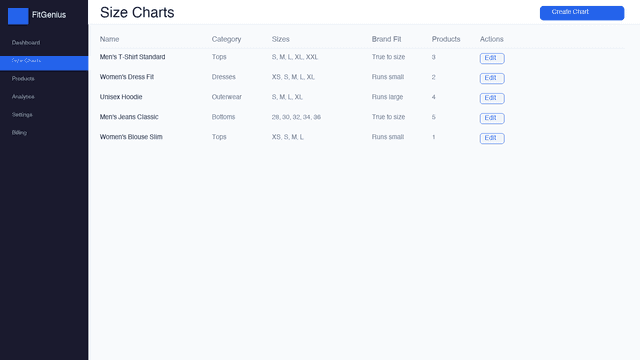
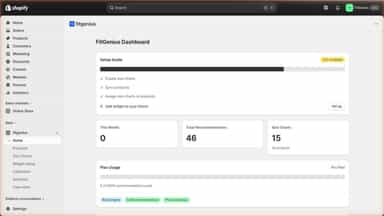
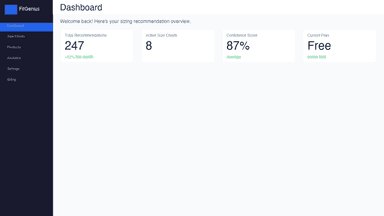
See every featureSizing uncertainty is a top cause of returns and abandoned carts. FitGenius adds a size recommendation widget to product pages: shoppers answer 3 quick questions on height, build, and fit preference, and get a recommendation with a confidence score and reasoning. Unlike static size charts, recommendations are specific to each product. Build size charts from templates, CSV, or manual entry.
Shoppers can't try clothes on through a screen, so they guess, order two sizes, and send one back. Robosize fixes both halves of that. Virtual try-on lets them see your garment on their own body. AI size recommendation tells them which size to pick, using height, weight and age. No tape measure. Set up one product and every other item in your store maps automatically. Works on any apparel store.
- Instant size recommendations via a measurement-based engine or AI analysis
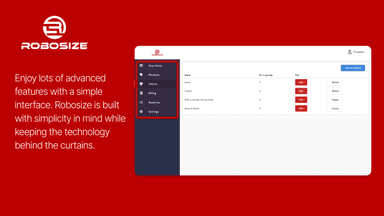
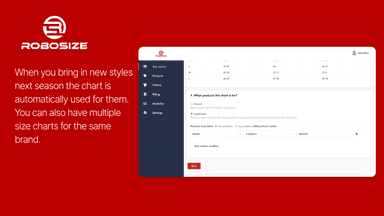
- Create size charts from templates, CSV import, or manual entry
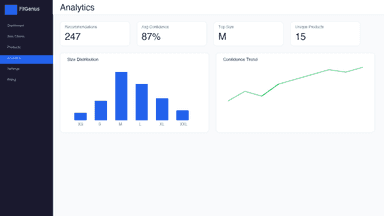
- Analytics dashboard showing recommendation volume, size distribution, and trends
- Accurate fit recommendation from basic questions like height, weight, and age
- Machine learning powered fitting room with optional parameters like fabric & cut
- Customizable questions and recommendation methods
- Product based size optimization
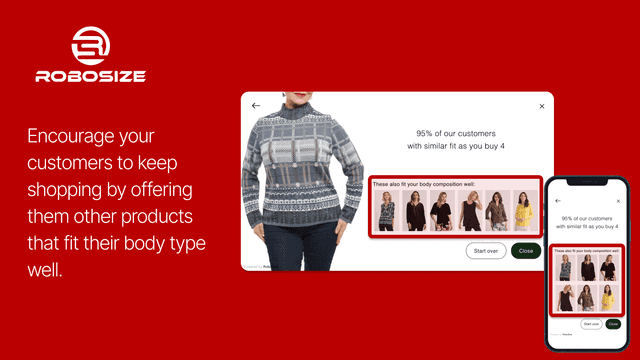
All the numbers
Every figure, side by side
A green dot marks the app ahead on a measured figure. Estimates, gaps and apps that leave no storefront trace never take the lead.
Adoption
| Measure |  FitGenius |  Robosize |
|---|---|---|
| Detected stores | Not published | Not published |
| Net store change, 28 days | 0 | 0 |
| Stores added, 28 days | Not enough data | Not enough data |
| Big-brand share | Not enough data | Not enough data |
| Top store categories | Not published | Not published |
| Top store countries | Not published | Not published |
Reviews
| Measure | FitGenius | Robosize |
|---|---|---|
| App Store rating | Not published | 5.0 ★ |
| App Store reviews | Not published | 4 |
| New reviews, 28 days | Not enough data | 0 |
| Reviewers a year or more in | Not enough data | Not enough data |
FAQ
FitGenius and Robosize: common questions
- Is FitGenius or Robosize cheaper?
- Both list a free plan. Paid plans start at $9.99/month for FitGenius and $9.99/month for Robosize. Shoplist compares base prices only between monthly plans in the same currency; usage charges and annual plans vary, so check each plan’s limits.
- Where does this comparison’s data come from?
- Shoplist crawls Shopify storefronts to detect which apps each store runs, and reads each app’s Shopify App Store listing for reviews, pricing, features and integrations. Store counts are as of Oct 13, 2026; estimated figures are labeled.
How Shoplist compares apps
Store counts come from Shoplist’s crawl of Shopify storefronts, which detects the apps each store runs; they are as of Oct 13, 2026. Reviews, ratings, plans, features and integrations come from each app’s Shopify App Store listing. 28-day figures are labeled when estimated, and a figure that is missing or estimated never decides who leads. Read the methodology.