

Fiducia vs The Yoda
Two Shopify apps, side by side: detected stores, momentum, reviews, plans, listed features and who runs each. Store counts as of Oct 13, 2026.
The short answer
- Paid plans start at $19/month for Fiducia and $50/month for The Yoda.
- The Yoda lists 17 features Fiducia’s listing doesn’t mention, including Activity tracking, AI-powered rules, Analytics.
Head to head


Starter
- · CSV bulk COGS import
- · Per-order & per-product margin breakdown
- · Profit tracking up to 200 orders/mo
- · Shipping & gateway fee tracking
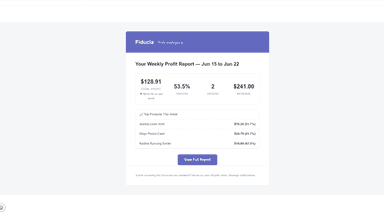
- · Weekly profit email digest
Growth
- · 90-day historical backfill
- · CSV bulk COGS import
- · Per-order & per-product margin breakdown
- · Profit tracking up to 1,000 orders/mo
- · Shipping & gateway fee tracking
- · Weekly profit email digest
Scale
- · 90-day historical backfill
- · CSV bulk COGS import
- · Per-order & per-product margin breakdown
- · Profit tracking up to 5,000 orders/mo
- · Weekly profit email digest
Pro
- · 90-day historical backfill
- · CSV bulk COGS import
- · Per-order & per-product margin breakdown
- · Shipping & gateway fee tracking
- · Unlimited order volume
- · Weekly profit email digest
Margin Growth Plan
- · Advanced customer tiering
- · Commercial levers ranked by impact value
- · Customer behavioural signals
- · Pricing optimization
- · Product profitability insights
- · Quote approval automation
Coverage counts what each App Store listing names. Every feature, checked off app by app, is in Shoplist.
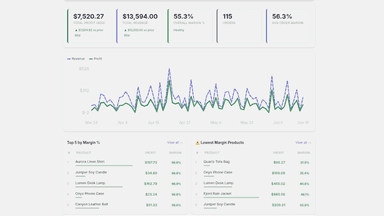
See every featureMost Shopify dashboards show revenue, not profit. A sale can look successful while it is actually losing money once product cost, payment fees, shipping, and discounts are included. Fiducia calculates net profit for every order automatically, using product costs merchants enter and the fees and discounts already present in their store data.
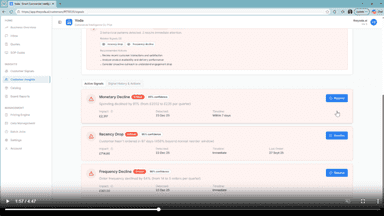
theYoda.ai gives B2B merchants 4 things. Profit Map: margin by wholesale account and by product. Your actual net position by customer. 4-Tier Customer Segmentation: Which accounts are your highest-value relationships, which are average, which are marginal, and which are actively losing you money. RFM Analysis: Early warning on trade account churn & who is drifting.
- Net profit per order, after costs, fees, and discounts
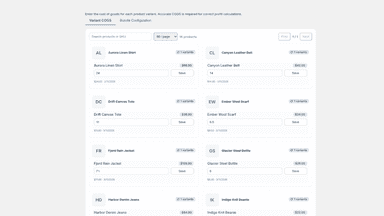
- Cost of goods sold tracking by product and variant
- Automatic alerts when a product's margin drops
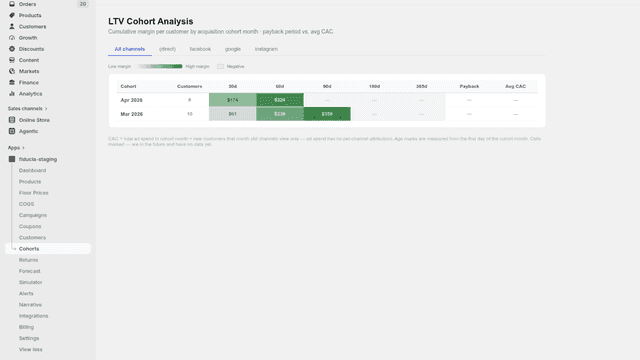
- Customer lifetime value and cohort profit analysis
- Automatically segments customers and products into 4 value tiers.
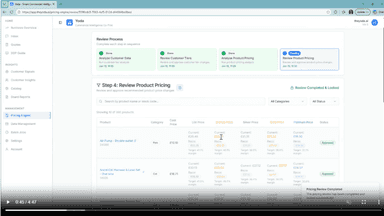
- Assigns precise, 4 level margin-protected pricing for every SKU and customer.
- Prioritised Action lists based on real-time RFM behaviour models & impact value.

All the numbers
Every figure, side by side
A green dot marks the app ahead on a measured figure. Estimates, gaps and apps that leave no storefront trace never take the lead.
Adoption
| Measure |  Fiducia |  The Yoda |
|---|---|---|
| Detected stores | Not published | Not published |
| Net store change, 28 days | 0 | 0 |
| Stores added, 28 days | Not enough data | Not enough data |
| Big-brand share | Not enough data | Not enough data |
| Top store categories | Not published | Not published |
| Top store countries | Not published | Not published |
Reviews
| Measure | Fiducia | The Yoda |
|---|---|---|
| App Store rating | Not published | Not published |
| App Store reviews | Not published | Not published |
| New reviews, 28 days | Not enough data | Not enough data |
| Reviewers a year or more in | Not enough data | Not enough data |
FAQ
Fiducia and The Yoda: common questions
- Is Fiducia or The Yoda cheaper?
- Paid plans start at $19/month for Fiducia and $50/month for The Yoda. Shoplist compares base prices only between monthly plans in the same currency; usage charges and annual plans vary, so check each plan’s limits.
- What features does each app list that the other doesn’t?
- Fiducia lists 5 the others don’t mention, such as AI insights, Forecasting, Lifetime value (LTV), ROAS. The Yoda lists 17 the others don’t mention, such as Activity tracking, AI-powered rules, Analytics, Auto-repricing. A feature missing from a listing may still be supported; this compares what each App Store listing says.
- Where does this comparison’s data come from?
- Shoplist crawls Shopify storefronts to detect which apps each store runs, and reads each app’s Shopify App Store listing for reviews, pricing, features and integrations. Store counts are as of Oct 13, 2026; estimated figures are labeled.
How Shoplist compares apps
Store counts come from Shoplist’s crawl of Shopify storefronts, which detects the apps each store runs; they are as of Oct 13, 2026. Reviews, ratings, plans, features and integrations come from each app’s Shopify App Store listing. 28-day figures are labeled when estimated, and a figure that is missing or estimated never decides who leads. Read the methodology.