
fetchdAI vs Tracetify: AI Citation Tracker
Two Shopify apps, side by side: detected stores, momentum, reviews, plans, listed features and who runs each. Store counts as of Oct 13, 2026.
The short answer
- Both list a free plan. Paid plans start at $19/month for fetchdAI and $99/month for Tracetify.
- fetchdAI lists 4 features Tracetify’s listing doesn’t mention, including Analytics, Metadata optimization, SEO score.
Head to head


Free
- · AI readiness score
- · Basic metafield audit
- · Schema injection (1 product)
Basic
- · AI content generation (5 articles/mo)
- · AI readiness score
- · Citation tracking (weekly, 15 prompts)
- · Full metafield audit
- · Manual scan (5/month)
- · Schema injection (unlimited products)
Growth
- · AI content generation (10 articles/mo)
- · Citation tracking (weekly, 25 prompts)
- · Everything in Basic
- · LLMs.txt generation
- · Manual scan (15/month)
- · Store comparison benchmarking
Scale
- · AI content generation (30 articles/mo)
- · Citation tracking (daily, 100 prompts)
- · Competitor benchmarking
- · Everything in Growth
- · Manual scan (30/month)
- · Priority support
Free
Pro
Coverage counts what each App Store listing names. Every feature, checked off app by app, is in Shoplist.
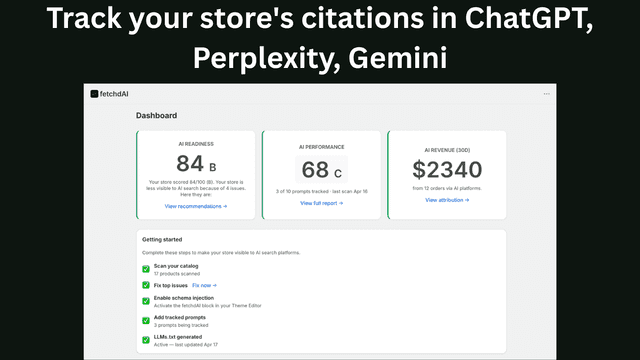
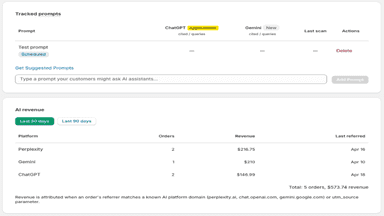
See every featureShoppers increasingly ask AI assistants for product recommendations before they ever visit a store. fetchdAI shows whether ChatGPT, Perplexity, and Gemini actually mention your products when customers ask, and what's stopping them from citing you. It catches the structured data gaps, thin descriptions, and missing content that keep AI from recommending your store — then gives you the tools to fix them.
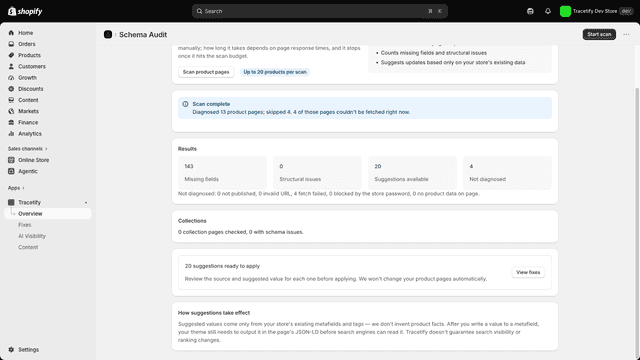
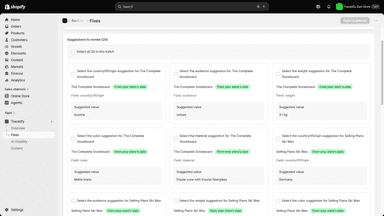
AI assistants now answer shopping questions directly. Tracetify shows you whether they cite your store, which pages they pull from, and what they get wrong or miss. Run a visibility scan, get page-level diagnostics, and fix issues without leaving the app: apply schema fixes, reorganize existing product text into FAQ and guide pages with zero invented claims, or let Claude Opus 5 draft new content for your review.
- Track citations in ChatGPT, Perplexity, and Gemini — see where you rank.
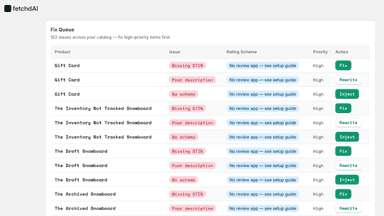
- Audit your store's AI readiness and fix issues in priority order.
- Auto-add product schema so AI can read and cite your catalog.
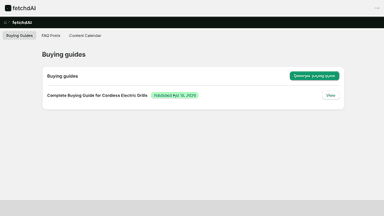
- Generate buying guides and FAQs that AI assistants cite.
- AI visibility scan: see if ChatGPT-class assistants cite your store
- Page-level diagnostics with concrete, per-page fix suggestions
- One-click schema fixes written back only when you apply them
- Reorganize pages: rebuilt from your own product text, nothing invented
All the numbers
Every figure, side by side
A green dot marks the app ahead on a measured figure. Estimates, gaps and apps that leave no storefront trace never take the lead.
Adoption
| Measure |  fetchdAI |  Tracetify |
|---|---|---|
| Detected stores | Not published | Not published |
| Net store change, 28 days | 0 | 0 |
| Stores added, 28 days | Not enough data | Not enough data |
| Big-brand share | Not enough data | Not enough data |
| Top store categories | Not published | Not published |
| Top store countries | Not published | Not published |
Reviews
| Measure | fetchdAI | Tracetify |
|---|---|---|
| App Store rating | 5.0 ★ | Not published |
| App Store reviews | 1 | Not published |
| New reviews, 28 days | Not enough data | Not enough data |
| Reviewers a year or more in | Not enough data | Not enough data |
FAQ
fetchdAI and Tracetify: common questions
- Is fetchdAI or Tracetify cheaper?
- Both list a free plan. Paid plans start at $19/month for fetchdAI and $99/month for Tracetify. Shoplist compares base prices only between monthly plans in the same currency; usage charges and annual plans vary, so check each plan’s limits.
- What features does each app list that the other doesn’t?
- fetchdAI lists 4 the others don’t mention, such as Analytics, Metadata optimization, SEO score, Theme optimization. Tracetify lists 2 the others don’t mention, such as Rich snippets, Tracking. A feature missing from a listing may still be supported; this compares what each App Store listing says.
- Where does this comparison’s data come from?
- Shoplist crawls Shopify storefronts to detect which apps each store runs, and reads each app’s Shopify App Store listing for reviews, pricing, features and integrations. Store counts are as of Oct 13, 2026; estimated figures are labeled.
How Shoplist compares apps
Store counts come from Shoplist’s crawl of Shopify storefronts, which detects the apps each store runs; they are as of Oct 13, 2026. Reviews, ratings, plans, features and integrations come from each app’s Shopify App Store listing. 28-day figures are labeled when estimated, and a figure that is missing or estimated never decides who leads. Read the methodology.