
Feedman Google Shopping Feed vs ProductDataCloud
Two Shopify apps, side by side: detected stores, momentum, reviews, plans, listed features and who runs each. Store counts as of Oct 15, 2026 for Feedman Google Shopping Feed, Oct 13, 2026 for ProductDataCloud.
The short answer
- ProductDataCloud lists 6 features Feedman Google Shopping Feed’s listing doesn’t mention, including AI mapping, Metafields, Multi-format.
Head to head


Momentum
New reviews each month
Review pace is the clearest public read on how fast an app is winning new merchants.
PDC Starter
PDC Professional
PDC Enterprise
PDC Ultimate
Coverage counts what each App Store listing names. Every feature, checked off app by app, is in Shoplist.
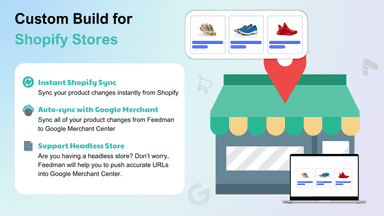
See every featureFeedman gives you a fast, reliable way to sync your Shopify product catalog to Google Merchant Center. Products update in real time as soon as they change in Shopify, not on a delayed schedule. Create feeds for multiple countries and languages, fine-tune attribute mapping and custom rules per feed, and fix Google-reported issues from Feed Health with bulk editing and CSV import/export.
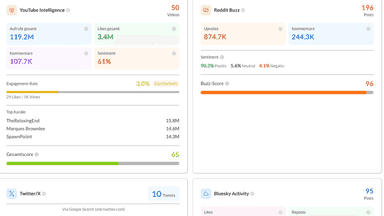
Enter a GTIN or scan a barcode and get structured product content mapped straight onto your Shopify fields: title, description, images, attributes, AI readable data and specifications. Built for catalogues that are too large to fill in by hand. On top of the content, you get market context: prices across shops, Google Trends demand, and social signals from YouTube, Reddit, and X.
- Details feed settings for each product to ensure the most compatible feed
- Automatic sync between Shopify and Feedman
- Multiple Language and Target country supported
- Bilder, Beschreibungen und Attribute per GTIN oder Barcode-Scan
- Automatische Zuordnung zu deinen Shopify-Produktfeldern
- Preise quer durch Shops und Marktplätze in Echtzeit beobachten
- Social Signals aus YouTube, Reddit und X plus Google Trends



All the numbers
Every figure, side by side
A green dot marks the app ahead on a measured figure. Estimates, gaps and apps that leave no storefront trace never take the lead.
Adoption
| Measure |  Feedman Google Shopping Feed |  ProductDataCloud |
|---|---|---|
| Detected stores | Not published | Not published |
| Net store change, 28 days | 0 | 0 |
| Stores added, 28 days | Not enough data | Not enough data |
| Big-brand share | Not enough data | Not enough data |
| Top store categories | Not published | Not published |
| Top store countries | Not published | Not published |
Reviews
| Measure | Feedman Google Shopping Feed | ProductDataCloud |
|---|---|---|
| App Store rating | 5.0 ★ | Not published |
| App Store reviews | 2 | Not published |
| New reviews, 28 days | Not enough data | Not enough data |
| Reviewers a year or more in | Not enough data | Not enough data |
Pricing
| Measure | Feedman Google Shopping Feed | ProductDataCloud |
|---|---|---|
| Free plan | Not listed | Not listed |
| Lowest paid monthly plan | No monthly plan listed | $149/month |
| Longest free trial | Not listed | Not listed |
| Plans listed | Not published | 4 |
Listing
| Measure | Feedman Google Shopping Feed | ProductDataCloud |
|---|---|---|
| Shopify category rank | Not enough data | #221 |
| Shopify App Charts | Not on this week’s charts | Not on this week’s charts |
| Built for Shopify | No | No |
| Launched | May 22, 2025 | May 22, 2026 |
| Languages | 1 | 3 |
| Developer | Feedman | ProductDataCloud |
FAQ
Feedman Google Shopping Feed and ProductDataCloud: common questions
- What features does each app list that the other doesn’t?
- Feedman Google Shopping Feed lists 3 the others don’t mention, such as Custom rules, Error validation, Localized feeds. ProductDataCloud lists 6 the others don’t mention, such as AI mapping, Metafields, Multi-format, Performance monitoring. A feature missing from a listing may still be supported; this compares what each App Store listing says.
- Where does this comparison’s data come from?
- Shoplist crawls Shopify storefronts to detect which apps each store runs, and reads each app’s Shopify App Store listing for reviews, pricing, features and integrations. Store counts are as of Oct 15, 2026 for Feedman Google Shopping Feed, Oct 13, 2026 for ProductDataCloud; estimated figures are labeled.
How Shoplist compares apps
Store counts come from Shoplist’s crawl of Shopify storefronts, which detects the apps each store runs; they are as of Oct 15, 2026 for Feedman Google Shopping Feed, Oct 13, 2026 for ProductDataCloud. Reviews, ratings, plans, features and integrations come from each app’s Shopify App Store listing. 28-day figures are labeled when estimated, and a figure that is missing or estimated never decides who leads. Read the methodology.