

Epic: Bulk Order Fulfillment vs syncX: Fulfill Tracking Bulk
Two Shopify apps, side by side: detected stores, momentum, reviews, plans, listed features and who runs each. Store counts as of Oct 14, 2026 for Epic, Nov 2, 2026 for syncX.
The short answer
- On the Shopify App Store: Epic 5.0 from 3 reviews and syncX 4.8 from 56 reviews.
- Paid plans start at $5/month for Epic and $1/month for syncX.
- syncX lists 14 features Epic’s listing doesn’t mention, including Auto-sync, Custom rules, Customer notifications.
Head to head


Auto Fulfillment & order tracking via FTP/SFTP, Gsheet & more
Momentum
New reviews each month
Review pace is the clearest public read on how fast an app is winning new merchants.
Basic
Starter
- · 1 shipping source
- · 17 connections (FTP, Email, API, DropXL)
- · Basic features
- · First 100 fulfillments Free
- · One-page Tracking Entry (free)
- · Sync tracking info to Paypal
Basic
- · 1 shipping source
- · Partial fulfillment (split single order)
- · max 350 orders / month (reset monthly)
Pro
- · 3 shipping sources
- · Partial fulfillment (split single order)
- · max 800 orders / month (reset monthly)
Unlimited
- · All advanced features
- · Auto tagging order once fulfilled
- · Custom delivery status update
- · Custom-build connection (ERP, 3PL)
- · Partial fulfillment (split single order)
- · Priority sync
Coverage counts what each App Store listing names. Every feature, checked off app by app, is in Shoplist.
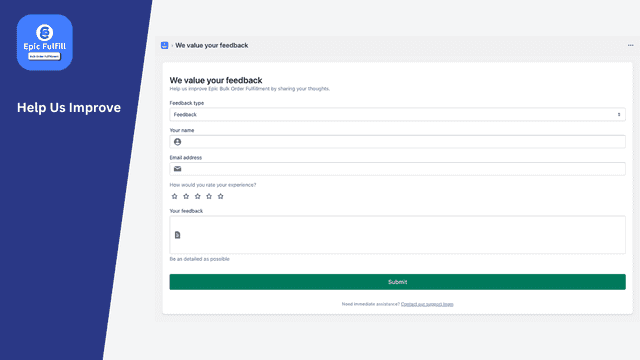
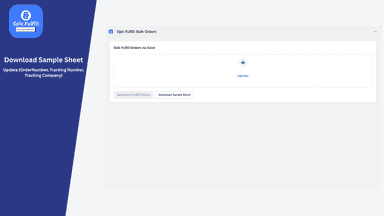
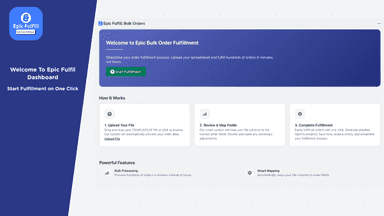
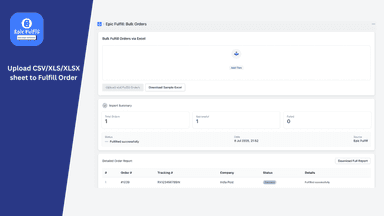
See every featureEpic: Bulk Order Fulfillment lets you fulfill orders in bulk instead of one at a time. Export your unfulfilled orders to Excel or CSV, add tracking numbers and carriers, then upload the file to fulfill every order in seconds. Customers get shipping notifications automatically. Map your own spreadsheet columns, fulfill full or partial orders, and process thousands of rows in a single import.
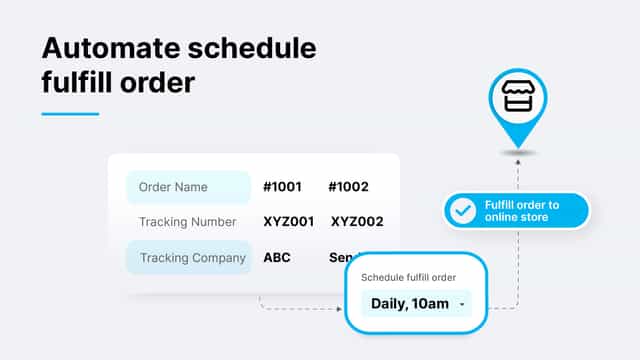
Upload, import, process, and automate orders with CSV workflows and bulk fulfillment in one place. Upload tracking numbers via CSV, Google Sheets, API, FTP, PayPal, or email to fulfill orders instantly. Generate tracking links automatically for any carrier. Automate order workflows by splitting orders by supplier, warehouse, location, or custom rules, and sync data with 3PLs and multiple systems.
- Upload tracking info via Excel in one click
- Bulk update orders with tracking numbers
- Auto-sync shipping data to Shopify
- Auto match order number and fulfill order with tracking info in fulfillment log
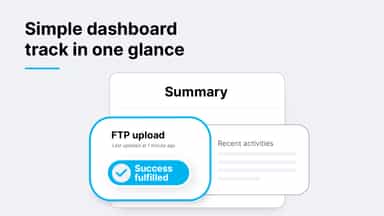
- Fetch order files from any type of source such as email, FTP/SFTP, Google Sheet
- Fetch order files from any source e.g email, FTP/SFTP, Google Sheet, REST API
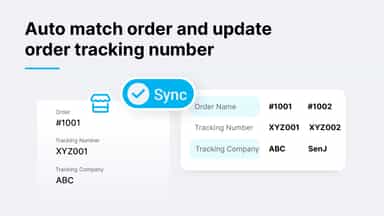
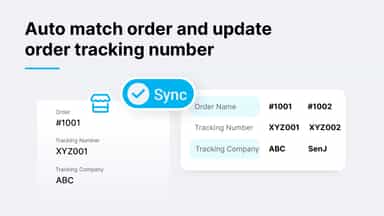
- Automatically match order and update order tracking code. Fits any 3PL courier
All the numbers
Every figure, side by side
A green dot marks the app ahead on a measured figure. Estimates, gaps and apps that leave no storefront trace never take the lead.
Adoption
| Measure |  Epic |  syncX |
|---|---|---|
| Detected stores | Not published | Not published |
| Net store change, 28 days | 0 | 0 |
| Stores added, 28 days | Not enough data | Not enough data |
| Big-brand share | Not enough data | Not enough data |
| Top store categories | Not published | Not published |
| Top store countries | Not published | Not published |
Reviews
| Measure | Epic | syncX |
|---|---|---|
| App Store rating | 5.0 ★(ahead) | 4.8 ★ |
| App Store reviews | 3 | 56(ahead) |
| New reviews, 28 days | Not enough data | Not enough data |
| Reviewers a year or more in | Not enough data | Not enough data |
FAQ
Epic and syncX: common questions
- Is Epic or syncX cheaper?
- Paid plans start at $5/month for Epic and $1/month for syncX. Shoplist compares base prices only between monthly plans in the same currency; usage charges and annual plans vary, so check each plan’s limits.
- Which has better reviews, Epic or syncX?
- On the Shopify App Store: Epic 5.0 from 3 reviews and syncX 4.8 from 56 reviews.
- What features does each app list that the other doesn’t?
- syncX lists 14 the others don’t mention, such as Auto-sync, Custom rules, Customer notifications, Fulfillment. A feature missing from a listing may still be supported; this compares what each App Store listing says.
- Where does this comparison’s data come from?
- Shoplist crawls Shopify storefronts to detect which apps each store runs, and reads each app’s Shopify App Store listing for reviews, pricing, features and integrations. Store counts are as of Oct 14, 2026 for Epic, Nov 2, 2026 for syncX; estimated figures are labeled.
How Shoplist compares apps
Store counts come from Shoplist’s crawl of Shopify storefronts, which detects the apps each store runs; they are as of Oct 14, 2026 for Epic, Nov 2, 2026 for syncX. Reviews, ratings, plans, features and integrations come from each app’s Shopify App Store listing. 28-day figures are labeled when estimated, and a figure that is missing or estimated never decides who leads. Read the methodology.