
Ekhata vs Zync ‑ Zohobooks Connector
Two Shopify apps, side by side: detected stores, momentum, reviews, plans, listed features and who runs each. Store counts as of Aug 5, 2026 for Ekhata, Oct 13, 2026 for Zync.
The short answer
- Zync lists 4 features Ekhata’s listing doesn’t mention, including Batch processing, Customer accounts, Profit tracking.
Head to head


Free
Basic
- · For stores on the “Basic" Shopify plan
- · Manual and Auto Sync Modes
- · No Product or Order sync limits
- · On call Onboarding Support
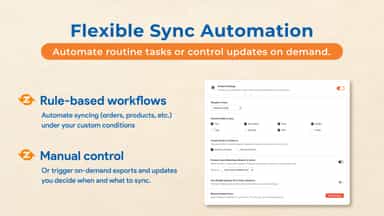
- · Rule based and Manual Sync
- · Sync orders, products, customers to Zoho
Grow
- · For stores on the “Grow" Shopify plan
- · Manual and Auto Sync Modes
- · On call Onboarding Support
- · Rule based and Manual Sync
- · Sync orders, products, customers to Zoho
Advanced
- · For store on the “advanced" Shopify plan
- · Manual and Auto Sync Modes
- · No Product or Order sync limits
- · On call Onboarding Support
- · Rule based and Manual Sync
- · Sync orders, products, customers to Zoho
Plus
- · For stores on the “Plus" Shopify plan
- · Manual and Auto Sync Modes
- · On call Onboarding Support
- · Rule based and Manual Sync
- · Sync orders, products, customers to Zoho
Coverage counts what each App Store listing names. Every feature, checked off app by app, is in Shoplist.
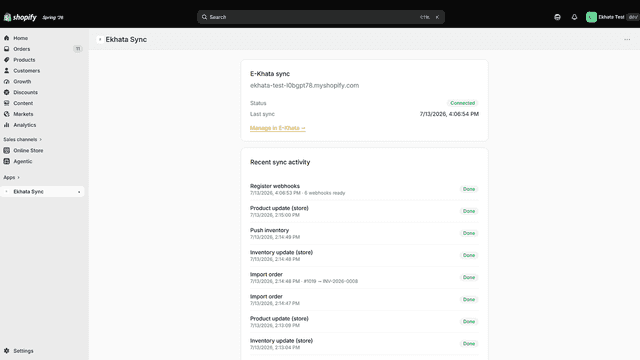
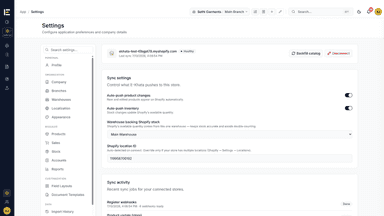
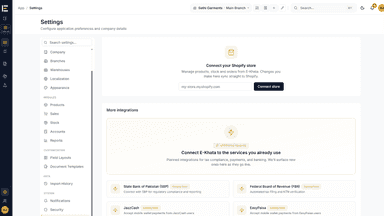
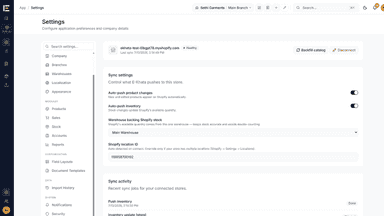
See every featureEkhata connects your store to E-Khata, an accounting and inventory system. Products and live stock levels are pushed from E-Khata to your store, so listings and quantities stay accurate without manual updates. Every order is imported back into E-Khata as a sales invoice, with the customer created and stock deducted automatically.
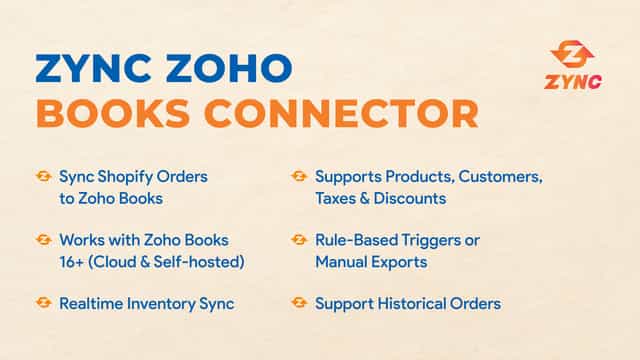
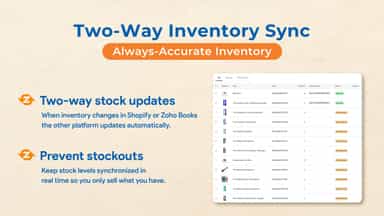
Key features: Real-Time Order Export: Orders from Shopify are Exported to Zoho Books in real-time, ensuring immediate updates. Customer, Product, and Stock Sync: To maintain consistency, customer data, product information, and stock levels are synchronized from Shopify to Zoho Books.
- Automatically list your E-Khata products and variants on your store
- Real-time stock sync keeps your store quantities accurate
- Orders become sales invoices in your books, with customer and stock updated
- Check your sync status from inside your Shopify admin
- Real-Time Order Export to ZohoBooks
- Customer, Product, and Stock Sync
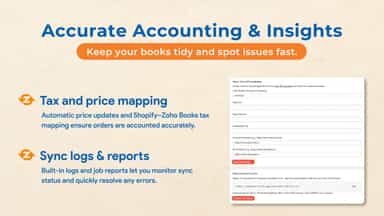
- Tax, Shipping, and Discounts Supported
All the numbers
Every figure, side by side
A green dot marks the app ahead on a measured figure. Estimates, gaps and apps that leave no storefront trace never take the lead.
Adoption
| Measure |  Ekhata |  Zync |
|---|---|---|
| Detected stores | Not published | Not published |
| Net store change, 28 days | 0 | 0 |
| Stores added, 28 days | Not enough data | Not enough data |
| Big-brand share | Not enough data | Not enough data |
| Top store categories | Not published | Not published |
| Top store countries | Not published | Not published |
Reviews
| Measure | Ekhata | Zync |
|---|---|---|
| App Store rating | Not published | Not published |
| App Store reviews | Not published | Not published |
| New reviews, 28 days | Not enough data | Not enough data |
| Reviewers a year or more in | Not enough data | Not enough data |
FAQ
Ekhata and Zync: common questions
- What features does each app list that the other doesn’t?
- Ekhata lists 1 the others don’t mention, such as Accounts receivable. Zync lists 4 the others don’t mention, such as Batch processing, Customer accounts, Profit tracking, Reporting. A feature missing from a listing may still be supported; this compares what each App Store listing says.
- Where does this comparison’s data come from?
- Shoplist crawls Shopify storefronts to detect which apps each store runs, and reads each app’s Shopify App Store listing for reviews, pricing, features and integrations. Store counts are as of Aug 5, 2026 for Ekhata, Oct 13, 2026 for Zync; estimated figures are labeled.
How Shoplist compares apps
Store counts come from Shoplist’s crawl of Shopify storefronts, which detects the apps each store runs; they are as of Aug 5, 2026 for Ekhata, Oct 13, 2026 for Zync. Reviews, ratings, plans, features and integrations come from each app’s Shopify App Store listing. 28-day figures are labeled when estimated, and a figure that is missing or estimated never decides who leads. Read the methodology.