

Atlas: AI Store Builder vs Markuply : Paste. Map. Publish
Two Shopify apps, side by side: detected stores, momentum, reviews, plans, listed features and who runs each. Store counts as of Nov 8, 2026 for Atlas, Oct 14, 2026 for Markuply.
The short answer
- Only Markuply lists a free plan. Paid plans start at $39/month for Atlas and $28.99/month for Markuply.
- Markuply lists 16 features Atlas’s listing doesn’t mention, including 404 pages, Blogs, Career pages.
Head to head


- United States
- United Kingdom
- Canada
Momentum
New reviews each month
Review pace is the clearest public read on how fast an app is winning new merchants.
Development stores
- · Free to explore for development stores
All-in-One
- · AI store builder
- · Al listicles & advertorials builder
- · Al page builder
- · Bundle upsells & quantity breaks
- · Custom cart drawer
FREE
- · 3 page conversions (lifetime)
- · Asset replacement & image optimization
- · Free starter templates
- · Full detection: assets, links, forms, co
- · Link mapping to real store pages
- · Security cleanup & pre-publish review
PRO
- · AI alt text & asset labels
- · All template library access with preview
- · Automatic mobile fixes
- · Branding presets (save & reuse)
- · One-click theme match
- · Product card mapping
Coverage counts what each App Store listing names. Every feature, checked off app by app, is in Shoplist.
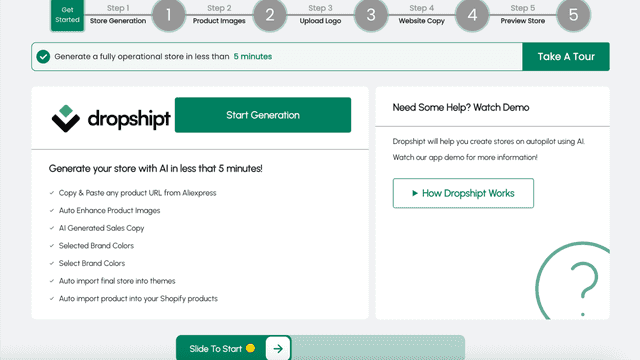
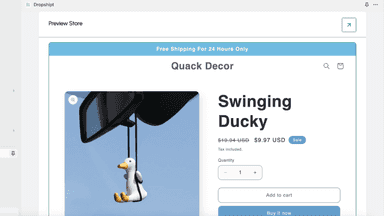
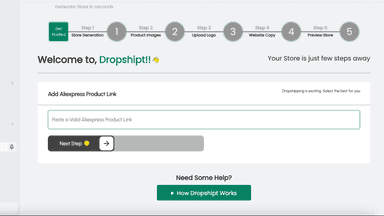
See every featureAtlas builds Shopify stores and pages from any product link or source. Paste a link, and AI generates your store design & product pages, in minutes. Build landing pages, advertorials, and listicles for any product. Add bundle upsells and cart upsells to increase order value.
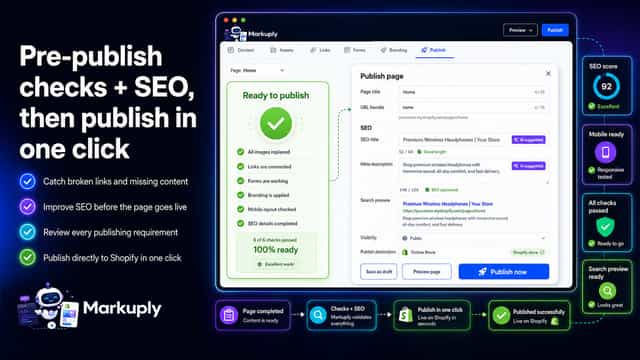
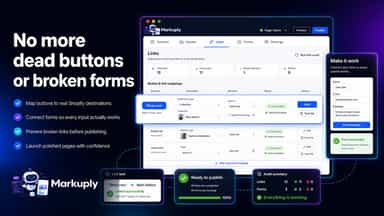
Markuply converts AI-generated HTML from ChatGPT, Claude, Gemini, or Grok into Shopify pages and blog posts. Paste your code to detect placeholder images, videos, icons, inactive links, and forms that need setup.
- Generates a full branded custom store with just a Aliexpress product link.
- Writes product description and home page text with AI.
- Sets up your theme to make it look more appealing and branded.
- Pages, Blocks, Articles Conversions
- Full detection: assets, links, forms, colors
- Asset replacement & image optimization
- Link mapping to real store pages




All the numbers
Every figure, side by side
A green dot marks the app ahead on a measured figure. Estimates, gaps and apps that leave no storefront trace never take the lead.
Adoption
| Measure |  Atlas |  Markuply |
|---|---|---|
| Detected stores | 429 | Not published |
| Net store change, 28 days | +7 | 0 |
| Stores added, 28 days | 20 | Not enough data |
| Big-brand share | Not enough data | Not enough data |
| Top store categories | Health & Beauty, Apparel & Accessories, Home & Garden | Not published |
| Top store countries | United States, United Kingdom, Canada | Not published |
Reviews
| Measure | Atlas | Markuply |
|---|---|---|
| App Store rating | 4.5 ★ | Not published |
| App Store reviews | 387 | Not published |
| New reviews, 28 days | 11 | Not enough data |
| Reviewers a year or more in | 3% | Not enough data |
FAQ
Atlas and Markuply: common questions
- Is Atlas or Markuply cheaper?
- Only Markuply lists a free plan. Paid plans start at $39/month for Atlas and $28.99/month for Markuply. Shoplist compares base prices only between monthly plans in the same currency; usage charges and annual plans vary, so check each plan’s limits.
- What features does each app list that the other doesn’t?
- Atlas lists 11 the others don’t mention, such as A/B testing, AI generation, Analytics, Bulk editing. Markuply lists 16 the others don’t mention, such as 404 pages, Blogs, Career pages, CDN. A feature missing from a listing may still be supported; this compares what each App Store listing says.
- Where does this comparison’s data come from?
- Shoplist crawls Shopify storefronts to detect which apps each store runs, and reads each app’s Shopify App Store listing for reviews, pricing, features and integrations. Store counts are as of Nov 8, 2026 for Atlas, Oct 14, 2026 for Markuply; estimated figures are labeled.
How Shoplist compares apps
Store counts come from Shoplist’s crawl of Shopify storefronts, which detects the apps each store runs; they are as of Nov 8, 2026 for Atlas, Oct 14, 2026 for Markuply. Reviews, ratings, plans, features and integrations come from each app’s Shopify App Store listing. 28-day figures are labeled when estimated, and a figure that is missing or estimated never decides who leads. Read the methodology.