

DrapeUp vs EazyEdit: Bulk Product Edit
Two Shopify apps, side by side: detected stores, momentum, reviews, plans, listed features and who runs each. Store counts as of Oct 13, 2026.
The short answer
- Only EazyEdit lists a free plan. Paid plans start at $19/month for DrapeUp and $9.90/month for EazyEdit.
- EazyEdit lists 10 features DrapeUp’s listing doesn’t mention, including Backup, Data sync, Descriptions.
Head to head


starter
- · 200 variants per month
- · Basic size chart templates
- · Image filename matching
- · Shopify CSV export
pro
- · 1,000 variants per month
- · AI product descriptions
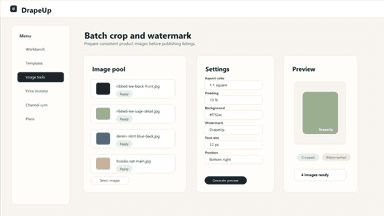
- · Batch watermark and crop
- · Create Shopify draft products
studio
- · 5,000 variants per month
- · Advanced CSV cleanup
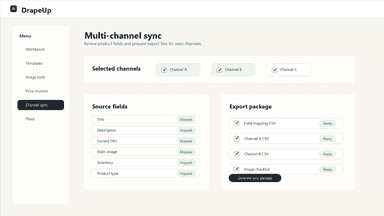
- · Multi-channel sync
- · Supplier price monitoring
Free
- · 30-day backup history
- · Edit up to 10 products
- · Preview every change
Starter
- · 60-day backup history
- · Edit up to 500 products
- · Scheduled CSV feed updates
Basic
- · 90-day backup history
- · Edit up to 10,000 products
- · Scheduled CSV feed updates
Unlimited
- · 180-day backup history
- · Unlimited active schedules
- · Unlimited product edits
Coverage counts what each App Store listing names. Every feature, checked off app by app, is in Shoplist.
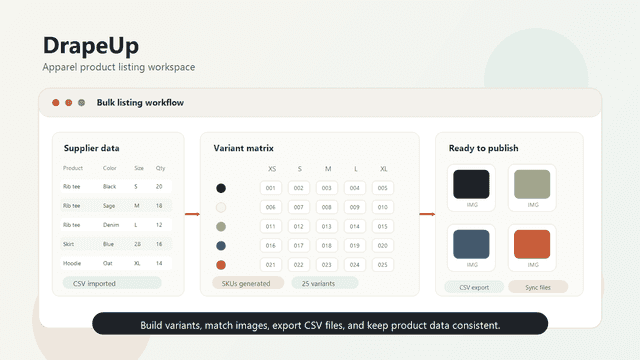
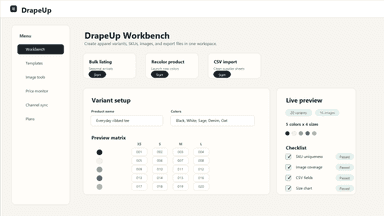
See every featureDrapeUp is built for apparel stores that manage many colors, sizes, images, and supplier spreadsheets. Merchants can create variant matrices, generate SKUs, match product images, export CSV files, monitor supplier updates, and prepare channel sync files from one workspace. It reduces repetitive listing work and helps teams keep product data consistent before publishing.
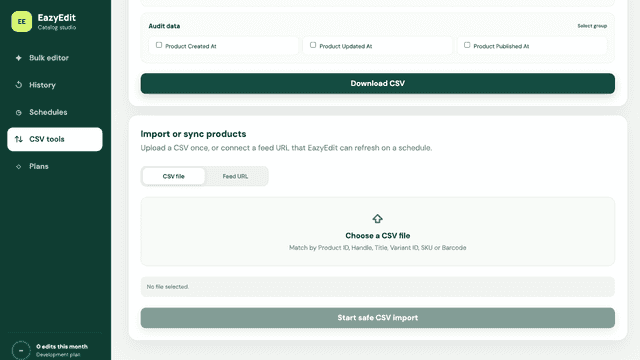
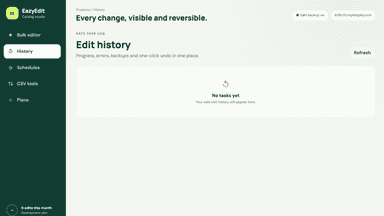
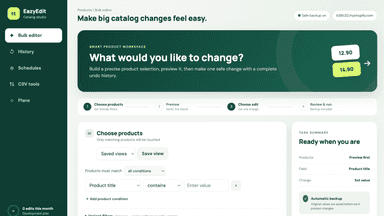
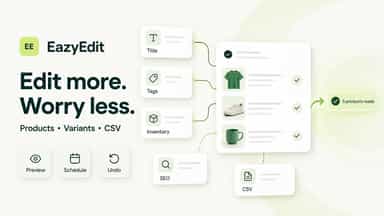
EazyEdit helps merchants update large product catalogs from one workspace. Build precise product and variant filters, preview matching items, then change prices, inventory, titles, tags, SEO fields, metafields, media, and more. Import or export CSV files, map feed columns, and schedule recurring feed updates. Each task records progress and keeps original values so completed edits can be reviewed or undone.
- Create product variants from colors, sizes, and supplier spreadsheets
- Generate SKUs and export clean CSV files for product publishing
- Match product images to variants and prepare channel sync files
- Filter products and variants, then preview every match before editing
- Bulk edit prices, inventory, content, SEO, metafields, media, and more
- Import and export CSV files with flexible column mapping
- Schedule catalog edits and recurring CSV feed updates
All the numbers
Every figure, side by side
A green dot marks the app ahead on a measured figure. Estimates, gaps and apps that leave no storefront trace never take the lead.
Adoption
| Measure |  DrapeUp |  EazyEdit |
|---|---|---|
| Detected stores | Not published | Not published |
| Net store change, 28 days | 0 | 0 |
| Stores added, 28 days | Not enough data | Not enough data |
| Big-brand share | Not enough data | Not enough data |
| Top store categories | Not published | Not published |
| Top store countries | Not published | Not published |
Reviews
| Measure | DrapeUp | EazyEdit |
|---|---|---|
| App Store rating | Not published | Not published |
| App Store reviews | Not published | Not published |
| New reviews, 28 days | Not enough data | Not enough data |
| Reviewers a year or more in | Not enough data | Not enough data |
FAQ
DrapeUp and EazyEdit: common questions
- Is DrapeUp or EazyEdit cheaper?
- Only EazyEdit lists a free plan. Paid plans start at $19/month for DrapeUp and $9.90/month for EazyEdit. Shoplist compares base prices only between monthly plans in the same currency; usage charges and annual plans vary, so check each plan’s limits.
- What features does each app list that the other doesn’t?
- DrapeUp lists 1 the others don’t mention, such as AI assistance. EazyEdit lists 10 the others don’t mention, such as Backup, Data sync, Descriptions, Metafields. A feature missing from a listing may still be supported; this compares what each App Store listing says.
- Where does this comparison’s data come from?
- Shoplist crawls Shopify storefronts to detect which apps each store runs, and reads each app’s Shopify App Store listing for reviews, pricing, features and integrations. Store counts are as of Oct 13, 2026; estimated figures are labeled.
How Shoplist compares apps
Store counts come from Shoplist’s crawl of Shopify storefronts, which detects the apps each store runs; they are as of Oct 13, 2026. Reviews, ratings, plans, features and integrations come from each app’s Shopify App Store listing. 28-day figures are labeled when estimated, and a figure that is missing or estimated never decides who leads. Read the methodology.