

Docket: PDF Invoice Printer vs Shoptopus: Invoice Generator
Two Shopify apps, side by side: detected stores, momentum, reviews, plans, listed features and who runs each. Store counts as of Oct 13, 2026 for Docket, Nov 19, 2026 for Shoptopus.
The short answer
- Shoptopus lists 11 features Docket’s listing doesn’t mention, including Barcodes, Color and font, Customs documents.
Head to head


- Australia
- France
- United Kingdom
Momentum
New reviews each month
Review pace is the clearest public read on how fast an app is winning new merchants.
Unlimited
- · Every Docket feature and document type
- · Two months free for annual prepayment
Coverage counts what each App Store listing names. Every feature, checked off app by app, is in Shoplist.
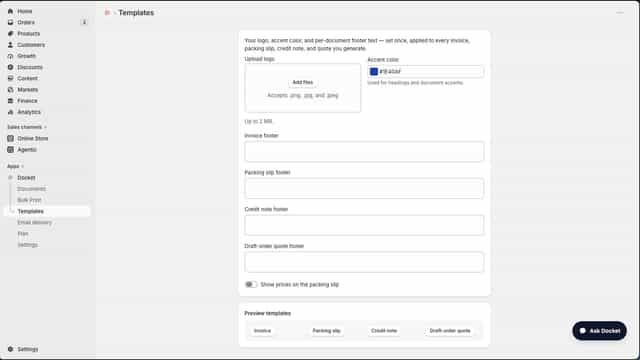
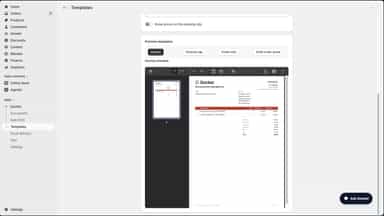
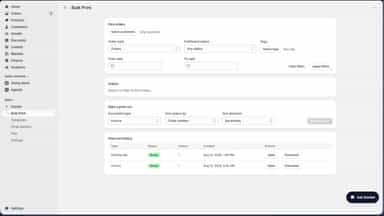
See every featureDocket turns just-in-time Shopify order, refund and draft-order data into immutable PDFs and printable HTML records. Generate in Shopify Admin, use native Print, or combine invoices, packing slips, credit notes and quotes in sorted bulk runs. Choose which document types generate automatically. Add hosted PDF links to Shopify notifications.
The Invoice Generator creates PDF documents effortlessly, enabling users to tailor templates without any coding required and conveniently print them on demand. Beyond invoices, it facilitates the creation of packing slips, credit notes, and return forms. Its simplicity and speed ensure that customers receive aesthetically pleasing and legally compliant invoices.
- Generate invoices, packing slips, credit notes and draft-order quotes
- Choose automatic generation for order, refund and draft-order documents
- Print in Shopify Admin or combine documents in sorted bulk runs
- Add hosted PDF links to order, shipping and refund notifications
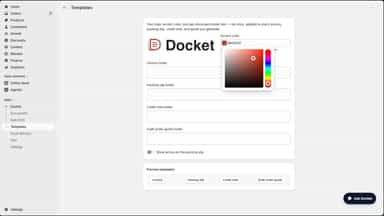
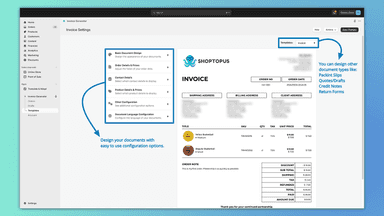
- Personalize your templates with the visual editor. No coding required!
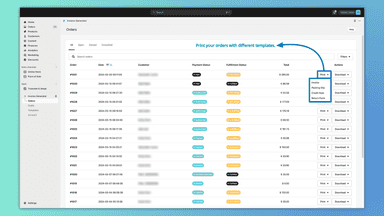
- Print and download your invoices with a single click.
- Create compliant invoices without any special configuration.
- Show correct tax values and create compliant invoices for your country.



All the numbers
Every figure, side by side
A green dot marks the app ahead on a measured figure. Estimates, gaps and apps that leave no storefront trace never take the lead.
Adoption
| Measure |  Docket |  Shoptopus |
|---|---|---|
| Detected stores | Not published | 170 |
| Net store change, 28 days | 0 | 0 |
| Stores added, 28 days | Not enough data | Not enough data |
| Big-brand share | Not enough data | Not enough data |
| Top store categories | Not published | Home & Garden, Apparel & Accessories, Health & Beauty |
| Top store countries | Not published | Australia, France, United Kingdom |
Reviews
| Measure | Docket | Shoptopus |
|---|---|---|
| App Store rating | Not published | 4.8 ★ |
| App Store reviews | Not published | 65 |
| New reviews, 28 days | Not enough data | 0 |
| Reviewers a year or more in | Not enough data | 20% |
FAQ
Docket and Shoptopus: common questions
- What features does each app list that the other doesn’t?
- Docket lists 2 the others don’t mention, such as Email automation, Quotes. Shoptopus lists 11 the others don’t mention, such as Barcodes, Color and font, Customs documents, Delivery notes. A feature missing from a listing may still be supported; this compares what each App Store listing says.
- Where does this comparison’s data come from?
- Shoplist crawls Shopify storefronts to detect which apps each store runs, and reads each app’s Shopify App Store listing for reviews, pricing, features and integrations. Store counts are as of Oct 13, 2026 for Docket, Nov 19, 2026 for Shoptopus; estimated figures are labeled.
How Shoplist compares apps
Store counts come from Shoplist’s crawl of Shopify storefronts, which detects the apps each store runs; they are as of Oct 13, 2026 for Docket, Nov 19, 2026 for Shoptopus. Reviews, ratings, plans, features and integrations come from each app’s Shopify App Store listing. 28-day figures are labeled when estimated, and a figure that is missing or estimated never decides who leads. Read the methodology.