

Dixxi: Product Configurator vs XB: AI Product Upsell & Addons
Two Shopify apps, side by side: detected stores, momentum, reviews, plans, listed features and who runs each. Store counts as of Oct 13, 2026 for Dixxi, Nov 4, 2026 for XB.
The short answer
- Only Dixxi lists a free plan.
- Dixxi lists 10 features XB’s listing doesn’t mention, including Bundles, Conversion rates, Drag-and-drop editor.
Head to head


- India
- Denmark
- Indonesia
Momentum
New reviews each month
Review pace is the clearest public read on how fast an app is winning new merchants.
FREE
- · "Powered by Dixxi" watermark
- · 1 Active Section
- · Inherited Theme Styling
- · Max 2 blocks per section
- · Max 5 linked products total
PRO
- · Custom colors & padding
- · No Watermark
- · Standard Support
- · Unlimited Linked Products
- · Unlimited sections & blocks
Coverage counts what each App Store listing names. Every feature, checked off app by app, is in Shoplist.
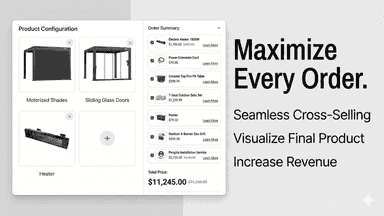
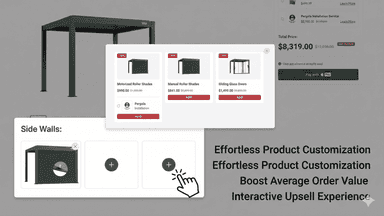
See every featureDixxi: Configurator lets merchants add configurable add-on blocks and accessories to product pages. Interactive "+" spots can be placed near key product areas and linked to related products, services, or extras. Widgets can be targeted to specific products or collections, so each catalog can have its own relevant options.
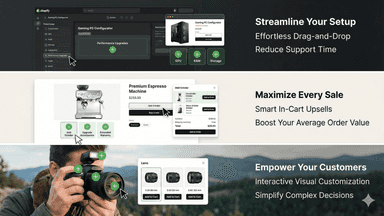
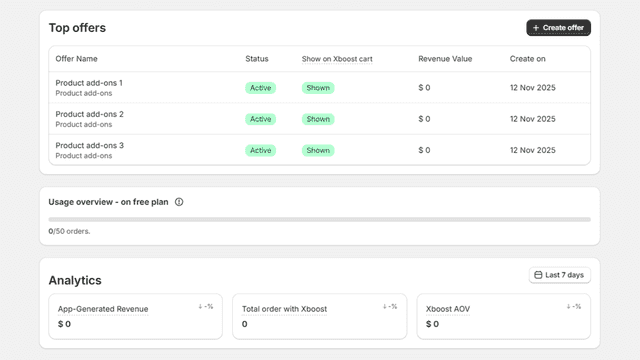
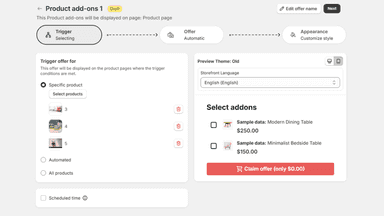
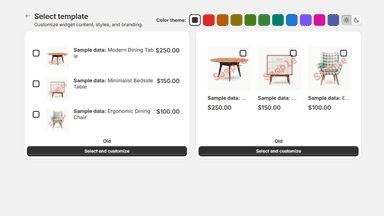
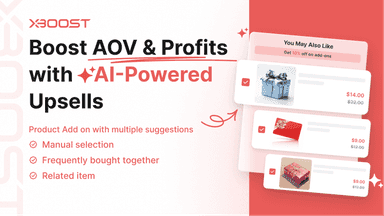
XB: AI Product Upsell & Addons uses advanced AI to analyze product details, titles, tags, collections, order data, and customer behavior. It then delivers smart upsell suggestions and relevant addons directly on the product page. The app offers multiple clean, modern layouts with easy no-code customization. Xboost loads fast, fits seamlessly with any theme, and helps increase AOV without affecting performance.
- • Add interactive “+” add-on blocks to product pages
- • Connect blocks to related products or services
- • Assign widgets per product or per collection
- • Drag-and-drop visual editor
- Product Add-On: tempt customers with must-have extras
- Multiple recommendation sources: AI-powered and manual options
- Multiple templates: choose the ideal widget style for your store


All the numbers
Every figure, side by side
A green dot marks the app ahead on a measured figure. Estimates, gaps and apps that leave no storefront trace never take the lead.
Adoption
| Measure |  Dixxi |  XB |
|---|---|---|
| Detected stores | Not published | 10 |
| Net store change, 28 days | 0 | 0 |
| Stores added, 28 days | Not enough data | Not enough data |
| Big-brand share | Not enough data | Not enough data |
| Top store categories | Not published | Apparel & Accessories, Health & Beauty, Home & Garden |
| Top store countries | Not published | India, Denmark, Indonesia |
Reviews
| Measure | Dixxi | XB |
|---|---|---|
| App Store rating | Not published | 5.0 ★ |
| App Store reviews | Not published | 6 |
| New reviews, 28 days | Not enough data | Not enough data |
| Reviewers a year or more in | Not enough data | Not enough data |
FAQ
Dixxi and XB: common questions
- Is Dixxi or XB cheaper?
- Only Dixxi lists a free plan. Shoplist compares base prices only between monthly plans in the same currency; usage charges and annual plans vary, so check each plan’s limits.
- What features does each app list that the other doesn’t?
- Dixxi lists 10 the others don’t mention, such as Bundles, Conversion rates, Drag-and-drop editor, Free gifts. XB lists 1 the others don’t mention, such as Funnel performance. A feature missing from a listing may still be supported; this compares what each App Store listing says.
- Where does this comparison’s data come from?
- Shoplist crawls Shopify storefronts to detect which apps each store runs, and reads each app’s Shopify App Store listing for reviews, pricing, features and integrations. Store counts are as of Oct 13, 2026 for Dixxi, Nov 4, 2026 for XB; estimated figures are labeled.
How Shoplist compares apps
Store counts come from Shoplist’s crawl of Shopify storefronts, which detects the apps each store runs; they are as of Oct 13, 2026 for Dixxi, Nov 4, 2026 for XB. Reviews, ratings, plans, features and integrations come from each app’s Shopify App Store listing. 28-day figures are labeled when estimated, and a figure that is missing or estimated never decides who leads. Read the methodology.