

Define: Trademark search vs Verifix ‑ Protection Scanner
Two Shopify apps, side by side: detected stores, momentum, reviews, plans, listed features and who runs each. Store counts as of Sep 26, 2026 for Define, Oct 14, 2026 for Verifix.
The short answer
- Only Verifix lists a free plan.
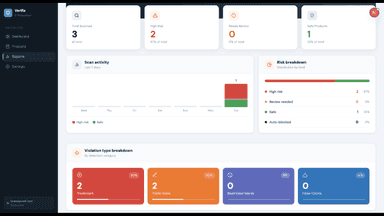
- Verifix lists 2 features Define’s listing doesn’t mention, including Compliance reports, Terms and conditions.
Head to head


Free Plan
- · 250 product scans per month
- · AI-powered trademark detection
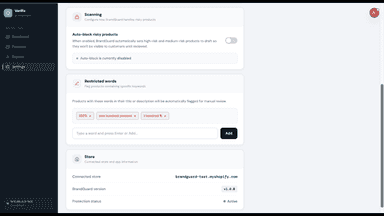
- · Auto-block high risk products
Pro Plan
- · 2,000 product scans
- · Auto-block high risk products
- · Email support
- · Image logo detection
- · Text keyword scanning
Scale Plan
- · 5,000 product scans
- · Auto-block high risk products
- · Email support
- · Image logo detection
- · Priority support
- · Text keyword scanning
Business Plan
- · Auto-block high risk
- · Image logo detection
- · Premium email support
- · Priority support
- · Text keyword scanning
- · Unlimited product scans
Coverage counts what each App Store listing names. Every feature, checked off app by app, is in Shoplist.
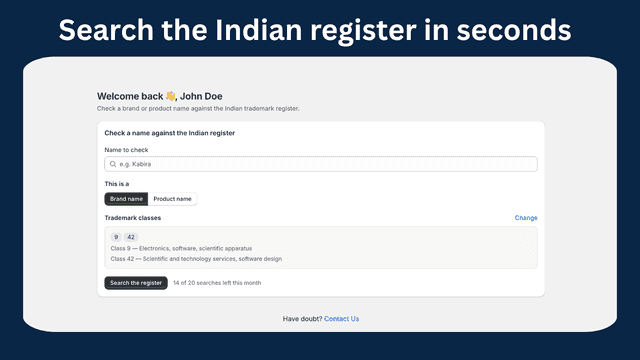
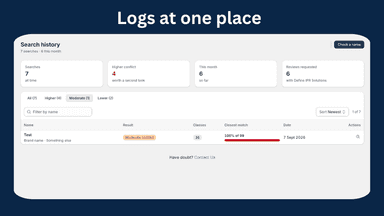
See every featureTrademark Watch checks a brand or product name against India's trademark register before you commit — right from Shopify admin. Enter the name and what you sell; we search live and registered marks in the relevant Nice classes and flag close matches, with a clear low/moderate/high conflict verdict. Built by trademark law firm Define IPR Solutions. This is a register search, not legal advice.
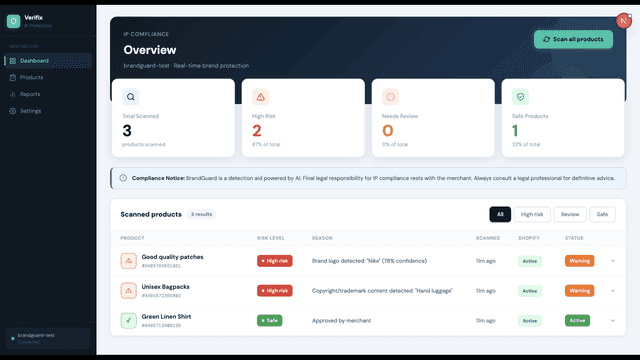
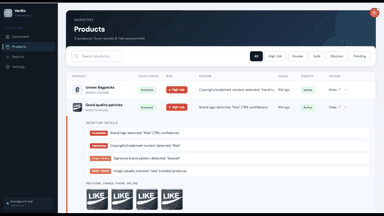
Verifix automatically scans your Shopify products for intellectual property violations using AI-powered image and text analysis. It detects trademark logos, brand keywords, trade dress patterns, and false claims in product titles, descriptions, and images. High-risk products are automatically drafted to prevent customer-facing exposure. Medium-risk products are flagged for merchant review with evidence.
- Search the Indian register in seconds
- Classes filled in automatically
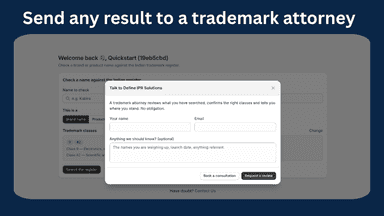
- Send any result to a trademark attorney
- AI-powered image scanning detects brand logos and trademark violations
- Auto-draft high-risk products before customers see them
- Review queue with approve and reject controls for borderline products
- Text scanning catches brand keywords, false claims, and restricted words
All the numbers
Every figure, side by side
A green dot marks the app ahead on a measured figure. Estimates, gaps and apps that leave no storefront trace never take the lead.
Adoption
| Measure |  Define |  Verifix |
|---|---|---|
| Detected stores | Not published | Not published |
| Net store change, 28 days | 0 | 0 |
| Stores added, 28 days | Not enough data | Not enough data |
| Big-brand share | Not enough data | Not enough data |
| Top store categories | Not published | Not published |
| Top store countries | Not published | Not published |
Reviews
| Measure | Define | Verifix |
|---|---|---|
| App Store rating | Not published | Not published |
| App Store reviews | Not published | Not published |
| New reviews, 28 days | Not enough data | Not enough data |
| Reviewers a year or more in | Not enough data | Not enough data |
FAQ
Define and Verifix: common questions
- Is Define or Verifix cheaper?
- Only Verifix lists a free plan. Shoplist compares base prices only between monthly plans in the same currency; usage charges and annual plans vary, so check each plan’s limits.
- What features does each app list that the other doesn’t?
- Verifix lists 2 the others don’t mention, such as Compliance reports, Terms and conditions. A feature missing from a listing may still be supported; this compares what each App Store listing says.
- Where does this comparison’s data come from?
- Shoplist crawls Shopify storefronts to detect which apps each store runs, and reads each app’s Shopify App Store listing for reviews, pricing, features and integrations. Store counts are as of Sep 26, 2026 for Define, Oct 14, 2026 for Verifix; estimated figures are labeled.
How Shoplist compares apps
Store counts come from Shoplist’s crawl of Shopify storefronts, which detects the apps each store runs; they are as of Sep 26, 2026 for Define, Oct 14, 2026 for Verifix. Reviews, ratings, plans, features and integrations come from each app’s Shopify App Store listing. 28-day figures are labeled when estimated, and a figure that is missing or estimated never decides who leads. Read the methodology.