

Deducto: Smarter Promotions vs Veda – Safe Discounts & Stacks
Two Shopify apps, side by side: detected stores, momentum, reviews, plans, listed features and who runs each. Store counts as of Oct 13, 2026.
The short answer
- Only Deducto lists a free plan. Paid plans start at $99/month for Deducto and $9/month for Veda.
- Deducto lists 25 features Veda’s listing doesn’t mention, including APIs and webhooks, Automations, BOGO.
Head to head


Free
- · 1000 API requests included
- · 3 active promotions
- · Single user
Lite
- · 10 active promotions
- · 100,000 API requests included
- · 5 users
Pro
- · 20 users
- · 30 active promotions
- · 500,000 API requests included
Core
Coverage counts what each App Store listing names. Every feature, checked off app by app, is in Shoplist.
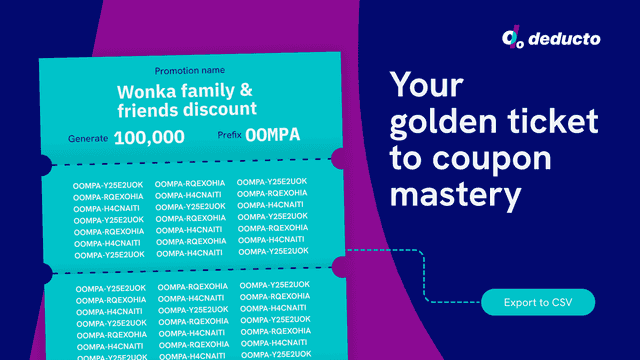
See every featureShopify's discounts only take you so far. Deducto is the promotions engine that picks up where they leave off, giving your team one place to build offers with real logic and targeting, control how they combine, and keep them profitable as you scale. Launch whatever you can imagine in minutes, with no code and without juggling a stack of single-purpose discount apps.
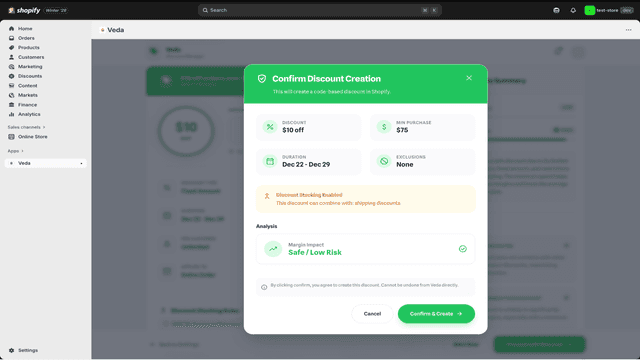
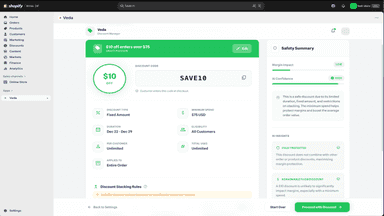
Veda helps merchants create discounts using plain language while protecting profitability. Instead of configuring complex rules manually, you describe your goal and Veda drafts the discount logic for you. Before anything goes live, Veda analyzes stacking rules, exclusions, and potential margin impact so you understand exactly how a discount will behave at checkout.
- Flexible logic and nested conditions for complex promotion rules
- Use custom product attributes, collections, vendors and tags to build promotions
- Priority ordering to ensure promotions apply in the order you want
- Allow customers to enter multiple coupons at once, in the cart and checkout
- Create discounts using natural language instead of complex configuration
- Automatically checks how discounts stack with existing promotions
- Shows potential margin impact before a discount goes live



All the numbers
Every figure, side by side
A green dot marks the app ahead on a measured figure. Estimates, gaps and apps that leave no storefront trace never take the lead.
Adoption
| Measure |  Deducto |  Veda |
|---|---|---|
| Detected stores | Not published | Not published |
| Net store change, 28 days | 0 | 0 |
| Stores added, 28 days | Not enough data | Not enough data |
| Big-brand share | Not enough data | Not enough data |
| Top store categories | Not published | Not published |
| Top store countries | Not published | Not published |
Reviews
| Measure | Deducto | Veda |
|---|---|---|
| App Store rating | 5.0 ★ | Not published |
| App Store reviews | 1 | Not published |
| New reviews, 28 days | Not enough data | Not enough data |
| Reviewers a year or more in | Not enough data | Not enough data |
FAQ
Deducto and Veda: common questions
- Is Deducto or Veda cheaper?
- Only Deducto lists a free plan. Paid plans start at $99/month for Deducto and $9/month for Veda. Shoplist compares base prices only between monthly plans in the same currency; usage charges and annual plans vary, so check each plan’s limits.
- What features does each app list that the other doesn’t?
- Deducto lists 25 the others don’t mention, such as APIs and webhooks, Automations, BOGO, Bulk discounts. A feature missing from a listing may still be supported; this compares what each App Store listing says.
- Where does this comparison’s data come from?
- Shoplist crawls Shopify storefronts to detect which apps each store runs, and reads each app’s Shopify App Store listing for reviews, pricing, features and integrations. Store counts are as of Oct 13, 2026; estimated figures are labeled.
How Shoplist compares apps
Store counts come from Shoplist’s crawl of Shopify storefronts, which detects the apps each store runs; they are as of Oct 13, 2026. Reviews, ratings, plans, features and integrations come from each app’s Shopify App Store listing. 28-day figures are labeled when estimated, and a figure that is missing or estimated never decides who leads. Read the methodology.