

Decorly vs Placely ‑ View In Your Space
Two Shopify apps, side by side: detected stores, momentum, reviews, plans, listed features and who runs each. Store counts as of Oct 14, 2026.
The short answer
- Only Placely lists a free plan. Paid plans start at $9/month for Decorly and $19/month for Placely.
- Placely lists 10 features Decorly’s listing doesn’t mention, including Dynamic scaling, Embedded viewer, File upload.
Head to head


Decorly Growth
- · 3D model generation
- · No watermark
- · Up to 80 SKUs
- · View in Room AR
Decorly Pro
- · 3D model generation
- · No watermark
- · Up to 250 SKUs
- · View in Room AR
Decorly Scale
- · 3D model generation
- · No watermark
- · Up to 600 SKUs
- · View in Room AR
Decorly Enterprise
- · 3D model generation
- · No watermark
- · Unlimited SKUs
- · View in Room AR
FREE
- · Analytics
- · Customization
- · Limits to 10 products only
- · Placement & sizing
- · Theme matching
- · every snapshot has a small Placely logo
Pro Plan
- · Analytics
- · Customization
- · No watermarks or logo in it
- · Placement & sizing
- · Theme matching
- · Unlimited Products
Coverage counts what each App Store listing names. Every feature, checked off app by app, is in Shoplist.
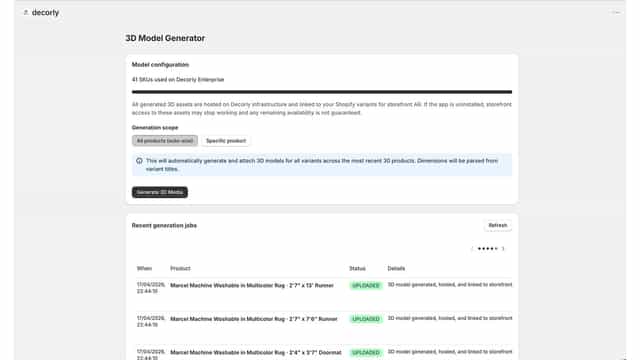
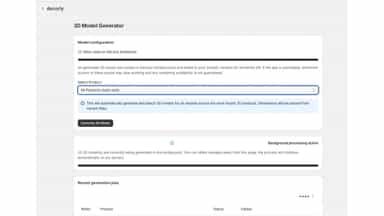
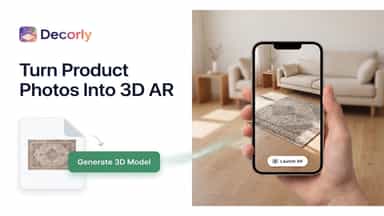
See every featureDecorly helps rug merchants generate 3D models from existing product images and publish them to product variants. Shoppers can open a View in Room experience on product pages, inspect rugs in 3D, and launch AR on supported devices.
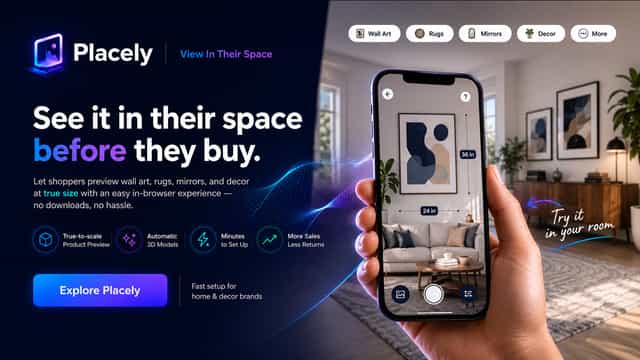
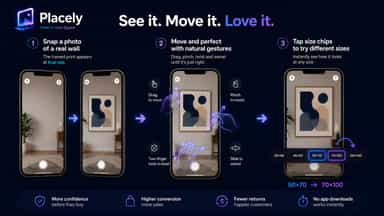
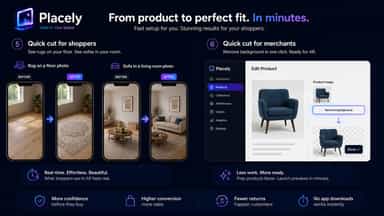
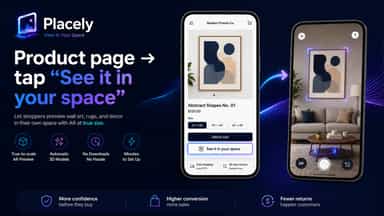
Placely adds a "See it in your space" button to your product pages. Shoppers snap a photo of their wall or floor and place your product in it — moving, resizing, and angling it with simple gestures. A quick calibration shows true real-world size, and automatic light blending makes it look natural. Placely creates product cutouts from your existing photos, so setup takes minutes with no design skills.
- Generate 3D rug models from existing product images.
- Link unique 3D models to each rug variant.
- Add a View in Room 3D viewer with AR launch on product pages.
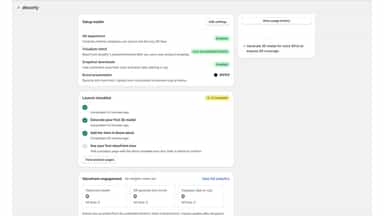
- Configure visualizer labels and brand styling.
- Shoppers place your product in a photo of their space, at true size
- Automatic background removal turns your product photos into clean cutouts
- Works on every phone, computer, and in-app browser
- Realistic light blending and size calibration build buying confidence
All the numbers
Every figure, side by side
A green dot marks the app ahead on a measured figure. Estimates, gaps and apps that leave no storefront trace never take the lead.
Adoption
| Measure |  Decorly |  Placely |
|---|---|---|
| Detected stores | Not published | Not published |
| Net store change, 28 days | 0 | 0 |
| Stores added, 28 days | Not enough data | Not enough data |
| Big-brand share | Not enough data | Not enough data |
| Top store categories | Not published | Not published |
| Top store countries | Not published | Not published |
Reviews
| Measure | Decorly | Placely |
|---|---|---|
| App Store rating | Not published | Not published |
| App Store reviews | Not published | Not published |
| New reviews, 28 days | Not enough data | Not enough data |
| Reviewers a year or more in | Not enough data | Not enough data |
FAQ
Decorly and Placely: common questions
- Is Decorly or Placely cheaper?
- Only Placely lists a free plan. Paid plans start at $9/month for Decorly and $19/month for Placely. Shoplist compares base prices only between monthly plans in the same currency; usage charges and annual plans vary, so check each plan’s limits.
- What features does each app list that the other doesn’t?
- Decorly lists 6 the others don’t mention, such as 3D models, Augmented reality, Color, Custom branding. Placely lists 10 the others don’t mention, such as Dynamic scaling, Embedded viewer, File upload, Images. A feature missing from a listing may still be supported; this compares what each App Store listing says.
- Where does this comparison’s data come from?
- Shoplist crawls Shopify storefronts to detect which apps each store runs, and reads each app’s Shopify App Store listing for reviews, pricing, features and integrations. Store counts are as of Oct 14, 2026; estimated figures are labeled.
How Shoplist compares apps
Store counts come from Shoplist’s crawl of Shopify storefronts, which detects the apps each store runs; they are as of Oct 14, 2026. Reviews, ratings, plans, features and integrations come from each app’s Shopify App Store listing. 28-day figures are labeled when estimated, and a figure that is missing or estimated never decides who leads. Read the methodology.