

Databay: ROAS Profit Analytics vs Datma ‑ Commerce Analytics
Two Shopify apps, side by side: detected stores, momentum, reviews, plans, listed features and who runs each. Store counts as of Nov 12, 2026 for Databay, Nov 11, 2026 for Datma.
The short answer
- On the Shopify App Store: Databay 5.0 from 1 reviews and Datma 4.8 from 17 reviews.
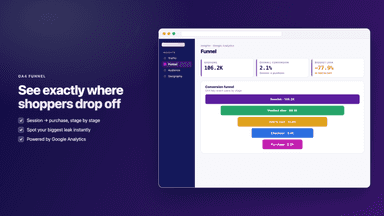
- Databay lists 6 features Datma’s listing doesn’t mention, including AI insights, Checkout analytics, Funnel analysis.
Head to head


- United States
- United Kingdom
- Canada
Momentum
New reviews each month
Review pace is the clearest public read on how fast an app is winning new merchants.
Free
- · 5 AI assistant questions/day
- · 500 orders/month, free forever
- · All dashboards, Reports, SQL Explore
- · Data refreshes once a day
- · First 14 days: no order limit
- · Last 12 months of order history
Intro
- · 14 data sources
- · 300 orders included
- · All features included
- · Hundreds of data points
- · Multi-store
- · Product visibility and performance
Start
- · 1,000 orders included
- · 14 data sources
- · All features included
- · Hundreds of data points
- · Multi-store
- · Product visibility and performance
Build
- · 14 data sources
- · 5,000 orders included
- · All features included
- · Hundreds of data points
- · Multi-store
- · Product visibility and performance
Grow
- · 10,000 orders included
- · 14 data sources
- · All features included
- · Hundreds of data points
- · Multi-store
- · Product visibility and performance
Coverage counts what each App Store listing names. Every feature, checked off app by app, is in Shoplist.
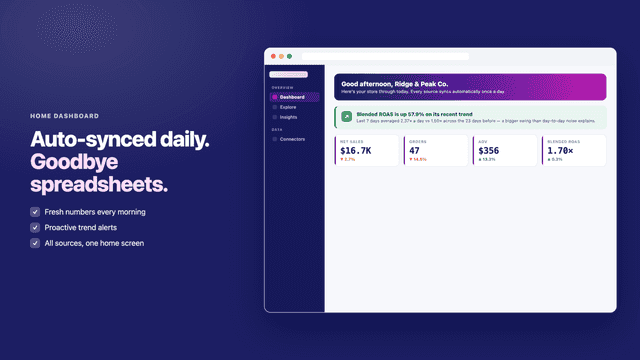
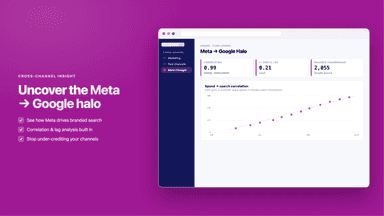
See every featureProfit analytics for Shopify stores that run Facebook and Google ads. Both platforms count the same order as their own sale, so your ads look better than they are. Databay checks ad spend against real Shopify orders: true ROAS, blended ROAS and net profit after product costs, payment fees and ad spend. Compare Meta and Google side by side and spot campaigns that lose money.
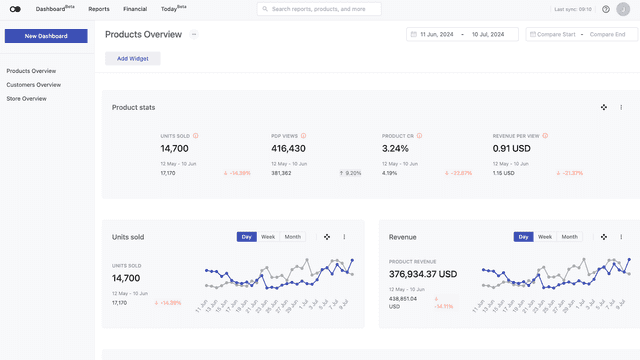
Datma Analytics gives Shopify brands a complete commercial view of storefront performance. Combine Shopify pixel tracking with backend store data to analyze shopper behavior, products, collections, customers, sessions, attributed revenue, and conversion trends. Built for growing DTC brands that want Shopify-native analytics without the complexity of traditional BI tools.
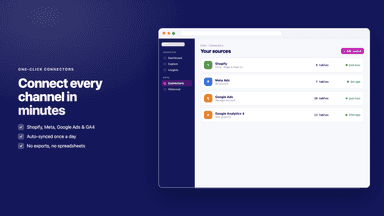
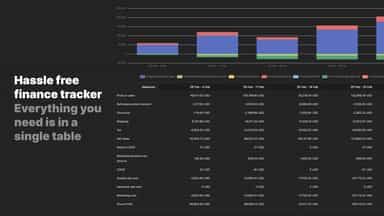
- Unified dashboard combining Shopify, GA4, Google Ads and Meta Ads data
- Track sales, sessions and ad spend together in one view
- Automatic data syncing to keep your dashboards up to date
- Compare marketing performance across all your channels
- Session-based metrics: PDP views, collection attributed stats, and more.
- Multi-store aggregation, unlimited reports, dashboard, schedule emails.
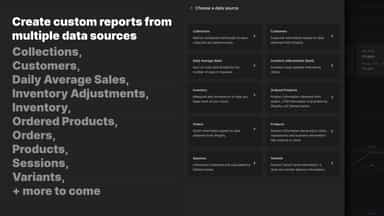
- Access hundreds of metrics from various data sources.
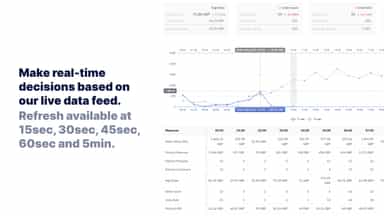
- Real-time data feed for immediate insights.


All the numbers
Every figure, side by side
A green dot marks the app ahead on a measured figure. Estimates, gaps and apps that leave no storefront trace never take the lead.
Adoption
| Measure |  Databay |  Datma |
|---|---|---|
| Detected stores | Not published | 193 |
| Net store change, 28 days | 0 | 0 |
| Stores added, 28 days | Not enough data | Not enough data |
| Big-brand share | Not enough data | Not enough data |
| Top store categories | Not published | Apparel & Accessories, Health & Beauty, Home & Garden |
| Top store countries | Not published | United States, United Kingdom, Canada |
Reviews
| Measure | Databay | Datma |
|---|---|---|
| App Store rating | 5.0 ★(ahead) | 4.8 ★ |
| App Store reviews | 1 | 17(ahead) |
| New reviews, 28 days | Not enough data | 0 |
| Reviewers a year or more in | Not enough data | Not enough data |
FAQ
Databay and Datma: common questions
- Which has better reviews, Databay or Datma?
- On the Shopify App Store: Databay 5.0 from 1 reviews and Datma 4.8 from 17 reviews.
- What features does each app list that the other doesn’t?
- Databay lists 6 the others don’t mention, such as AI insights, Checkout analytics, Funnel analysis, GDPR compliance. Datma lists 6 the others don’t mention, such as Event tracking, Forecasting, Multi-store reports, Pixel tracking. A feature missing from a listing may still be supported; this compares what each App Store listing says.
- Where does this comparison’s data come from?
- Shoplist crawls Shopify storefronts to detect which apps each store runs, and reads each app’s Shopify App Store listing for reviews, pricing, features and integrations. Store counts are as of Nov 12, 2026 for Databay, Nov 11, 2026 for Datma; estimated figures are labeled.
How Shoplist compares apps
Store counts come from Shoplist’s crawl of Shopify storefronts, which detects the apps each store runs; they are as of Nov 12, 2026 for Databay, Nov 11, 2026 for Datma. Reviews, ratings, plans, features and integrations come from each app’s Shopify App Store listing. 28-day figures are labeled when estimated, and a figure that is missing or estimated never decides who leads. Read the methodology.