

Daf One vs Profitz
Two Shopify apps, side by side: detected stores, momentum, reviews, plans, listed features and who runs each. Store counts as of Oct 13, 2026 for Daf One, Sep 2, 2026 for Profitz.
The short answer
- Profitz lists 6 features Daf One’s listing doesn’t mention, including COGS tracking, Custom reports, Expense tracking.
Head to head


Starter
- · 100 WhatsApp order confirmations/month
- · 30-day free trial (once per store)
- · AI assistant — 60 questions/day
- · Inventory value, dead stock & reorder
- · Real net profit after returns (RTO)
Growth
- · 30-day free trial (once per store)
- · 600 WhatsApp order confirmations/month
- · AI assistant — unlimited
- · Inventory value, dead stock & reorder
- · Real net profit after returns (RTO)
Coverage counts what each App Store listing names. Every feature, checked off app by app, is in Shoplist.
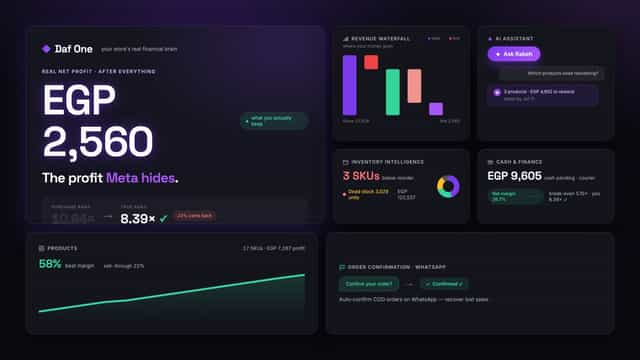
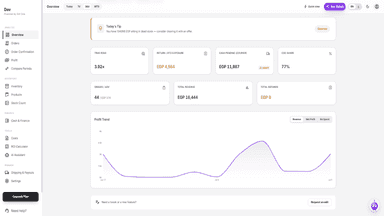
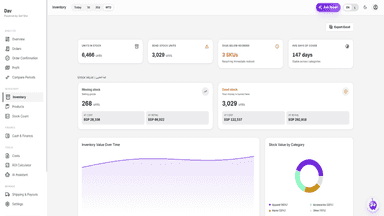
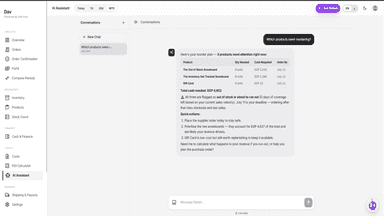
See every featureDaf One shows Shopify merchants their real net profit, not just revenue. It calculates profit after returns (RTO), ad spend, product purchases, shipping and COD fees, so you see what you keep on each order. It also tracks inventory value and dead stock, and tells you when to reorder a product before it runs out.
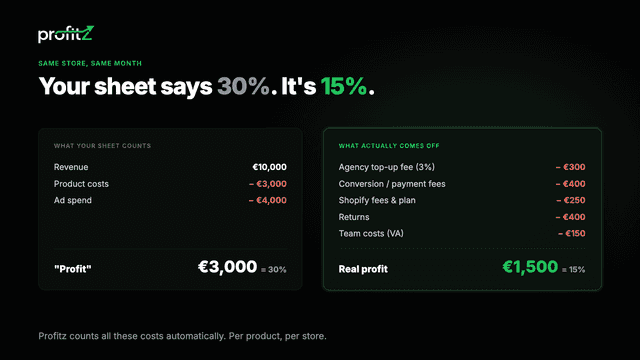
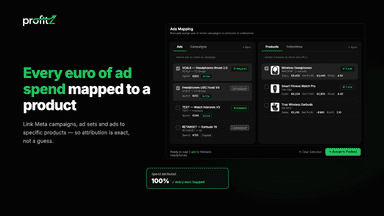
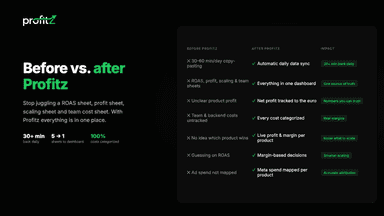
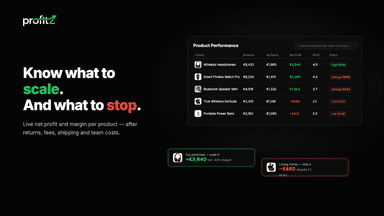
Profitz helps Shopify merchants understand real store profitability by combining Shopify order data, Meta ad spend, and business expenses in one dashboard. The app syncs store and ad data, connects campaigns to products, and allocates advertising costs to calculate profit at both the product and store level.
- Real net profit after returns (RTO), ad spend, shipping and COD fees
- Track inventory value and spot dead stock in your store
- Know when to reorder each product before it runs out
- Compare each courier's delivery and return rates
- Product-level profit by linking ads directly to specific products
- Unified profit view combining revenue, ad spend, and expenses
- Store-level profit overview showing true bottom-line performance
- Expense tracking for team, software, and other store costs
All the numbers
Every figure, side by side
A green dot marks the app ahead on a measured figure. Estimates, gaps and apps that leave no storefront trace never take the lead.
Adoption
| Measure |  Daf One |  Profitz |
|---|---|---|
| Detected stores | Not published | Not published |
| Net store change, 28 days | 0 | 0 |
| Stores added, 28 days | Not enough data | Not enough data |
| Big-brand share | Not enough data | Not enough data |
| Top store categories | Not published | Not published |
| Top store countries | Not published | Not published |
Reviews
| Measure | Daf One | Profitz |
|---|---|---|
| App Store rating | Not published | Not published |
| App Store reviews | Not published | Not published |
| New reviews, 28 days | Not enough data | Not enough data |
| Reviewers a year or more in | Not enough data | Not enough data |
FAQ
Daf One and Profitz: common questions
- What features does each app list that the other doesn’t?
- Daf One lists 2 the others don’t mention, such as Cash flow, Order details. Profitz lists 6 the others don’t mention, such as COGS tracking, Custom reports, Expense tracking, Inventory and product. A feature missing from a listing may still be supported; this compares what each App Store listing says.
- Where does this comparison’s data come from?
- Shoplist crawls Shopify storefronts to detect which apps each store runs, and reads each app’s Shopify App Store listing for reviews, pricing, features and integrations. Store counts are as of Oct 13, 2026 for Daf One, Sep 2, 2026 for Profitz; estimated figures are labeled.
How Shoplist compares apps
Store counts come from Shoplist’s crawl of Shopify storefronts, which detects the apps each store runs; they are as of Oct 13, 2026 for Daf One, Sep 2, 2026 for Profitz. Reviews, ratings, plans, features and integrations come from each app’s Shopify App Store listing. 28-day figures are labeled when estimated, and a figure that is missing or estimated never decides who leads. Read the methodology.