

CreditPush Analytics vs Syft Analytics
Two Shopify apps, side by side: detected stores, momentum, reviews, plans, listed features and who runs each. Store counts as of Oct 13, 2026.
The short answer
- Syft Analytics lists 18 features CreditPush Analytics’s listing doesn’t mention, including Accounts receivable, Bank reconciliation, Benchmarking.
Head to head


Momentum
New reviews each month
Review pace is the clearest public read on how fast an app is winning new merchants.
Free
Free
Coverage counts what each App Store listing names. Every feature, checked off app by app, is in Shoplist.
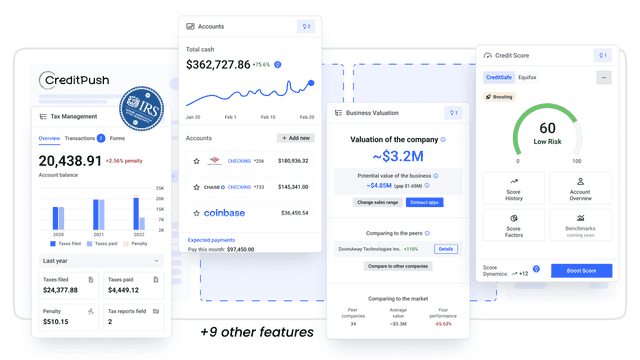
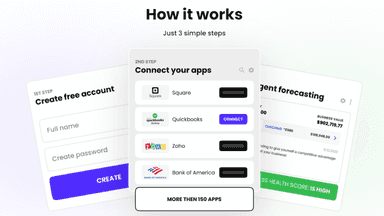
See every featureWe help small businesses grow and make better decisions by monitoring financial, sales, credit score and marketing data continuously and from one location.
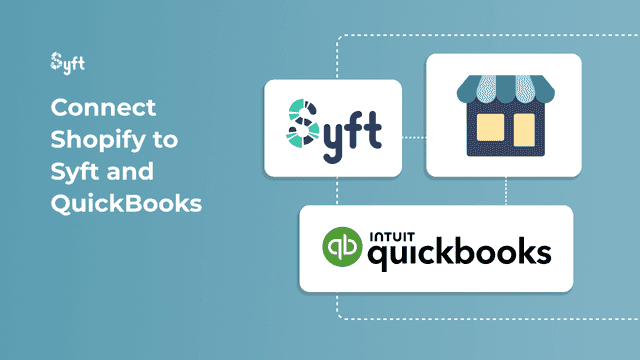
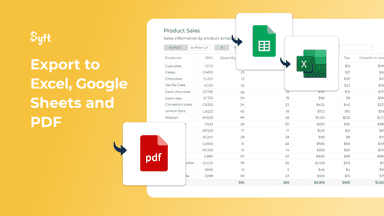
Create and export dashboards & reports to Excel, Google Sheets, PDF and interactive live views. Combine Shopify data with QuickBooks data and information from other sources for unparalleled store clarity. Syft is one tool to analyze, benchmark, and report on financial data.
- Business dashboard with analytics and Insights
- Business Valuation and finance management (like Mint, but for business)
- Business Credit Score report and boosting (Experian boost, but for business)
- No credit card required! We also offer incentives to the most loyal business ;)
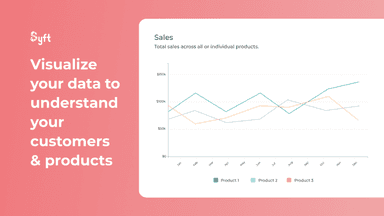
- Build beautiful dashboards, reports and visualizations for your store
- Combine store performance with QuickBooks data for a complete picture
- Get an individual or combined view of all your locations and stores
- Export to Excel, Word, Google Sheets and PDF

All the numbers
Every figure, side by side
A green dot marks the app ahead on a measured figure. Estimates, gaps and apps that leave no storefront trace never take the lead.
Adoption
| Measure |  CreditPush Analytics |  Syft Analytics |
|---|---|---|
| Detected stores | Not published | Not published |
| Net store change, 28 days | 0 | 0 |
| Stores added, 28 days | Not enough data | Not enough data |
| Big-brand share | Not enough data | Not enough data |
| Top store categories | Not published | Not published |
| Top store countries | Not published | Not published |
Reviews
| Measure | CreditPush Analytics | Syft Analytics |
|---|---|---|
| App Store rating | Not published | 5.0 ★ |
| App Store reviews | Not published | 3 |
| New reviews, 28 days | Not enough data | 0 |
| Reviewers a year or more in | Not enough data | Not enough data |
Pricing
| Measure | CreditPush Analytics | Syft Analytics |
|---|---|---|
| Free plan | Not listed | Not listed |
| Lowest paid monthly plan | No monthly plan listed | No monthly plan listed |
| Longest free trial | Not listed | Not listed |
| Plans listed | 1 | 1 |
Listing
| Measure | CreditPush Analytics | Syft Analytics |
|---|---|---|
| Shopify category rank | #442(ahead) | #644 |
| Shopify App Charts | Not on this week’s charts | Not on this week’s charts |
| Built for Shopify | No | No |
| Launched | Nov 9, 2020 | Dec 14, 2022 |
| Languages | 1 | 1 |
| Developer | CreditPush | Syft Analytics |
FAQ
CreditPush Analytics and Syft Analytics: common questions
- What features does each app list that the other doesn’t?
- CreditPush Analytics lists 10 the others don’t mention, such as Activity tracking, Checkout analytics, Custom reports, Event tracking. Syft Analytics lists 18 the others don’t mention, such as Accounts receivable, Bank reconciliation, Benchmarking, Custom dashboards. A feature missing from a listing may still be supported; this compares what each App Store listing says.
- Where does this comparison’s data come from?
- Shoplist crawls Shopify storefronts to detect which apps each store runs, and reads each app’s Shopify App Store listing for reviews, pricing, features and integrations. Store counts are as of Oct 13, 2026; estimated figures are labeled.
How Shoplist compares apps
Store counts come from Shoplist’s crawl of Shopify storefronts, which detects the apps each store runs; they are as of Oct 13, 2026. Reviews, ratings, plans, features and integrations come from each app’s Shopify App Store listing. 28-day figures are labeled when estimated, and a figure that is missing or estimated never decides who leads. Read the methodology.