

CreditGuard: B2B Credit Limits vs WRIT Allocation Guard
Two Shopify apps, side by side: detected stores, momentum, reviews, plans, listed features and who runs each. Store counts as of Oct 13, 2026.
The short answer
- Only WRIT Allocation Guard lists a free plan. Paid plans start at $49/month for CreditGuard and $19/month for WRIT Allocation Guard.
Head to head


Starter
- · Auto checkout block at limit
- · Credit limit per company location
- · Real-time balance tracking
- · Shopify Plus exclusive
Premium
- · AR Aging reports
- · Auto-suspend overdue locations
- · Everything in starter plan
- · Shopify flow integration
Free
Pro
Coverage counts what each App Store listing names. Every feature, checked off app by app, is in Shoplist.
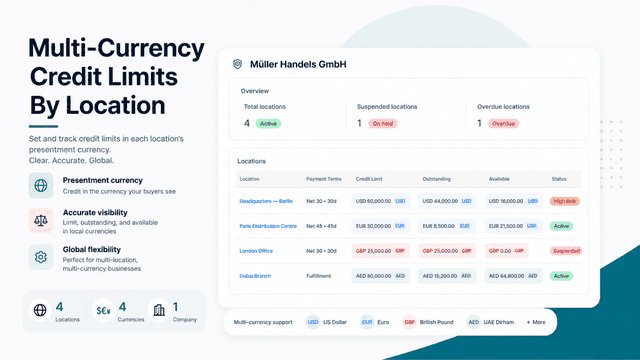
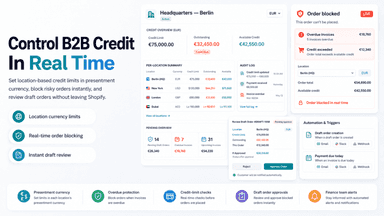
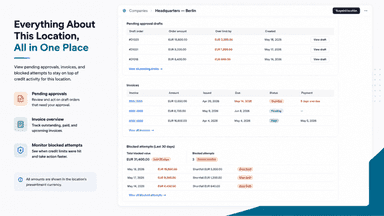
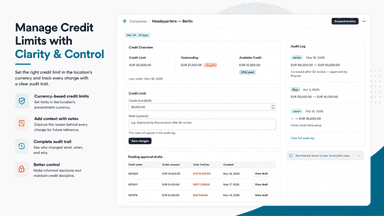
See every featureControl B2B credit by company and location with configurable limits, live balance tracking, and real-time checkout validation. Finance teams can prevent over-limit orders, review credit activity, and automate follow-up workflows as orders and payments update in Shopify.
If you allocate scarce inventory across dealers, Shopify can't hold each account's share across orders — native quantity rules cap only one order. Allocation Guard sets a per-company unit cap on a product for a rolling period (monthly, quarterly, annual, or one-time). Every B2B order counts against it, and a checkout function blocks units over the remaining balance.
- Set credit limits per B2B company location
- Real-time validation at checkout blocks B2B orders that exceed the credit limit
- Automate credit alerts and actions with Shopify Flow
- Automatically suspend locations when a location has overdue invoices
- Cumulative per-company unit caps, counted across every order — not just per cart
- Unbypassable enforcement — blocked server-side at checkout, not browser code
- Retail and un-capped products pass untouched; refunds restore units


All the numbers
Every figure, side by side
A green dot marks the app ahead on a measured figure. Estimates, gaps and apps that leave no storefront trace never take the lead.
Adoption
| Measure |  CreditGuard |  WRIT Allocation Guard |
|---|---|---|
| Detected stores | Not published | Not published |
| Net store change, 28 days | 0 | 0 |
| Stores added, 28 days | Not enough data | Not enough data |
| Big-brand share | Not enough data | Not enough data |
| Top store categories | Not published | Not published |
| Top store countries | Not published | Not published |
Reviews
| Measure | CreditGuard | WRIT Allocation Guard |
|---|---|---|
| App Store rating | Not published | Not published |
| App Store reviews | Not published | Not published |
| New reviews, 28 days | Not enough data | Not enough data |
| Reviewers a year or more in | Not enough data | Not enough data |
Pricing
| Measure | CreditGuard | WRIT Allocation Guard |
|---|---|---|
| Free plan | Not listed | Yes |
| Lowest paid monthly plan | $49/month | $19/month(ahead) |
| Longest free trial | 30 days | 14 days |
| Plans listed | 2 | 2 |
Listing
| Measure | CreditGuard | WRIT Allocation Guard |
|---|---|---|
| Shopify category rank | #234(ahead) | #328 |
| Shopify App Charts | Not on this week’s charts | Not on this week’s charts |
| Built for Shopify | No | No |
| Launched | Jul 1, 2026 | Sep 3, 2026 |
| Languages | 1 | 1 |
| Developer | Ceyone | WorQFlow Inc |
FAQ
CreditGuard and WRIT Allocation Guard: common questions
- Is CreditGuard or WRIT Allocation Guard cheaper?
- Only WRIT Allocation Guard lists a free plan. Paid plans start at $49/month for CreditGuard and $19/month for WRIT Allocation Guard. Shoplist compares base prices only between monthly plans in the same currency; usage charges and annual plans vary, so check each plan’s limits.
- Where does this comparison’s data come from?
- Shoplist crawls Shopify storefronts to detect which apps each store runs, and reads each app’s Shopify App Store listing for reviews, pricing, features and integrations. Store counts are as of Oct 13, 2026; estimated figures are labeled.
How Shoplist compares apps
Store counts come from Shoplist’s crawl of Shopify storefronts, which detects the apps each store runs; they are as of Oct 13, 2026. Reviews, ratings, plans, features and integrations come from each app’s Shopify App Store listing. 28-day figures are labeled when estimated, and a figure that is missing or estimated never decides who leads. Read the methodology.