
COD Guard: Risk Scanner vs CODFlow: COD Form & Courier
Two Shopify apps, side by side: detected stores, momentum, reviews, plans, listed features and who runs each. Store counts as of Oct 13, 2026 for COD Guard, Sep 3, 2026 for CODFlow.
The short answer
- CODFlow lists 4 features COD Guard’s listing doesn’t mention, including Fake accounts, Personalized messages, Widget design.
Head to head


Starter
- · Basic validation signals
- · Email alerts for flagged orders
- · Real-time risk scoring
Growth
- · Everything in Starter
- · Priority support
- · Unlimited orders
Coverage counts what each App Store listing names. Every feature, checked off app by app, is in Shoplist.
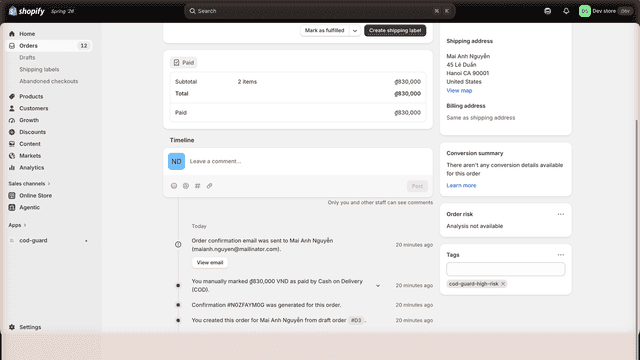
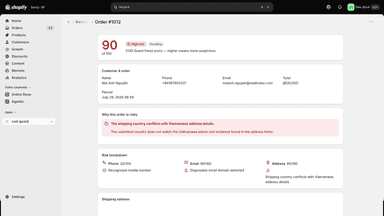
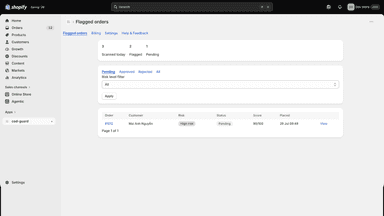
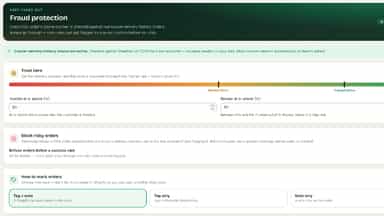
See every featureCOD Guard checks phone, email, and delivery-address details on cash-on-delivery orders as Shopify receives them. It assigns an explainable risk level and tags orders that may need review before shipping. Record delivery outcomes and see recent return history matched by phone within your store only. Successful deliveries can rehabilitate warnings, and history expires after 180 days.
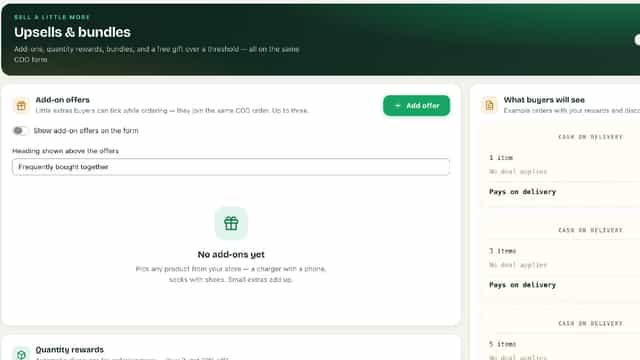
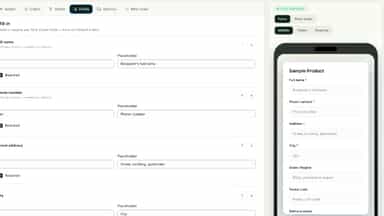
CODFlow adds a branded cash on delivery (COD) order form to product pages. Before an order is created, it checks the phone number against courier delivery and cancellation history from Steadfast, Pathao, Paperfly, and Carrybee, then tags it low, medium, or high risk to catch fake orders early. Set delivery charges by area or weight. Add quantity discounts, bundles, and gift-with-purchase offers on COD orders.
- Automatic risk score on every cash-on-delivery order, before you fulfill it.
- Vietnamese phone, email, and address checks in one low, medium, or high verdict.
- Risky orders tagged in Shopify Admin so fulfilment can pause and review them.
- A risk breakdown per order showing exactly which detail looked wrong.
- Google Sheets order export and Meta and TikTok pixel tracking
- Branded cash on delivery form builder with custom fields and styling
- Courier fraud checks using real delivery and cancellation history
- Delivery fee rules by area or weight, set by the merchant


All the numbers
Every figure, side by side
A green dot marks the app ahead on a measured figure. Estimates, gaps and apps that leave no storefront trace never take the lead.
Adoption
| Measure |  COD Guard |  CODFlow |
|---|---|---|
| Detected stores | Not published | Not published |
| Net store change, 28 days | 0 | 0 |
| Stores added, 28 days | Not enough data | Not enough data |
| Big-brand share | Not enough data | Not enough data |
| Top store categories | Not published | Not published |
| Top store countries | Not published | Not published |
Reviews
| Measure | COD Guard | CODFlow |
|---|---|---|
| App Store rating | Not published | Not published |
| App Store reviews | Not published | Not published |
| New reviews, 28 days | Not enough data | Not enough data |
| Reviewers a year or more in | Not enough data | Not enough data |
FAQ
COD Guard and CODFlow: common questions
- What features does each app list that the other doesn’t?
- COD Guard lists 1 the others don’t mention, such as Email notifications. CODFlow lists 4 the others don’t mention, such as Fake accounts, Personalized messages, Widget design, Widget placement. A feature missing from a listing may still be supported; this compares what each App Store listing says.
- Where does this comparison’s data come from?
- Shoplist crawls Shopify storefronts to detect which apps each store runs, and reads each app’s Shopify App Store listing for reviews, pricing, features and integrations. Store counts are as of Oct 13, 2026 for COD Guard, Sep 3, 2026 for CODFlow; estimated figures are labeled.
How Shoplist compares apps
Store counts come from Shoplist’s crawl of Shopify storefronts, which detects the apps each store runs; they are as of Oct 13, 2026 for COD Guard, Sep 3, 2026 for CODFlow. Reviews, ratings, plans, features and integrations come from each app’s Shopify App Store listing. 28-day figures are labeled when estimated, and a figure that is missing or estimated never decides who leads. Read the methodology.