

Clevly ‑ AI Business Copilot vs Skail ‑ AI Ecosystem Analyst
Two Shopify apps, side by side: detected stores, momentum, reviews, plans, listed features and who runs each. Store counts as of Oct 13, 2026.
The short answer
- Paid plans start at $120/month for Clevly and $99/month for Skail.
- Clevly lists 6 features Skail’s listing doesn’t mention, including Custom dashboards, Forecasting, Historical analysis.
Head to head


Pro
- · AI scan every 6 hours
- · Daily AI alerts & recommendations
- · Full analytics history from day one
- · Real P&L from your accounting data
- · Scale, Review or Stop per product
- · Unified ROAS across all ad platforms
Pro
- · 24-month sales, traffic, conversion data
- · Ask Skail: live analyst chat, on demand
- · Branded PDF audit & strategy reports
- · Every number verified, never estimated
- · Klaviyo, GA4, Google, Meta & QuickBooks
- · Monthly Owner's Brief + strategic plan
Coverage counts what each App Store listing names. Every feature, checked off app by app, is in Shoplist.
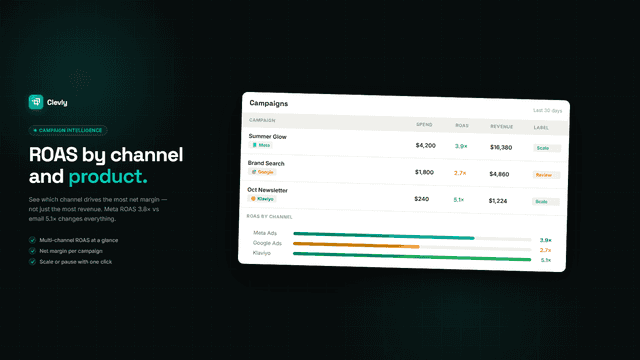
See every featureMost merchants fly blind. Revenue looks fine until it doesn't, and by then you've burned budget on the wrong campaigns, missed a stockout, or lost margin without knowing why. Clevly fixes that. It pulls data from your Shopify store, ad platforms, and accounting tools, then sends you a daily AI briefing with prioritized alerts and recommended actions.
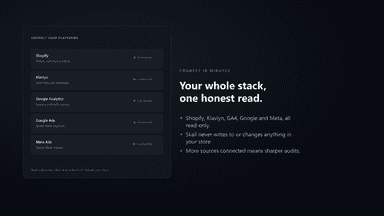
Your store leaks profit where dashboards do not look: ad spend past breakeven, dead flows, bot-inflated numbers. Skail is a whole analytics team in one. It reads Shopify, Klaviyo, GA4, Google, Meta and QuickBooks read-only and reconciles them into one honest picture. Connect your books and it computes your true breakeven ROAS from your own margin.
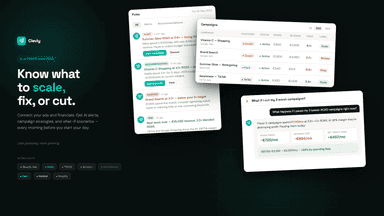
- AI Profit Alerts. Daily AI alerts on underperforming campaigns and margin drops.
- Cross-Platform Ad Analytics. Unified ROAS, spend and revenue.
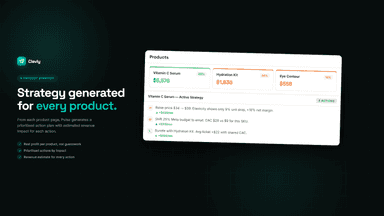
- AI Campaign & Product Strategies. AI action plans per campaign and product.
- What-If Scenarios. Model budget or price changes before you make them.
- Read-only connection: Skail never writes to or changes anything in your store
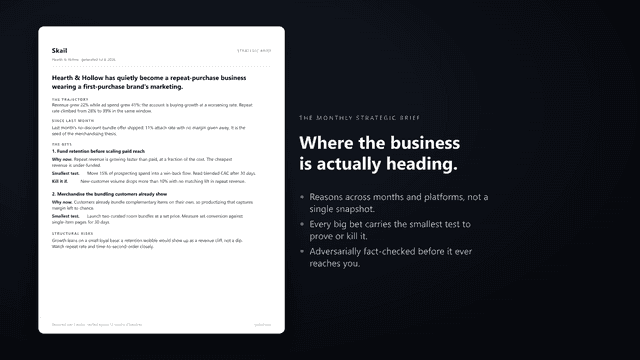
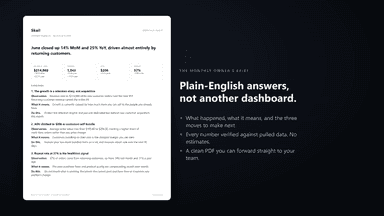
- Monthly audit: what happened, what it means, and the moves to make next
- Weekly pulse flags anomalies between audits so nothing slips by
- Every number verified against a live data pull, never estimated

All the numbers
Every figure, side by side
A green dot marks the app ahead on a measured figure. Estimates, gaps and apps that leave no storefront trace never take the lead.
Adoption
| Measure |  Clevly |  Skail |
|---|---|---|
| Detected stores | Not published | Not published |
| Net store change, 28 days | 0 | 0 |
| Stores added, 28 days | Not enough data | Not enough data |
| Big-brand share | Not enough data | Not enough data |
| Top store categories | Not published | Not published |
| Top store countries | Not published | Not published |
Reviews
| Measure | Clevly | Skail |
|---|---|---|
| App Store rating | Not published | 5.0 ★ |
| App Store reviews | Not published | 2 |
| New reviews, 28 days | Not enough data | Not enough data |
| Reviewers a year or more in | Not enough data | Not enough data |
FAQ
Clevly and Skail: common questions
- Is Clevly or Skail cheaper?
- Paid plans start at $120/month for Clevly and $99/month for Skail. Shoplist compares base prices only between monthly plans in the same currency; usage charges and annual plans vary, so check each plan’s limits.
- What features does each app list that the other doesn’t?
- Clevly lists 6 the others don’t mention, such as Custom dashboards, Forecasting, Historical analysis, Marketing attribution. A feature missing from a listing may still be supported; this compares what each App Store listing says.
- Where does this comparison’s data come from?
- Shoplist crawls Shopify storefronts to detect which apps each store runs, and reads each app’s Shopify App Store listing for reviews, pricing, features and integrations. Store counts are as of Oct 13, 2026; estimated figures are labeled.
How Shoplist compares apps
Store counts come from Shoplist’s crawl of Shopify storefronts, which detects the apps each store runs; they are as of Oct 13, 2026. Reviews, ratings, plans, features and integrations come from each app’s Shopify App Store listing. 28-day figures are labeled when estimated, and a figure that is missing or estimated never decides who leads. Read the methodology.