

Causely vs ReasonWhy
Two Shopify apps, side by side: detected stores, momentum, reviews, plans, listed features and who runs each. Store counts as of May 30, 2026 for Causely, Oct 14, 2026 for ReasonWhy.
The short answer
- Causely lists 6 features ReasonWhy’s listing doesn’t mention, including Abandoned cart, Checkout analytics, Custom reports.
Head to head


Starter
- · AI return-reason clustering
- · Ranked “fix these first” opportunities
- · Up to 100 returns analysed / month
Growth
- · Before / after impact tracking
- · Everything in Starter
- · Up to 500 returns analysed / month
Pro
- · Everything in Growth
- · Priority support
- · Product review integrations
- · Unlimited returns analysed
Coverage counts what each App Store listing names. Every feature, checked off app by app, is in Shoplist.
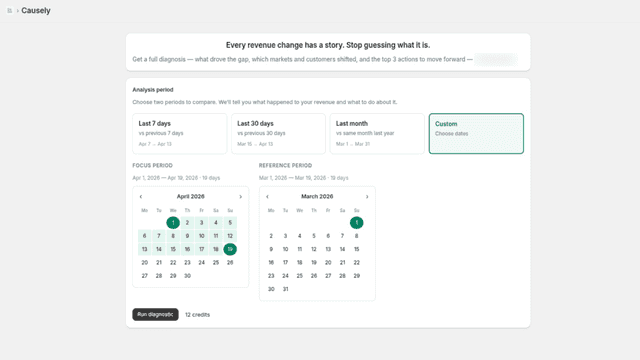
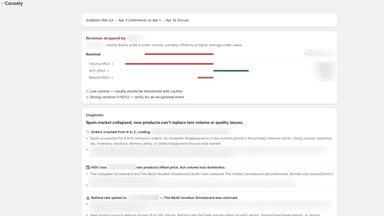
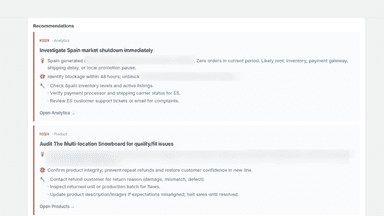
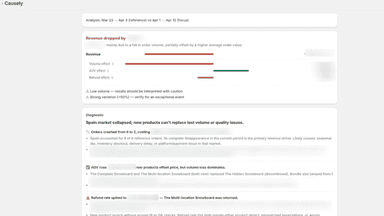
See every featureWhen your sales drop or spike, Causely tells you why — automatically. Connect your store and run an analysis in seconds. Causely breaks down your revenue change by channel, geography, customer segment, and product mix — so you know exactly where to focus to optimize your sales.
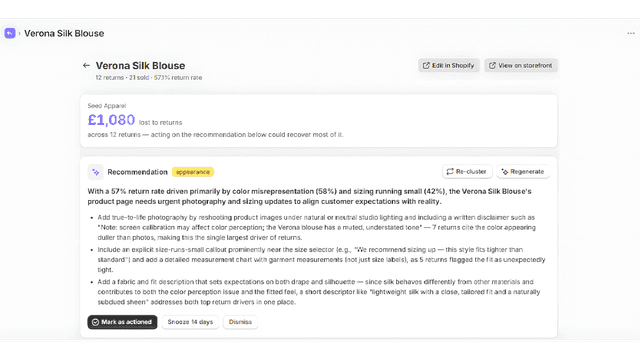
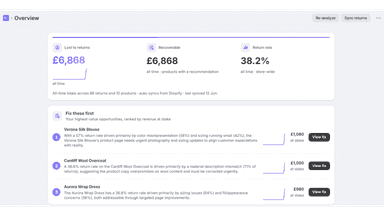
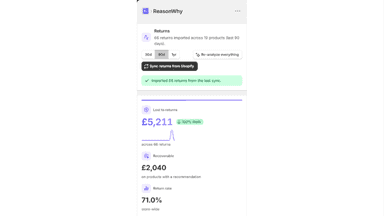
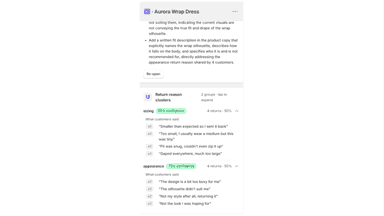
ReasonWhy reads your existing returns data and uses AI to group return reasons into clear categories, so you can stop guessing why customers send items back. It ranks your products by return impact and explains the real reason behind each one, whether sizing, fit, quality, or misleading product pages, then gives you evidence-backed fixes.
- Automated root cause analysis when revenue drops or spikes
- Deep diagnostic across channels, regions, segments and products
- Impact-focused recommendations tailored to your store's data and challenges
- One-click analysis — no setup, no dashboards to configure
- AI-grouped return reasons that turn raw returns data into clear, fixable themes
- Products ranked by return impact so you fix the costliest issues first
- Evidence-backed page fixes for sizing, fit, imagery, and copy
- Reads from your existing returns and review tools, no workflow changes
All the numbers
Every figure, side by side
A green dot marks the app ahead on a measured figure. Estimates, gaps and apps that leave no storefront trace never take the lead.
Adoption
| Measure |  Causely |  ReasonWhy |
|---|---|---|
| Detected stores | Not published | Not published |
| Net store change, 28 days | 0 | 0 |
| Stores added, 28 days | Not enough data | Not enough data |
| Big-brand share | Not enough data | Not enough data |
| Top store categories | Not published | Not published |
| Top store countries | Not published | Not published |
Reviews
| Measure | Causely | ReasonWhy |
|---|---|---|
| App Store rating | Not published | Not published |
| App Store reviews | Not published | Not published |
| New reviews, 28 days | Not enough data | Not enough data |
| Reviewers a year or more in | Not enough data | Not enough data |
FAQ
Causely and ReasonWhy: common questions
- What features does each app list that the other doesn’t?
- Causely lists 6 the others don’t mention, such as Abandoned cart, Checkout analytics, Custom reports, Funnel analysis. ReasonWhy lists 3 the others don’t mention, such as Activity tracking, GDPR compliance, Profit insights. A feature missing from a listing may still be supported; this compares what each App Store listing says.
- Where does this comparison’s data come from?
- Shoplist crawls Shopify storefronts to detect which apps each store runs, and reads each app’s Shopify App Store listing for reviews, pricing, features and integrations. Store counts are as of May 30, 2026 for Causely, Oct 14, 2026 for ReasonWhy; estimated figures are labeled.
How Shoplist compares apps
Store counts come from Shoplist’s crawl of Shopify storefronts, which detects the apps each store runs; they are as of May 30, 2026 for Causely, Oct 14, 2026 for ReasonWhy. Reviews, ratings, plans, features and integrations come from each app’s Shopify App Store listing. 28-day figures are labeled when estimated, and a figure that is missing or estimated never decides who leads. Read the methodology.