

CartHold vs HoldCart — Cart Reservation
Two Shopify apps, side by side: detected stores, momentum, reviews, plans, listed features and who runs each. Store counts as of Oct 13, 2026 for CartHold, Oct 29, 2026 for HoldCart.
The short answer
- Only HoldCart lists a free plan. Paid plans start at $19/month for CartHold and $19.99/month for HoldCart.
- CartHold lists 5 features HoldCart’s listing doesn’t mention, including Cart alerts, Cart-based, Max quantity.
Head to head


Momentum
New reviews each month
Review pace is the clearest public read on how fast an app is winning new merchants.
Early Access Plan
Free
- · 15-minute hold timer
- · One-click disable & safe uninstall
- · Protect 3 products
- · Real inventory holds, fail-safe
- · Up to 100 reservations/month
Pro
- · Analytics dashboard
- · Checkout grace period
- · Custom hold timers, 2 to 60 min
- · Priority support
- · Unlimited reservations
Coverage counts what each App Store listing names. Every feature, checked off app by app, is in Shoplist.
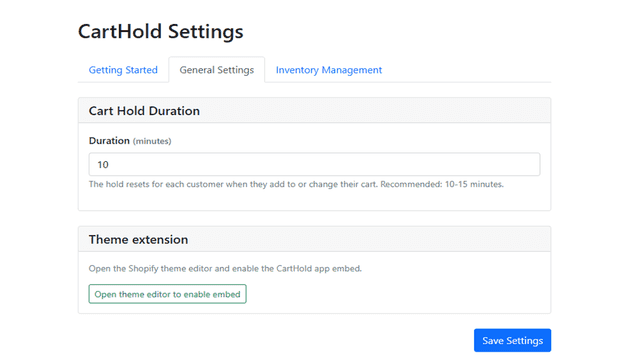
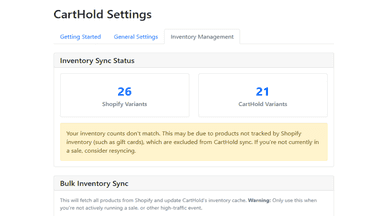
See every featureCartHold places real-time inventory holds on items while shoppers are active in the cart and checkout. This helps merchants reserve limited stock, reduce checkout disappointment, and create a more predictable buying experience. Holds are time-based, set by the shop owner in admin, can be applied to specific products or variants, and are adjusted or released automatically as carts are updated, cleared, or expire.
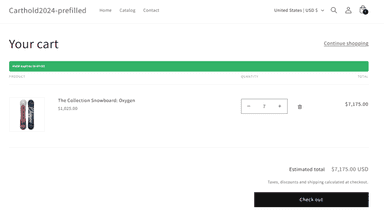
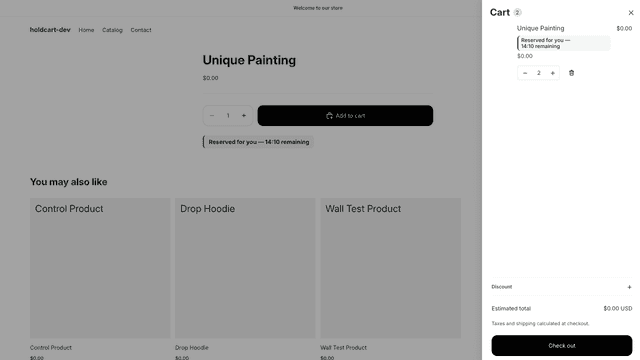
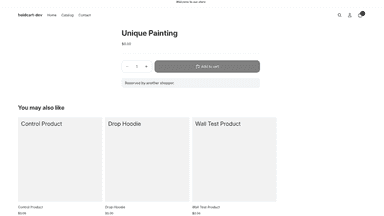
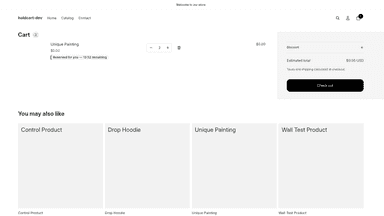
Shoppers add a one-of-a-kind item to their cart, race to checkout, and find it already sold. HoldCart places a genuine inventory hold the moment an item is added, so the unit is actually reserved while they check out, then auto-releases back to stock when the timer ends. It is not a fake countdown or manufactured urgency — it is a real hold with a real timer.
- Real-time, Cart-based quantity limits tied to available stock
- Automatic hold expiration to return stock when carts are abandoned
- Applies holds per product and variant to protect limited stock
- Real inventory holds — items are genuinely reserved at add-to-cart, not faked
- Fail-safe by design — if the app fails, your checkout keeps working
- Honest countdown — shoppers see a real timer backed by a real hold
- Automatic release — holds expire and return to stock on their own

All the numbers
Every figure, side by side
A green dot marks the app ahead on a measured figure. Estimates, gaps and apps that leave no storefront trace never take the lead.
Adoption
| Measure |  CartHold |  HoldCart |
|---|---|---|
| Detected stores | Not published | Not published |
| Net store change, 28 days | 0 | 0 |
| Stores added, 28 days | Not enough data | Not enough data |
| Big-brand share | Not enough data | Not enough data |
| Top store categories | Not published | Not published |
| Top store countries | Not published | Not published |
Reviews
| Measure | CartHold | HoldCart |
|---|---|---|
| App Store rating | Not published | 5.0 ★ |
| App Store reviews | Not published | 3 |
| New reviews, 28 days | Not enough data | Not enough data |
| Reviewers a year or more in | Not enough data | Not enough data |
FAQ
CartHold and HoldCart: common questions
- Is CartHold or HoldCart cheaper?
- Only HoldCart lists a free plan. Paid plans start at $19/month for CartHold and $19.99/month for HoldCart. Shoplist compares base prices only between monthly plans in the same currency; usage charges and annual plans vary, so check each plan’s limits.
- What features does each app list that the other doesn’t?
- CartHold lists 5 the others don’t mention, such as Cart alerts, Cart-based, Max quantity, Product-specific. A feature missing from a listing may still be supported; this compares what each App Store listing says.
- Where does this comparison’s data come from?
- Shoplist crawls Shopify storefronts to detect which apps each store runs, and reads each app’s Shopify App Store listing for reviews, pricing, features and integrations. Store counts are as of Oct 13, 2026 for CartHold, Oct 29, 2026 for HoldCart; estimated figures are labeled.
How Shoplist compares apps
Store counts come from Shoplist’s crawl of Shopify storefronts, which detects the apps each store runs; they are as of Oct 13, 2026 for CartHold, Oct 29, 2026 for HoldCart. Reviews, ratings, plans, features and integrations come from each app’s Shopify App Store listing. 28-day figures are labeled when estimated, and a figure that is missing or estimated never decides who leads. Read the methodology.