

Cardberry vs Catalog Sync
Two Shopify apps, side by side: detected stores, momentum, reviews, plans, listed features and who runs each. Store counts as of Sep 29, 2026 for Cardberry, Oct 13, 2026 for Catalog Sync.
The short answer
- Only Catalog Sync lists a free plan.
- Catalog Sync lists 4 features Cardberry’s listing doesn’t mention, including Automatic, Multi-store, Real-time.
Head to head


Reseller
- · Real-time inventory sync
- · Unlimited product imports
Supplier Basic
- · Real-time inventory sync
- · Up to 250 shared products
- · Up to 5 reseller connections
Supplier Pro
- · Priority support
- · Real-time inventory sync
- · Up to 2,500 shared products
- · Up to 25 reseller connections
Coverage counts what each App Store listing names. Every feature, checked off app by app, is in Shoplist.
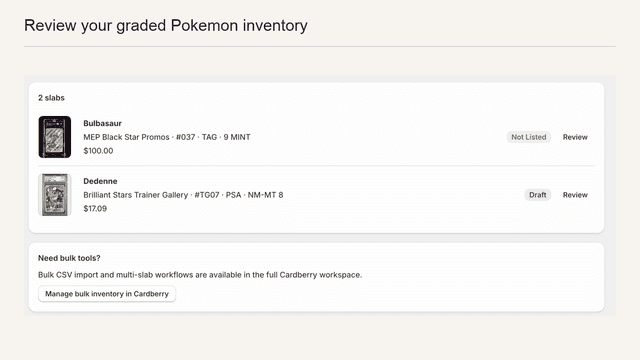
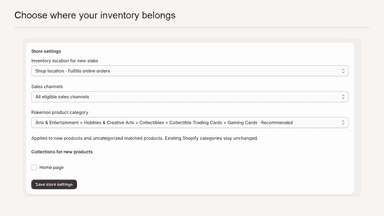
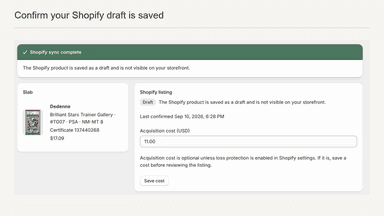
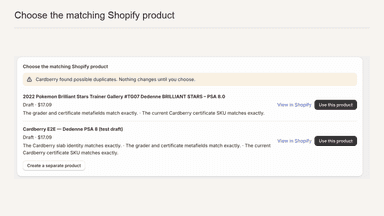
See every featureAdd PSA and TAG graded Pokemon cards by certificate number, or use existing Cardberry inventory. Cardberry automatically looks for matching cards and brings in available images and market estimates. Review product changes before syncing, choose store settings, and protect merchant managed content.
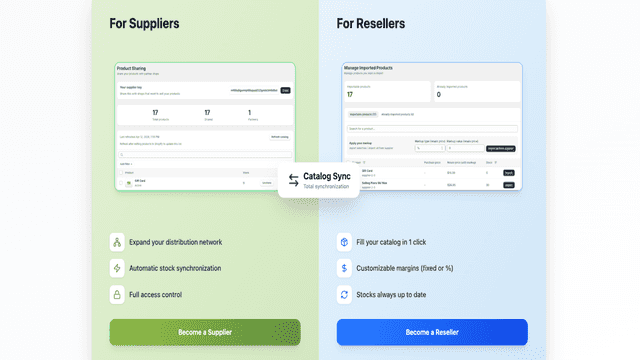
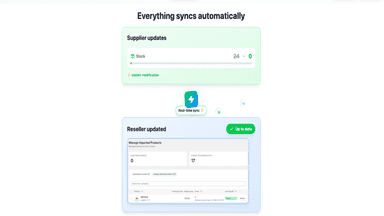
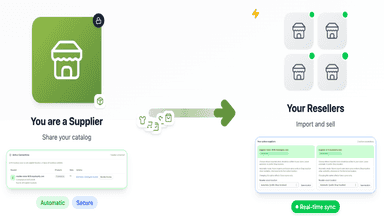
CatalogSync eliminates the manual work of sharing products between Shopify stores. Suppliers can share their catalog with resellers in a one-way sync, while inventory stays synchronized automatically from supplier to reseller. Resellers set custom markup rules during import and manage products from multiple suppliers in one dashboard.
- Import PSA and TAG graded Pokemon cards by certificate number.
- Review card details, images, available market estimates and listing prices.
- Review duplicates and approve product changes before syncing to Shopify.
- Choose publications, collections, categories and an inventory location.
- Share products from your catalog with reseller stores securely
- Automatic inventory synchronization across all connected stores
- Set custom markup rules when importing supplier products
- Manage connections and approve or revoke reseller access
All the numbers
Every figure, side by side
A green dot marks the app ahead on a measured figure. Estimates, gaps and apps that leave no storefront trace never take the lead.
Adoption
| Measure |  Cardberry |  Catalog Sync |
|---|---|---|
| Detected stores | Not published | Not published |
| Net store change, 28 days | 0 | 0 |
| Stores added, 28 days | Not enough data | Not enough data |
| Big-brand share | Not enough data | Not enough data |
| Top store categories | Not published | Not published |
| Top store countries | Not published | Not published |
Reviews
| Measure | Cardberry | Catalog Sync |
|---|---|---|
| App Store rating | Not published | Not published |
| App Store reviews | Not published | Not published |
| New reviews, 28 days | Not enough data | Not enough data |
| Reviewers a year or more in | Not enough data | Not enough data |
Pricing
| Measure | Cardberry | Catalog Sync |
|---|---|---|
| Free plan | Not listed | Yes |
| Lowest paid monthly plan | No monthly plan listed | $99/month |
| Longest free trial | Not listed | 14 days |
| Plans listed | Not published | 3 |
Listing
| Measure | Cardberry | Catalog Sync |
|---|---|---|
| Shopify category rank | #633 | #559(ahead) |
| Shopify App Charts | Not on this week’s charts | Not on this week’s charts |
| Built for Shopify | No | No |
| Launched | Sep 28, 2026 | May 4, 2026 |
| Languages | 1 | 2 |
| Developer | Cardberry.ai | FashionStockPro |
FAQ
Cardberry and Catalog Sync: common questions
- Is Cardberry or Catalog Sync cheaper?
- Only Catalog Sync lists a free plan. Shoplist compares base prices only between monthly plans in the same currency; usage charges and annual plans vary, so check each plan’s limits.
- What features does each app list that the other doesn’t?
- Cardberry lists 1 the others don’t mention, such as Prices. Catalog Sync lists 4 the others don’t mention, such as Automatic, Multi-store, Real-time, Variants. A feature missing from a listing may still be supported; this compares what each App Store listing says.
- Where does this comparison’s data come from?
- Shoplist crawls Shopify storefronts to detect which apps each store runs, and reads each app’s Shopify App Store listing for reviews, pricing, features and integrations. Store counts are as of Sep 29, 2026 for Cardberry, Oct 13, 2026 for Catalog Sync; estimated figures are labeled.
How Shoplist compares apps
Store counts come from Shoplist’s crawl of Shopify storefronts, which detects the apps each store runs; they are as of Sep 29, 2026 for Cardberry, Oct 13, 2026 for Catalog Sync. Reviews, ratings, plans, features and integrations come from each app’s Shopify App Store listing. 28-day figures are labeled when estimated, and a figure that is missing or estimated never decides who leads. Read the methodology.