

Bulkify: Smart Bulk Editor vs Segments
Two Shopify apps, side by side: detected stores, momentum, reviews, plans, listed features and who runs each. Store counts as of Oct 13, 2026.
The short answer
- Both list a free plan. Paid plans start at $15/month for Bulkify and $149/month for Segments.
- Bulkify lists 7 features Segments’s listing doesn’t mention, including Inventory, Prices, Rollback.
Head to head


Free
- · Price, Compare At Price, Cost
- · Product Category, Brand, Condition
- · Product Type
- · Reorder Options, Sort Variants
- · SEO Title
- · Status
Pro
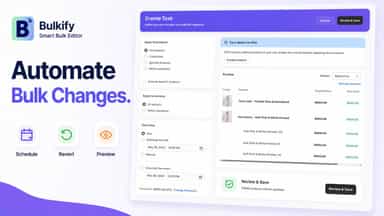
- · Auto-Revert Changes
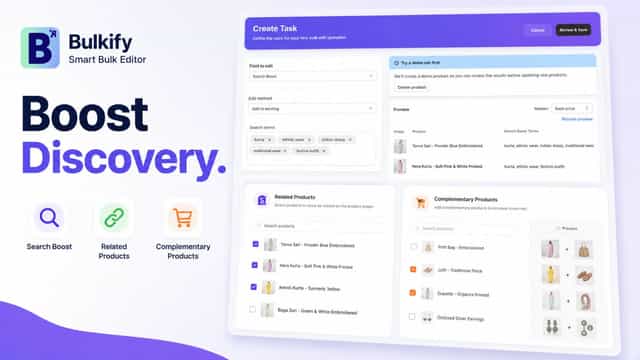
- · Complementary Products
- · Google Shopping Optimization
- · Inventory Sync
- · Metafield Editing
- · Related Products
Starter
- · AI-powered enrichment
- · Try enrichment on a small catalog
- · Up to 25 SKUs
Launch
- · SEO data and keywords
- · Shopify metafields writeback
- · Taxonomy and attributes enrichment
- · Up to 1,000 SKUs
- · Up to 10 active agents
Growth
- · Email Support
- · Enrichment and compliance data
- · Everything in Launch
- · Priority enrichment processing
- · Tax codes and categories
Pro
- · AI-generated product content
- · Advanced analytics
- · Everything in Growth
- · Full titles and descriptions rewrite
- · Priority support
Coverage counts what each App Store listing names. Every feature, checked off app by app, is in Shoplist.
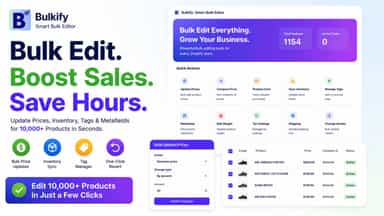
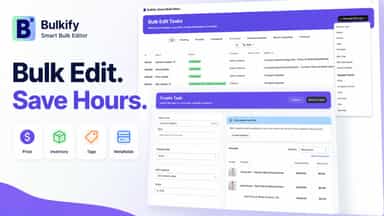
See every featureThis app helps merchants manage product data more efficiently by allowing bulk edits across multiple products at once. Instead of updating each product individually, merchants can quickly make changes to product information, inventory, tags, product status, and other fields from a single interface.
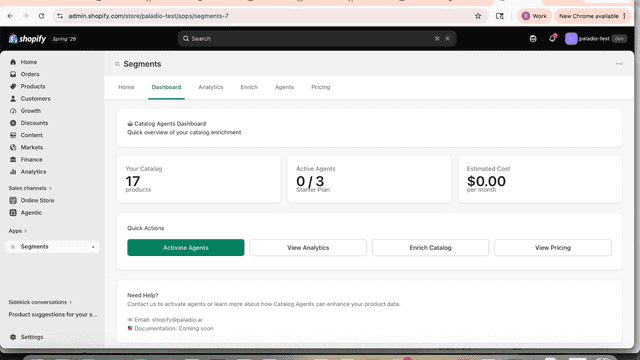
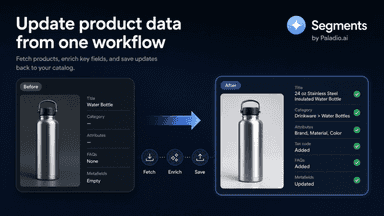
Segments helps Shopify merchants improve and maintain product information in their store. The app pulls product data from Shopify, enriches fields such as titles, descriptions, categories, attributes, tax codes, and FAQs, then saves the updated information back to Shopify.
- Bulk edit product prices and compare-at prices across multiple products at once.
- Update inventory levels, product status, and shipping settings in a single actio
- Manage product tags, types, and vendors to keep your catalog organized.
- Edit product, weight, tax settings, and other details without opening each
- Update product listings with rewritten titles, descriptions, and FAQs
- Add categories, attributes, keywords, tax codes, and product FAQs
- Enrich your entire product catalog in one automated workflow


All the numbers
Every figure, side by side
A green dot marks the app ahead on a measured figure. Estimates, gaps and apps that leave no storefront trace never take the lead.
Adoption
| Measure |  Bulkify |  Segments |
|---|---|---|
| Detected stores | Not published | Not published |
| Net store change, 28 days | 0 | 0 |
| Stores added, 28 days | Not enough data | Not enough data |
| Big-brand share | Not enough data | Not enough data |
| Top store categories | Not published | Not published |
| Top store countries | Not published | Not published |
Reviews
| Measure | Bulkify | Segments |
|---|---|---|
| App Store rating | Not published | Not published |
| App Store reviews | Not published | Not published |
| New reviews, 28 days | Not enough data | Not enough data |
| Reviewers a year or more in | Not enough data | Not enough data |
FAQ
Bulkify and Segments: common questions
- Is Bulkify or Segments cheaper?
- Both list a free plan. Paid plans start at $15/month for Bulkify and $149/month for Segments. Shoplist compares base prices only between monthly plans in the same currency; usage charges and annual plans vary, so check each plan’s limits.
- What features does each app list that the other doesn’t?
- Bulkify lists 7 the others don’t mention, such as Inventory, Prices, Rollback, Scheduled tasks. Segments lists 2 the others don’t mention, such as Descriptions, SEO updates. A feature missing from a listing may still be supported; this compares what each App Store listing says.
- Where does this comparison’s data come from?
- Shoplist crawls Shopify storefronts to detect which apps each store runs, and reads each app’s Shopify App Store listing for reviews, pricing, features and integrations. Store counts are as of Oct 13, 2026; estimated figures are labeled.
How Shoplist compares apps
Store counts come from Shoplist’s crawl of Shopify storefronts, which detects the apps each store runs; they are as of Oct 13, 2026. Reviews, ratings, plans, features and integrations come from each app’s Shopify App Store listing. 28-day figures are labeled when estimated, and a figure that is missing or estimated never decides who leads. Read the methodology.