

Breakwise: B2B Volume Pricing vs TierTable: Volume Discounts
Two Shopify apps, side by side: detected stores, momentum, reviews, plans, listed features and who runs each. Store counts as of Oct 13, 2026.
The short answer
- Both list a free plan. Paid plans start at $19/month for Breakwise and $9.99/month for TierTable.
- TierTable lists 2 features Breakwise’s listing doesn’t mention, including Percentage discounts, Volume discounts.
Head to head


Free
- · Live rule builder with preview
- · Renders natively at B2B checkout
- · Unlimited volume break rules
Growth
- · Auto re-sync on price change
- · Demand cadence analytics
- · Everything in Free, plus:
- · Per-break revenue attribution
Pro
- · AI plain-English analytics summary
- · AI volume break recommendations
- · Everything in Growth, plus:
- · Multi-currency attribution
Scale
- · ERP price-list integration
- · Everything in Pro, plus:
- · Higher-quality AI model
Free
- · Cards layout
- · One store-wide offer
- · Powered-by notice
Pro
- · 14-day free trial
- · All three layouts
- · Fixed amount per unit
- · No branding
- · Percentage discounts
Coverage counts what each App Store listing names. Every feature, checked off app by app, is in Shoplist.
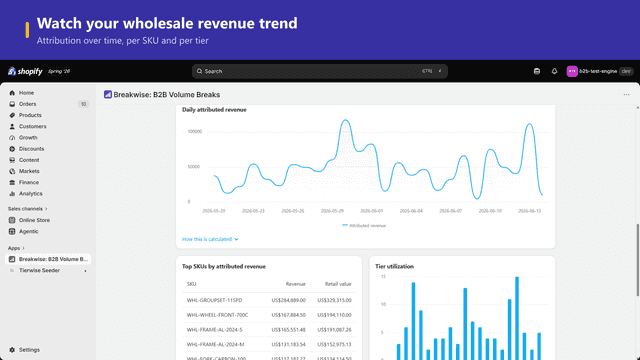
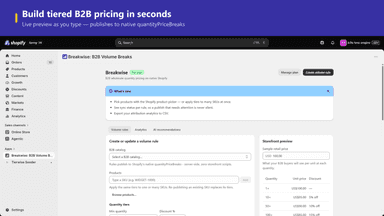
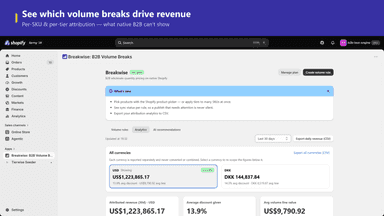
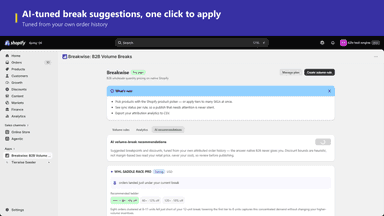
See every featureNative Shopify B2B sets volume price breaks. Breakwise tells you whether they earn revenue and keeps them right when prices change. See attributed revenue per SKU and per tier, daily. When a product price changes, affected breaks re-derive automatically. On Pro and Scale, that same order history powers AI-ranked, one-click break recommendations.
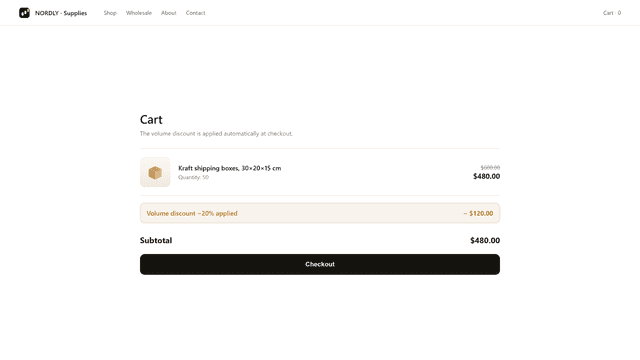
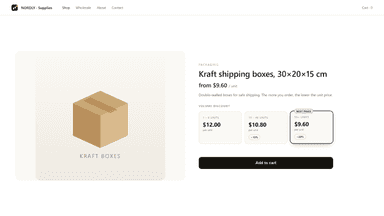
TierTable shows quantity discount tables directly on your product pages, so shoppers can see how much they save by ordering more. The matching discount is applied automatically in the cart and at checkout, not just displayed. It works for B2B catalogs and regular retail, supports percentage or fixed-amount discounts, and is set up by adding one block in the theme editor without writing code.
- Attribution analytics — prove which volume breaks actually drive revenue
- Auto re-sync — refreshes volume breaks when a product's retail value changes
- Renders natively at B2B checkout — no theme edits, no storefront scripts
- Real discounts in the cart and at checkout, not just shown on the page
- Percentage off, or a fixed amount off per unit
- Three layouts: cards, table, or savings list
- Active tier highlights automatically as the quantity changes


All the numbers
Every figure, side by side
A green dot marks the app ahead on a measured figure. Estimates, gaps and apps that leave no storefront trace never take the lead.
Adoption
| Measure |  Breakwise |  TierTable |
|---|---|---|
| Detected stores | Not published | Not published |
| Net store change, 28 days | 0 | 0 |
| Stores added, 28 days | Not enough data | Not enough data |
| Big-brand share | Not enough data | Not enough data |
| Top store categories | Not published | Not published |
| Top store countries | Not published | Not published |
Reviews
| Measure | Breakwise | TierTable |
|---|---|---|
| App Store rating | Not published | Not published |
| App Store reviews | Not published | Not published |
| New reviews, 28 days | Not enough data | Not enough data |
| Reviewers a year or more in | Not enough data | Not enough data |
FAQ
Breakwise and TierTable: common questions
- Is Breakwise or TierTable cheaper?
- Both list a free plan. Paid plans start at $19/month for Breakwise and $9.99/month for TierTable. Shoplist compares base prices only between monthly plans in the same currency; usage charges and annual plans vary, so check each plan’s limits.
- What features does each app list that the other doesn’t?
- TierTable lists 2 the others don’t mention, such as Percentage discounts, Volume discounts. A feature missing from a listing may still be supported; this compares what each App Store listing says.
- Where does this comparison’s data come from?
- Shoplist crawls Shopify storefronts to detect which apps each store runs, and reads each app’s Shopify App Store listing for reviews, pricing, features and integrations. Store counts are as of Oct 13, 2026; estimated figures are labeled.
How Shoplist compares apps
Store counts come from Shoplist’s crawl of Shopify storefronts, which detects the apps each store runs; they are as of Oct 13, 2026. Reviews, ratings, plans, features and integrations come from each app’s Shopify App Store listing. 28-day figures are labeled when estimated, and a figure that is missing or estimated never decides who leads. Read the methodology.