
Boost Pre‑paid Orders vs UpPay : Partial Fees & COD
Two Shopify apps, side by side: detected stores, momentum, reviews, plans, listed features and who runs each. Store counts as of Oct 14, 2026.
The short answer
- Only UpPay lists a free plan. Paid plans start at $5/month for Boost Pre‑paid Orders and $12/month for UpPay.
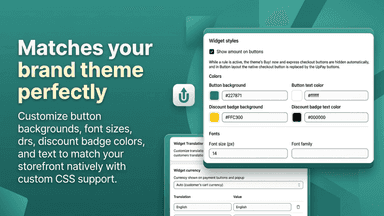
- Boost Pre‑paid Orders lists 1 features UpPay’s listing doesn’t mention, including Widget color.
Head to head


Monthly Plan
Forever Free $0
- · Advanced shipping rules
- · Automated invoice reminders
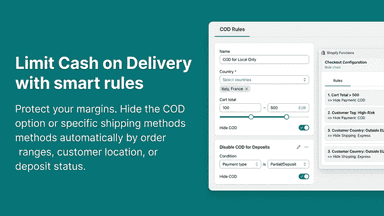
- · Cash on Delivery controls & rules
- · Partial payments — deposit now, balance
- · Up to 10 orders/month
Growth Plan
- · Advanced shipping rules
- · Automated invoice reminders
- · Forever 0% commission
- · Partial payments controls
- · Up to 500 orders/month
Premium Plan
- · Everything in Growth
- · Forever 0% commission
- · Full widget customization
- · Up to 800 orders/month
Enterprise Plan
- · Everything in Premium
- · Forever 0% commission
- · Priority support
- · Unlimited orders/month
Coverage counts what each App Store listing names. Every feature, checked off app by app, is in Shoplist.
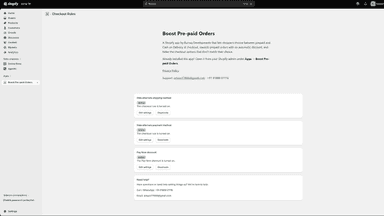
See every featureCash-on-Delivery drives return-to-origin losses and working-capital strain for D2C brands, especially in COD-heavy markets. This app gives shoppers a clear choice between prepaid and Cash on Delivery on the cart page, rewards prepaid checkout with an automatic discount, and cleans up checkout so shoppers only see the options that match what they picked.
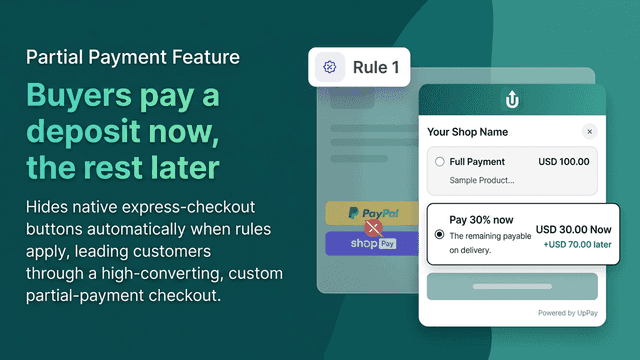
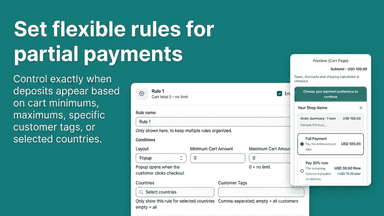
UpPay lets customers place a deposit online and settle the balance on delivery, making Cash on Delivery and large orders easier to close. Show partial payments and COD only when your rules allow: cart total, country, product, or customer tag. Add a COD fee customers accept before checkout, hide shipping methods by payment type, and reward full prepayment with a discount.
- Prepaid vs. Cash on Delivery choice on the cart page and cart drawer
- Automatic discount applied when a shopper chooses the prepaid option
- Hides checkout options that don't match the shopper's payment choice
- Let customers place a deposit now and settle the balance on delivery
- Cash on Delivery rules by cart total, location, product, and customer tag.
- Optional Cash on Delivery fee that customers see and accept before checkout.



All the numbers
Every figure, side by side
A green dot marks the app ahead on a measured figure. Estimates, gaps and apps that leave no storefront trace never take the lead.
Adoption
| Measure |  Boost Pre‑paid Orders |  UpPay |
|---|---|---|
| Detected stores | Not published | Not published |
| Net store change, 28 days | 0 | 0 |
| Stores added, 28 days | Not enough data | Not enough data |
| Big-brand share | Not enough data | Not enough data |
| Top store categories | Not published | Not published |
| Top store countries | Not published | Not published |
Reviews
| Measure | Boost Pre‑paid Orders | UpPay |
|---|---|---|
| App Store rating | Not published | 5.0 ★ |
| App Store reviews | Not published | 1 |
| New reviews, 28 days | Not enough data | Not enough data |
| Reviewers a year or more in | Not enough data | Not enough data |
Pricing
| Measure | Boost Pre‑paid Orders | UpPay |
|---|---|---|
| Free plan | Not listed | Yes |
| Lowest paid monthly plan | $5/month(ahead) | $12/month |
| Longest free trial | 3 days | Not listed |
| Plans listed | 1 | 4 |
Listing
| Measure | Boost Pre‑paid Orders | UpPay |
|---|---|---|
| Shopify category rank | #104 | #72(ahead) |
| Shopify App Charts | Not on this week’s charts | Not on this week’s charts |
| Built for Shopify | No | No |
| Launched | Aug 31, 2026 | Aug 11, 2026 |
| Languages | 1 | 1 |
| Developer | Burraq Developments | Veltrion Technologies |
FAQ
Boost Pre‑paid Orders and UpPay: common questions
- Is Boost Pre‑paid Orders or UpPay cheaper?
- Only UpPay lists a free plan. Paid plans start at $5/month for Boost Pre‑paid Orders and $12/month for UpPay. Shoplist compares base prices only between monthly plans in the same currency; usage charges and annual plans vary, so check each plan’s limits.
- What features does each app list that the other doesn’t?
- Boost Pre‑paid Orders lists 1 the others don’t mention, such as Widget color. UpPay lists 1 the others don’t mention, such as Widget design. A feature missing from a listing may still be supported; this compares what each App Store listing says.
- Where does this comparison’s data come from?
- Shoplist crawls Shopify storefronts to detect which apps each store runs, and reads each app’s Shopify App Store listing for reviews, pricing, features and integrations. Store counts are as of Oct 14, 2026; estimated figures are labeled.
How Shoplist compares apps
Store counts come from Shoplist’s crawl of Shopify storefronts, which detects the apps each store runs; they are as of Oct 14, 2026. Reviews, ratings, plans, features and integrations come from each app’s Shopify App Store listing. 28-day figures are labeled when estimated, and a figure that is missing or estimated never decides who leads. Read the methodology.