

Pulse SEO – AI Audit & Fix vs EN: SEO Optimizer AI
Two Shopify apps, side by side: detected stores, momentum, reviews, plans, listed features and who runs each. Store counts as of Oct 13, 2026.
The short answer
- Only EN lists a free plan. Paid plans start at $9.99/month for Pulse SEO and $9/month for EN.
- EN lists 16 features Pulse SEO’s listing doesn’t mention, including AI generation, Audits, Convert file types.
Head to head


Pro
- · 10 AI fixes per month
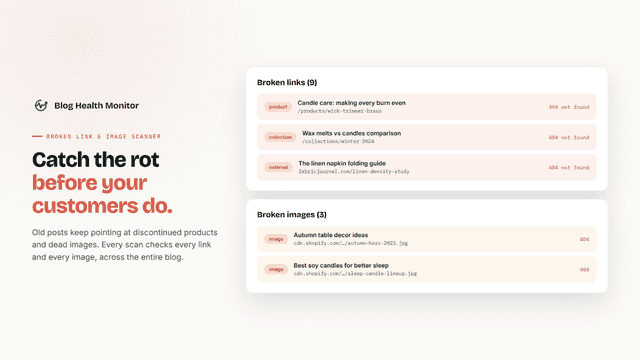
- · Broken link & image scanner
- · Money-leak, thin-content & alt-text
- · Per-query drill-down for declining pages
- · Traffic decay tracking
- · Unlimited blog posts scanned
PRO+
- · 500 fixes a month — clear the backlog
- · AI alt text — accurate, descriptive alt
- · AI meta descriptions & SEO titles.
- · Broken image cleanup, srcset included
- · One-click repair for broken links
- · Products & collections, not just posts
Free
- · AI meta titles & descriptions (20/mo)
- · AI product schema (20 products/mo)
- · Google PageSpeed Insights tracking
- · Image optimization & alt text (20/mo)
- · Preconnect & preload speed boost
- · SEO Audit
Advanced
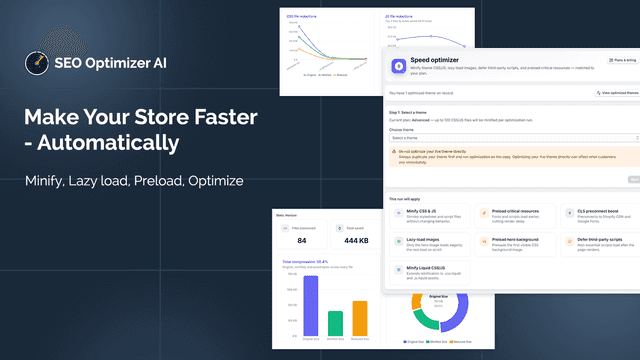
- · CSS/JS & Liquid CSS/JS minification
- · Defer third-party scripts
- · Faster, lighter page performance
- · Fix broken links with redirects
- · Image lazy loading & hero preload
- · Unlimited AI meta & descriptions
Coverage counts what each App Store listing names. Every feature, checked off app by app, is in Shoplist.
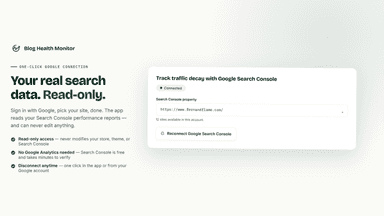
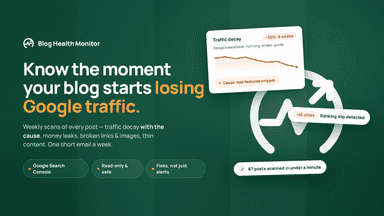
See every featureKnow when your store starts losing Google traffic — then fix it in one click. Your store took years to build. Pulse SEO makes sure it never quietly rots. Every week it scans every post, product and collection, reads your Search Console data, then emails only what needs attention: pages losing clicks, broken links, missing alt text, thin content.
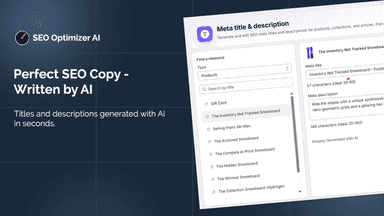
Most stores have pages with missing meta titles, meta descriptions, and image alt text, and checking a full catalog by hand takes hours. This app scans your products, collections, pages, and blog posts, scores each one, and finds broken links so you can fix them with a redirect.
- Traffic decay alerts with cause diagnosis — ranking slip vs demand drop
- Money-leak finder: posts with real traffic but zero product links
- Broken link & image scanner across every post, every week
- Flags thin content and missing alt text before Google penalizes them
- Scores your store's SEO and finds broken links you can fix with a redirect
- AI writes meta titles, descriptions, and image alt text for you to review
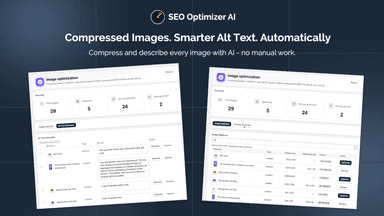
- Compresses product and article images to WebP to shrink page weight
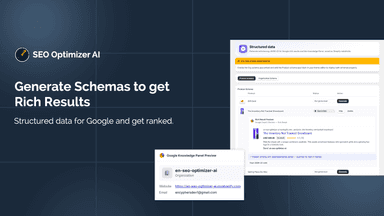
- Adds Product and Organization schema so Google can read your pages

All the numbers
Every figure, side by side
A green dot marks the app ahead on a measured figure. Estimates, gaps and apps that leave no storefront trace never take the lead.
Adoption
| Measure |  Pulse SEO |  EN |
|---|---|---|
| Detected stores | Not published | Not published |
| Net store change, 28 days | 0 | 0 |
| Stores added, 28 days | Not enough data | Not enough data |
| Big-brand share | Not enough data | Not enough data |
| Top store categories | Not published | Not published |
| Top store countries | Not published | Not published |
Reviews
| Measure | Pulse SEO | EN |
|---|---|---|
| App Store rating | Not published | Not published |
| App Store reviews | Not published | Not published |
| New reviews, 28 days | Not enough data | Not enough data |
| Reviewers a year or more in | Not enough data | Not enough data |
FAQ
Pulse SEO and EN: common questions
- Is Pulse SEO or EN cheaper?
- Only EN lists a free plan. Paid plans start at $9.99/month for Pulse SEO and $9/month for EN. Shoplist compares base prices only between monthly plans in the same currency; usage charges and annual plans vary, so check each plan’s limits.
- What features does each app list that the other doesn’t?
- Pulse SEO lists 3 the others don’t mention, such as Analytics, Content optimization, Website traffic. EN lists 16 the others don’t mention, such as AI generation, Audits, Convert file types, Image backup. A feature missing from a listing may still be supported; this compares what each App Store listing says.
- Where does this comparison’s data come from?
- Shoplist crawls Shopify storefronts to detect which apps each store runs, and reads each app’s Shopify App Store listing for reviews, pricing, features and integrations. Store counts are as of Oct 13, 2026; estimated figures are labeled.
How Shoplist compares apps
Store counts come from Shoplist’s crawl of Shopify storefronts, which detects the apps each store runs; they are as of Oct 13, 2026. Reviews, ratings, plans, features and integrations come from each app’s Shopify App Store listing. 28-day figures are labeled when estimated, and a figure that is missing or estimated never decides who leads. Read the methodology.