
Blocky vs Pagekit ‑ Store Theme Sections
Two Shopify apps, side by side: detected stores, momentum, reviews, plans, listed features and who runs each. Store counts as of Nov 7, 2026 for Blocky, Nov 8, 2026 for Pagekit.
The short answer
- On the Shopify App Store: Blocky 3.2 from 19 reviews and Pagekit 2.4 from 6 reviews.
- Only Pagekit lists a free plan. Paid plans start at $39.99/month for Blocky and $7.99/month for Pagekit.
- Blocky lists 15 features Pagekit’s listing doesn’t mention, including 404 pages, Career pages, Cart pages.
Head to head


- United States
- Belgium
- Canada
Momentum
New reviews each month
Review pace is the clearest public read on how fast an app is winning new merchants.
Monthly
- · All Current and Future Blocks
Free
- · - All features access
- · - Free forever - No hidden fees
- · - Only free sections access
Basic
- · - Pricing depends on your Shopify plan
- · - Unlimited Premium Sections
Proffesional
- · - Pricing depends on your Shopify plan
- · - Unlimited Premium Sections
Advance
- · - Pricing depends on your Shopify plan
- · - Unlimited Premium Sections
Coverage counts what each App Store listing names. Every feature, checked off app by app, is in Shoplist.
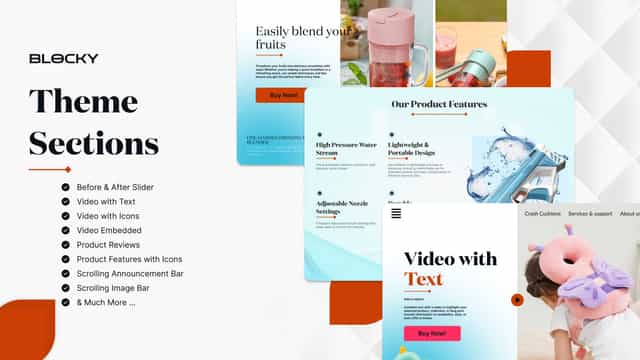
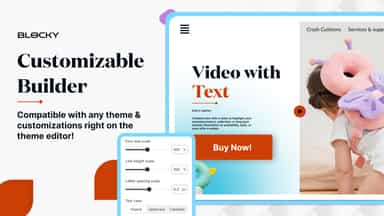
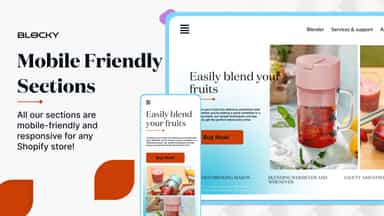
See every featureBlocky offers prebuilt theme sections that make it simple to customize your store. These blocks are user-friendly and can be tailored to align perfectly with your store's style. With a wide range of customization options, you can effortlessly adjust colors, styles, and layouts to create a unique shopping experience.
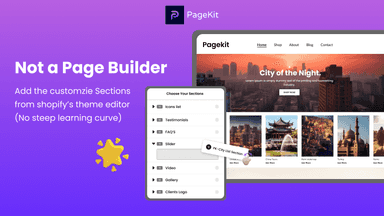
Most Shopify themes come with just 15 design sections, and if you're not satisfied or need more, you're left with complex page builders or costly developers. Pagekit solves this problem by offering a library of user-friendly, customizable sections. You can effortlessly add these to your store's theme and tweak them in the theme editor. Create features, testimonials, FAQs, trust badges, and more with ease!
- Video with Text Block
- Video Hero Block
- Before and After Slider Block
- Many more blocks
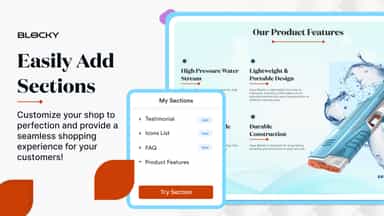
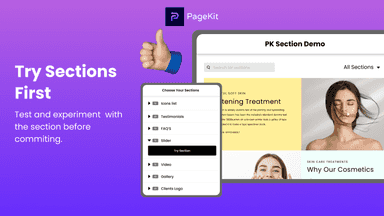
- Browse & Add sections to any page, or any theme. Edit from Shopifys theme editor
- Upgrade your existing theme with new theme sections. No need to start over.
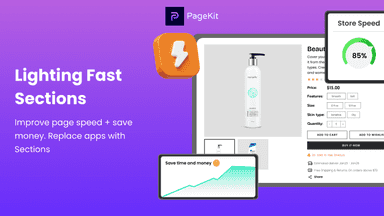
- Keep or even improve page-speed. Some apps loads slow, replace with a section.
- Built considering marketing needs. Built for performance and speed.



All the numbers
Every figure, side by side
A green dot marks the app ahead on a measured figure. Estimates, gaps and apps that leave no storefront trace never take the lead.
Adoption
| Measure |  Blocky |  Pagekit |
|---|---|---|
| Detected stores | Not published | 21 |
| Net store change, 28 days | 0 | 0 |
| Stores added, 28 days | Not enough data | Not enough data |
| Big-brand share | Not enough data | Not enough data |
| Top store categories | Not published | Apparel & Accessories, Health & Beauty, Services |
| Top store countries | Not published | United States, Belgium, Canada |
Reviews
| Measure | Blocky | Pagekit |
|---|---|---|
| App Store rating | 3.2 ★(ahead) | 2.4 ★ |
| App Store reviews | 19(ahead) | 6 |
| New reviews, 28 days | 2(ahead) | 0 |
| Reviewers a year or more in | Not enough data | Not enough data |
FAQ
Blocky and Pagekit: common questions
- Is Blocky or Pagekit cheaper?
- Only Pagekit lists a free plan. Paid plans start at $39.99/month for Blocky and $7.99/month for Pagekit. Shoplist compares base prices only between monthly plans in the same currency; usage charges and annual plans vary, so check each plan’s limits.
- Which has better reviews, Blocky or Pagekit?
- On the Shopify App Store: Blocky 3.2 from 19 reviews and Pagekit 2.4 from 6 reviews.
- What features does each app list that the other doesn’t?
- Blocky lists 15 the others don’t mention, such as 404 pages, Career pages, Cart pages, Collections. Pagekit lists 3 the others don’t mention, such as A/B testing, Custom code, Editor tool. A feature missing from a listing may still be supported; this compares what each App Store listing says.
- Where does this comparison’s data come from?
- Shoplist crawls Shopify storefronts to detect which apps each store runs, and reads each app’s Shopify App Store listing for reviews, pricing, features and integrations. Store counts are as of Nov 7, 2026 for Blocky, Nov 8, 2026 for Pagekit; estimated figures are labeled.
How Shoplist compares apps
Store counts come from Shoplist’s crawl of Shopify storefronts, which detects the apps each store runs; they are as of Nov 7, 2026 for Blocky, Nov 8, 2026 for Pagekit. Reviews, ratings, plans, features and integrations come from each app’s Shopify App Store listing. 28-day figures are labeled when estimated, and a figure that is missing or estimated never decides who leads. Read the methodology.