
Bildx vs Provid.AI: Product Video Maker
Two Shopify apps, side by side: detected stores, momentum, reviews, plans, listed features and who runs each. Store counts as of Nov 11, 2026 for Bildx, Oct 14, 2026 for Provid.AI.
The short answer
- Only Provid.AI lists a free plan.
- Provid.AI lists 4 features Bildx’s listing doesn’t mention, including Embedded videos, Video background, Video player.
Head to head

Free to install
- · 10 introductory credits included
- · Buy credit packs as needed
- · Credits do not expire
- · No recurring subscription
Free
- · 5 AI videos
Starter
- · 20 AI videos
- · No watermark
Growth
- · 100 AI videos
- · AI voice over
- · Bulk Video Creation
- · No watermark
Pro
- · 500 AI videos
- · AI voice over
- · Bulk Video Creation
- · No watermark
Coverage counts what each App Store listing names. Every feature, checked off app by app, is in Shoplist.
See every featureTurn Shopify product information and images into product-only or presenter-led videos. Review scripts, visuals, scenes, generated clips, and captions before creating the final video. Publish approved media to the selected product only when you choose.
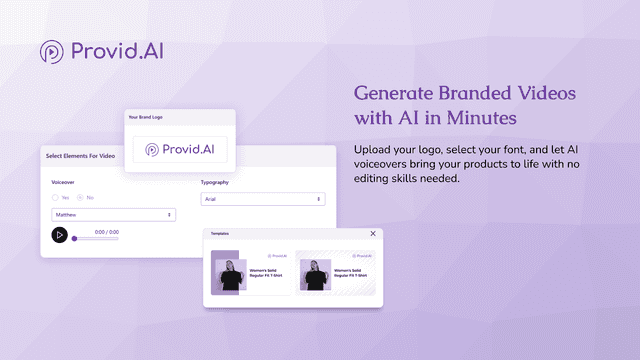
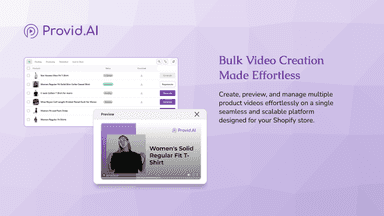
provid.ai helps Shopify merchants create high-quality product videos automatically using existing product titles, descriptions, and images. Merchants can choose from video templates, add their logo and brand elements, and let the AI generate and publish videos to product pages. The app also supports voiceovers and bulk video creation, saving time and improving product presentation.
- Create product videos from catalog images and product information
- Review scripts, scenes, generated clips, and captions before rendering
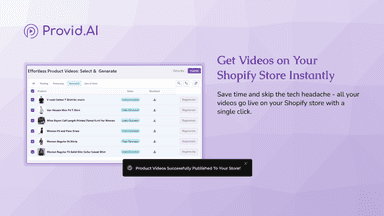
- Publish approved videos directly to the selected catalog product
- Create presenter-led videos with reusable talking avatars
- Generate product videos using titles, descriptions, and images
- Add your logo, brand colors, and fonts to every video
- Auto-generate voiceovers with natural-sounding AI voices
- Bulk create and publish videos directly to product pages

All the numbers
Every figure, side by side
A green dot marks the app ahead on a measured figure. Estimates, gaps and apps that leave no storefront trace never take the lead.
Adoption
| Measure |  Provid.AI | |
|---|---|---|
| Detected stores | Not published | Not published |
| Net store change, 28 days | Not enough data | 0 |
| Stores added, 28 days | Not enough data | Not enough data |
| Big-brand share | Not enough data | Not enough data |
| Top store categories | Not published | Not published |
| Top store countries | Not published | Not published |
Reviews
| Measure | Provid.AI | |
|---|---|---|
| App Store rating | Not published | 1.0 ★ |
| App Store reviews | Not published | 1 |
| New reviews, 28 days | Not enough data | Not enough data |
| Reviewers a year or more in | Not enough data | Not enough data |
FAQ
Bildx and Provid.AI: common questions
- Is Bildx or Provid.AI cheaper?
- Only Provid.AI lists a free plan. Shoplist compares base prices only between monthly plans in the same currency; usage charges and annual plans vary, so check each plan’s limits.
- What features does each app list that the other doesn’t?
- Bildx lists 1 the others don’t mention, such as Video editing. Provid.AI lists 4 the others don’t mention, such as Embedded videos, Video background, Video player, Video widget. A feature missing from a listing may still be supported; this compares what each App Store listing says.
- Where does this comparison’s data come from?
- Shoplist crawls Shopify storefronts to detect which apps each store runs, and reads each app’s Shopify App Store listing for reviews, pricing, features and integrations. Store counts are as of Nov 11, 2026 for Bildx, Oct 14, 2026 for Provid.AI; estimated figures are labeled.
How Shoplist compares apps
Store counts come from Shoplist’s crawl of Shopify storefronts, which detects the apps each store runs; they are as of Nov 11, 2026 for Bildx, Oct 14, 2026 for Provid.AI. Reviews, ratings, plans, features and integrations come from each app’s Shopify App Store listing. 28-day figures are labeled when estimated, and a figure that is missing or estimated never decides who leads. Read the methodology.