Bidit ‑ Make an Offer Button vs Zefiro
Two Shopify apps, side by side: detected stores, momentum, reviews, plans, listed features and who runs each. Store counts as of Nov 16, 2026 for Bidit, Nov 18, 2026 for Zefiro.
The short answer
- Zefiro lists 6 features Bidit’s listing doesn’t mention, including Dashboards, Flash sales, Percentage discounts.
Head to head

Free to Download
- · All features available
Pay per sale
- · Automatic final payment and refunds
- · Campaign price across your whole store
- · Price drops for everyone as sales grow
- · Unlimited campaigns and products
- · Zefiro offer widget, no theme code
Coverage counts what each App Store listing names. Every feature, checked off app by app, is in Shoplist.
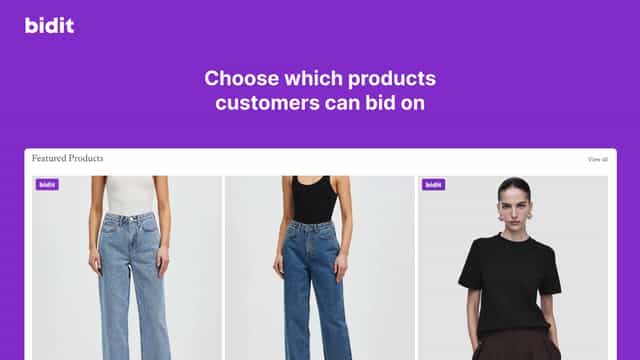
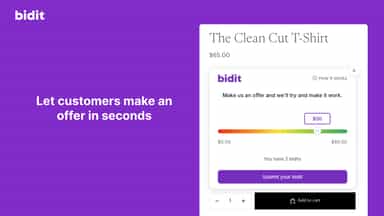
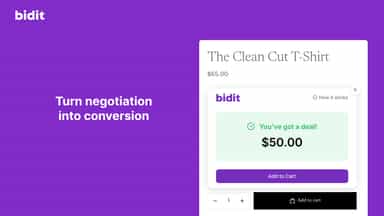
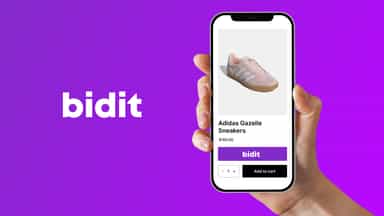
See every featureBidit adds a Make an Offer button to your product pages. A shopper who likes the product, but not quite the price, makes a private offer, and your rules accept, counter or decline it in seconds. You set a floor price nobody else sees, by product or collection. Bidit Onsite Abandonment invites a private offer from shoppers about to leave a product page without buying.
Time-limited promotions rarely adapt to real demand without manual work. Zefiro runs campaigns of up to 7 days with price tiers based on units sold. The offer widget shows shoppers the current price, the next tier and the time left, in their language. They pay through the standard Shopify checkout.
- Smart price offers – Let customers bid and get instant accept or counter offers.
- Smart offers: Customers bid, get instant accept, counter or decline
- Custom rules – Set minimum prices, counters, and declined-bid discounts.
- Custom rules: Set minimum price, counters and incentives
- Time-limited campaigns of up to 7 days
- Price tiers that drop as more units sell
- Final price applied to every campaign order
- Automatic capture or refund when the campaign ends
All the numbers
Every figure, side by side
A green dot marks the app ahead on a measured figure. Estimates, gaps and apps that leave no storefront trace never take the lead.
Adoption
| Measure |  Bidit | |
|---|---|---|
| Detected stores | Not published | Not published |
| Net store change, 28 days | 0 | 0 |
| Stores added, 28 days | Not enough data | Not enough data |
| Big-brand share | Not enough data | Not enough data |
| Top store categories | Not published | Not published |
| Top store countries | Not published | Not published |
Reviews
| Measure | Bidit | |
|---|---|---|
| App Store rating | 5.0 ★ | Not published |
| App Store reviews | 1 | Not published |
| New reviews, 28 days | 0 | Not enough data |
| Reviewers a year or more in | Not enough data | Not enough data |
FAQ
Bidit and Zefiro: common questions
- What features does each app list that the other doesn’t?
- Bidit lists 2 the others don’t mention, such as AI-powered rules, Price negotiation. Zefiro lists 6 the others don’t mention, such as Dashboards, Flash sales, Percentage discounts, Price tracking. A feature missing from a listing may still be supported; this compares what each App Store listing says.
- Where does this comparison’s data come from?
- Shoplist crawls Shopify storefronts to detect which apps each store runs, and reads each app’s Shopify App Store listing for reviews, pricing, features and integrations. Store counts are as of Nov 16, 2026 for Bidit, Nov 18, 2026 for Zefiro; estimated figures are labeled.
How Shoplist compares apps
Store counts come from Shoplist’s crawl of Shopify storefronts, which detects the apps each store runs; they are as of Nov 16, 2026 for Bidit, Nov 18, 2026 for Zefiro. Reviews, ratings, plans, features and integrations come from each app’s Shopify App Store listing. 28-day figures are labeled when estimated, and a figure that is missing or estimated never decides who leads. Read the methodology.