

Basis Receivables vs StatementClerk: B2B Statements
Two Shopify apps, side by side: detected stores, momentum, reviews, plans, listed features and who runs each. Store counts as of Nov 3, 2026 for Basis Receivables, Oct 30, 2026 for StatementClerk.
The short answer
- Both list a free plan. Paid plans start at $29/month for Basis Receivables and $24/month for StatementClerk.
- StatementClerk lists 3 features Basis Receivables’s listing doesn’t mention, including Customers, Order details, Transactions.
Head to head


Free
- · Full B2B aging report, all buckets
- · Per-company statements, ready to copy
- · Up to 5 B2B companies
Starter
- · Dunning queue with drafted reminders
- · Up to 50 B2B companies
Growth
- · Dunning queue with drafted reminders
- · Up to 200 B2B companies
Pro
- · Dunning queue with drafted reminders
- · Unlimited B2B companies
Free
- · Every feature included
- · Up to 5 companies on terms
Pro
- · Everything in Free
- · No company limit
Coverage counts what each App Store listing names. Every feature, checked off app by app, is in Shoplist.
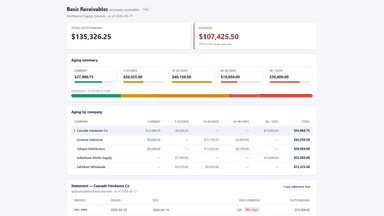
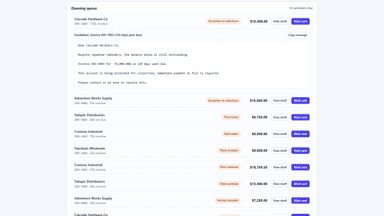
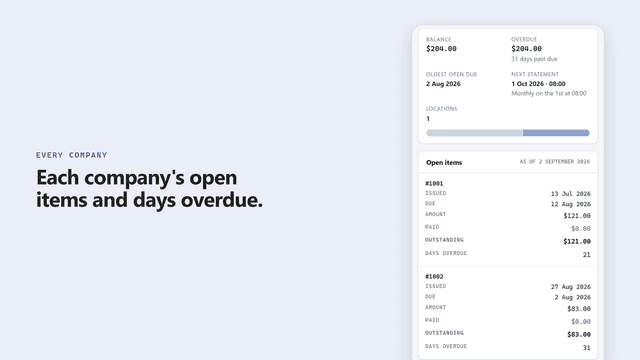
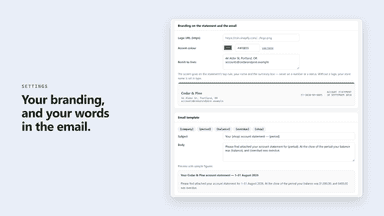
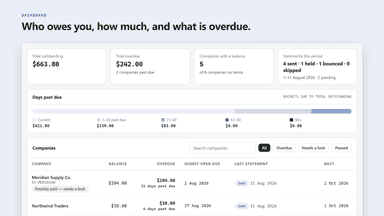
See every featureYou sell wholesale on net terms, but Shopify never tells you what you are owed — so you go order by order, or keep a spreadsheet. Basis Receivables reads your B2B companies, orders and payment terms and builds the report Shopify leaves out: an AR aging ledger per company, worst first. Unpaid orders from drafts count too, Company or not. Customer statements, CSV export and drafted reminders for overdue invoices.
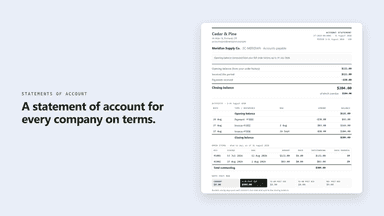
Your wholesale customers buy on payment terms, and someone has to tell them what they owe. StatementClerk builds a statement of account for every company from your Shopify B2B orders and payments — opening balance, invoices, payments, open items, 30/60/90 aging — and emails it as a PDF on your schedule. Each is checked against Shopify before sending; one that fails a check waits for review with the reason.
- Aged receivables report: current, 1-30, 31-60, 61-90 and 90+ days, by company
- See what every wholesale customer owes you, worst first, without opening orders
- A statement for any company, ready to copy into your own email
- Reminders soften to a payment query when the invoice has no agreed due date
- Statements of account for every company on terms, on the schedule you set
- Opening balance, invoices, payments, open items and 30/60/90 aging in one PDF
- Checked against Shopify before sending; held with the reason if a check fails
- Review queue first, autopilot when a cycle is clean; build a period on demand

All the numbers
Every figure, side by side
A green dot marks the app ahead on a measured figure. Estimates, gaps and apps that leave no storefront trace never take the lead.
Adoption
| Measure |  Basis Receivables |  StatementClerk |
|---|---|---|
| Detected stores | Not published | Not published |
| Net store change, 28 days | 0 | 0 |
| Stores added, 28 days | Not enough data | Not enough data |
| Big-brand share | Not enough data | Not enough data |
| Top store categories | Not published | Not published |
| Top store countries | Not published | Not published |
Reviews
| Measure | Basis Receivables | StatementClerk |
|---|---|---|
| App Store rating | Not published | Not published |
| App Store reviews | Not published | Not published |
| New reviews, 28 days | Not enough data | Not enough data |
| Reviewers a year or more in | Not enough data | Not enough data |
Pricing
| Measure | Basis Receivables | StatementClerk |
|---|---|---|
| Free plan | Yes | Yes |
| Lowest paid monthly plan | $29/month | $24/month(ahead) |
| Longest free trial | 14 days | 14 days |
| Plans listed | 4 | 2 |
Listing
| Measure | Basis Receivables | StatementClerk |
|---|---|---|
| Shopify category rank | #214 | #160(ahead) |
| Shopify App Charts | Not on this week’s charts | Not on this week’s charts |
| Built for Shopify | No | No |
| Launched | Aug 31, 2026 | Sep 16, 2026 |
| Languages | 1 | 1 |
| Developer | Basis Ventures | MB Croppick |
FAQ
Basis Receivables and StatementClerk: common questions
- Is Basis Receivables or StatementClerk cheaper?
- Both list a free plan. Paid plans start at $29/month for Basis Receivables and $24/month for StatementClerk. Shoplist compares base prices only between monthly plans in the same currency; usage charges and annual plans vary, so check each plan’s limits.
- What features does each app list that the other doesn’t?
- Basis Receivables lists 2 the others don’t mention, such as Cash flow, Multi-currency. StatementClerk lists 3 the others don’t mention, such as Customers, Order details, Transactions. A feature missing from a listing may still be supported; this compares what each App Store listing says.
- Where does this comparison’s data come from?
- Shoplist crawls Shopify storefronts to detect which apps each store runs, and reads each app’s Shopify App Store listing for reviews, pricing, features and integrations. Store counts are as of Nov 3, 2026 for Basis Receivables, Oct 30, 2026 for StatementClerk; estimated figures are labeled.
How Shoplist compares apps
Store counts come from Shoplist’s crawl of Shopify storefronts, which detects the apps each store runs; they are as of Nov 3, 2026 for Basis Receivables, Oct 30, 2026 for StatementClerk. Reviews, ratings, plans, features and integrations come from each app’s Shopify App Store listing. 28-day figures are labeled when estimated, and a figure that is missing or estimated never decides who leads. Read the methodology.