
App test vs syncX: Neon ‑ Up Confident
Two Shopify apps, side by side: detected stores, momentum, reviews, plans, listed features and who runs each. Store counts as of Oct 14, 2026 for App test, Oct 13, 2026 for syncX.
The short answer
- Only syncX lists a free plan.
- syncX lists 5 features App test’s listing doesn’t mention, including Engagement tracking, Hashtags, Pre-orders.
Head to head


Increase social proof with inventory display & sold count
Momentum
New reviews each month
Review pace is the clearest public read on how fast an app is winning new merchants.
Free
- · Customize inventory count
- · Customize sold count
- · Inventory count
- · Not in stock
- · Sold count
Basic
- · Inventory count
- · Inventory count on Collection page
- · Not in stock
- · Sold count
- · Variant count
Coverage counts what each App Store listing names. Every feature, checked off app by app, is in Shoplist.
See every featureIntroduce your app with two brief sentences that clearly summarize your app’s purpose and main merchant benefit. This will display in prominently placed text on your listing.
NEON is an innovative app that allows consumers to visualize a product's supply and demand. With info on how many products are sold out, pre-order, or available for sale, it inspires confidence as a consumer that they are buying what they want. Have you wondered what influenced your conversion rate? It is the customer confidence level in your product. Implement with your product page or collection page
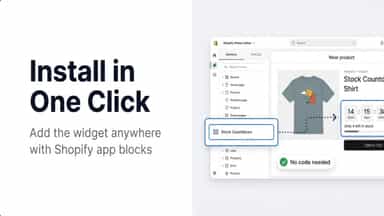
- Real-time stock counter that shows "Only X left" and updates automatically.
- Set a low-stock threshold to trigger urgency alerts only when it matters most.
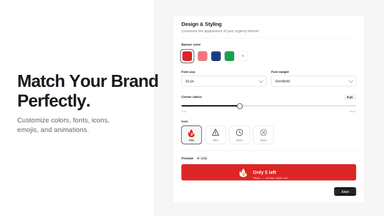
- Customize colors, fonts, icons, and placement to match your brand perfectly.
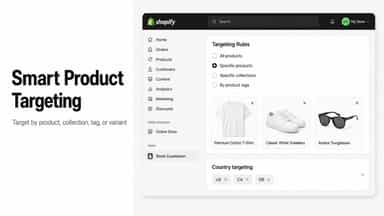
- Target specific products or collections with per-variant inventory tracking.
- Create urgency by displaying out of stock and low stock products
- Choose your own colour and style to fit your theme
- Display stock availability to customers whether in quantity or just high/low



All the numbers
Every figure, side by side
A green dot marks the app ahead on a measured figure. Estimates, gaps and apps that leave no storefront trace never take the lead.
Adoption
| Measure |  App test |  syncX |
|---|---|---|
| Detected stores | Not published | Not published |
| Net store change, 28 days | 0 | 0 |
| Stores added, 28 days | Not enough data | Not enough data |
| Big-brand share | Not enough data | Not enough data |
| Top store categories | Not published | Not published |
| Top store countries | Not published | Not published |
Reviews
| Measure | App test | syncX |
|---|---|---|
| App Store rating | Not published | 3.1 ★ |
| App Store reviews | Not published | 22 |
| New reviews, 28 days | Not enough data | 0 |
| Reviewers a year or more in | Not enough data | Not enough data |
FAQ
App test and syncX: common questions
- Is App test or syncX cheaper?
- Only syncX lists a free plan. Shoplist compares base prices only between monthly plans in the same currency; usage charges and annual plans vary, so check each plan’s limits.
- What features does each app list that the other doesn’t?
- App test lists 3 the others don’t mention, such as Auto-alerts, Custom alerts, UGC. syncX lists 5 the others don’t mention, such as Engagement tracking, Hashtags, Pre-orders, Product views. A feature missing from a listing may still be supported; this compares what each App Store listing says.
- Where does this comparison’s data come from?
- Shoplist crawls Shopify storefronts to detect which apps each store runs, and reads each app’s Shopify App Store listing for reviews, pricing, features and integrations. Store counts are as of Oct 14, 2026 for App test, Oct 13, 2026 for syncX; estimated figures are labeled.
How Shoplist compares apps
Store counts come from Shoplist’s crawl of Shopify storefronts, which detects the apps each store runs; they are as of Oct 14, 2026 for App test, Oct 13, 2026 for syncX. Reviews, ratings, plans, features and integrations come from each app’s Shopify App Store listing. 28-day figures are labeled when estimated, and a figure that is missing or estimated never decides who leads. Read the methodology.