
AF: Facebook Pixel & CAPI vs Datahash ‑ Conversions API
Two Shopify apps, side by side: detected stores, momentum, reviews, plans, listed features and who runs each. Store counts as of Nov 18, 2026.
The short answer
- AF is detected on 7.9× as many Shopify stores as Datahash: 127 vs 16 as of Nov 18, 2026.
- Only AF lists a free plan.
- AF lists 15 features Datahash’s listing doesn’t mention, including Analytics dashboard, Conversion tracking, Custom audiences.
Head to head


- United States
- United Kingdom
- Pakistan
- United States
- India
- Japan
Momentum
New reviews each month
Review pace is the clearest public read on how fast an app is winning new merchants.
FREE
- · Multiple Ad Channels — Meta, TikTok, X
- · Server-side Conversion API
- · Unlimited Pixels
PREMIUM
- · Better Event Matching
- · Conversion Recovery
- · Multiple Ad Channels — Meta, TikTok, X
- · Unlimited Pixels
- · Unlimited Server-side Conversion API
Coverage counts what each App Store listing names. Every feature, checked off app by app, is in Shoplist.
See every featureLosing Meta or TikTok conversion data after iOS14? Missing data leads to poor ad optimization and wasted budget. Avantify restores maximum tracking accuracy using first-party data and Server-side Conversion API (CAPI). Secure your pixel data with reliable backup pixels, prevent duplication, and maximize your ROAS instantly. Setup in 2 minutes—no coding required!
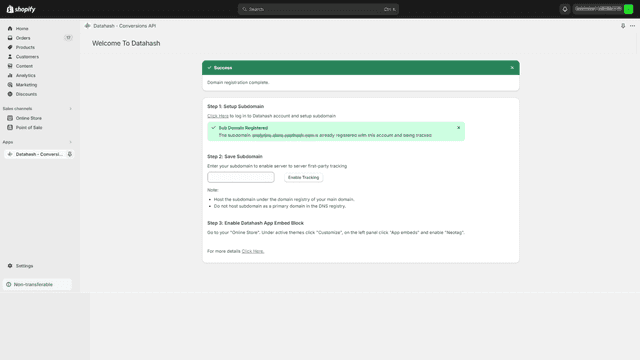
Datahash enables marketers to improve ROAS by unlocking value from their first-party customer data compliantly, in a cookie-less, privacy-first digital ecosystem. Marketers can now set up all type of first-party data integrations through Conversions API (CAPI) to Ad platforms such as Meta, Google, Snapchat, TikTok, X, LinkedIn in just 15-minutes.
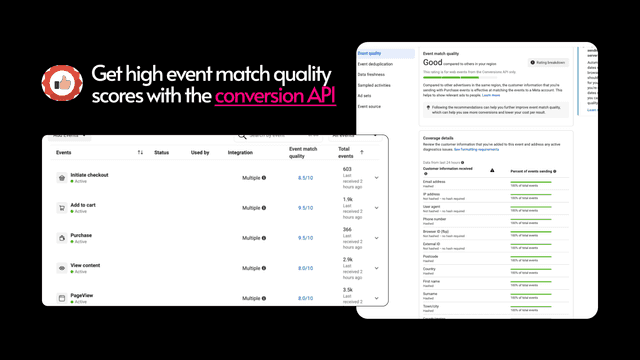
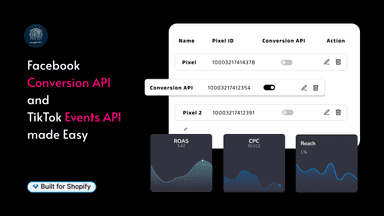
- Bypass iOS 14 & ad-blockers with conversion API for Facebook Pixel, TikTok Pixel
- Install pixel based on Product, Collection, Entire store, etc
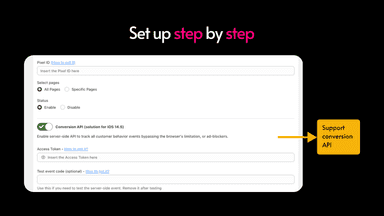
- Track unlimited pixels across channels with one-click setup, no login, no code
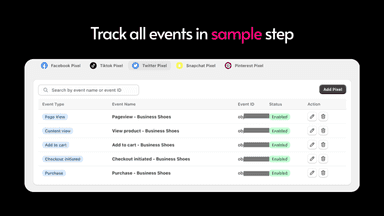
- Capture every action from page view, add to cart, initial checkout to purchase.
- Effortlessly integrate CAPI event tracking in 15 minutes (no coding needed).
- Ensure compliant and secure first-party data tracking
- Overcome challenges posed by cookie-deprecation in a future-proof way



All the numbers
Every figure, side by side
A green dot marks the app ahead on a measured figure. Estimates, gaps and apps that leave no storefront trace never take the lead.
Adoption
| Measure | AF |  Datahash |
|---|---|---|
| Detected stores | 127(ahead) | 16 |
| Net store change, 28 days | −1 | 0 |
| Stores added, 28 days | Not enough data | Not enough data |
| Big-brand share | Not enough data | Not enough data |
| Top store categories | Apparel & Accessories, Home & Garden, Health & Beauty | Apparel & Accessories, Home & Garden, Health & Beauty |
| Top store countries | United States, United Kingdom, Pakistan | United States, India, Japan |
Reviews
| Measure | AF | Datahash |
|---|---|---|
| App Store rating | 4.9 ★ | Not published |
| App Store reviews | 41 | Not published |
| New reviews, 28 days | 0(ahead) | 0 |
| Reviewers a year or more in | Not enough data | Not enough data |
FAQ
AF and Datahash: common questions
- Which is more popular, AF or Datahash?
- AF is detected on 7.9× as many Shopify stores as Datahash: 127 vs 16 as of Nov 18, 2026.
- Is AF or Datahash cheaper?
- Only AF lists a free plan. Shoplist compares base prices only between monthly plans in the same currency; usage charges and annual plans vary, so check each plan’s limits.
- What features does each app list that the other doesn’t?
- AF lists 15 the others don’t mention, such as Analytics dashboard, Conversion tracking, Custom audiences, Dashboards. A feature missing from a listing may still be supported; this compares what each App Store listing says.
- Where does this comparison’s data come from?
- Shoplist crawls Shopify storefronts to detect which apps each store runs, and reads each app’s Shopify App Store listing for reviews, pricing, features and integrations. Store counts are as of Nov 18, 2026; estimated figures are labeled.
How Shoplist compares apps
Store counts come from Shoplist’s crawl of Shopify storefronts, which detects the apps each store runs; they are as of Nov 18, 2026. Reviews, ratings, plans, features and integrations come from each app’s Shopify App Store listing. 28-day figures are labeled when estimated, and a figure that is missing or estimated never decides who leads. Read the methodology.