

Automatic SEO vs Sapt
Two Shopify apps, side by side: detected stores, momentum, reviews, plans, listed features and who runs each. Store counts as of Oct 13, 2026 for Automatic SEO, Oct 14, 2026 for Sapt.
The short answer
- Both list a free plan. Paid plans start at $49/month for Automatic SEO and $29/month for Sapt.
- Automatic SEO lists 5 features Sapt’s listing doesn’t mention, including ALT text, Analytics, Automations.
Head to head


Free
- · Daily publishing of approved blog posts
- · Generate 5 blog posts
Pro
- · Add custom keywords
- · Automatic blog post rewrite
- · Daily publishing of approved blog posts
- · New articles generated daily
- · Unlimited blog posts
Free
- · 10 AI credits
- · Auto-publish to Shopify
- · Google Analytics integration
- · SEO blog article generation
- · Search Console integration
Sapt Starter
- · 500 AI credits/month
- · Auto-publish to Shopify
- · Google Analytics integration
- · Keyword research
- · SEO blog article generation
- · Search Console integration
Sapt Pro
- · 2,500 AI credits/month
- · Auto-publish to Shopify
- · Automatic SEO blog article generation
- · Google Analytics integration
- · Keyword research
- · Search Console integration
Coverage counts what each App Store listing names. Every feature, checked off app by app, is in Shoplist.
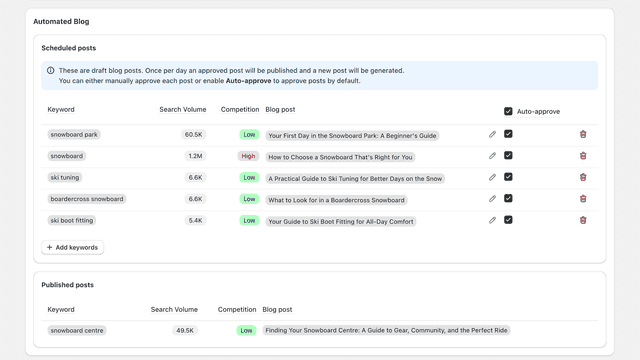
See every featureThe app automatically generates blog posts based on your store's products and existing content. It researches optimal keywords for your products and creates high-quality, engaging blog posts that drive organic search traffic to your store.
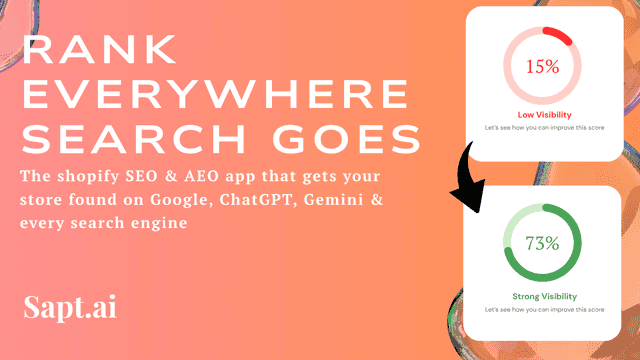
Sapt digs through your products, pages, and customer data to figure out what makes your brand tick. Then it finds the keywords your competitors forgot about and writes blog posts that sound like you, not a robot. You get credits to kick the tires. If it clicks, keep going. Content that DOESN'T reads like it was written by a microwave.
- Automatic keyword research based on your store's products
- Automatic blog post generation targeting optimal keywords
- References your products in the generated blog posts
- Generates new blog posts daily
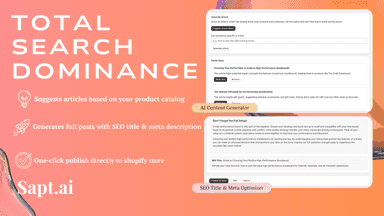
- Knows your brand before it writes a word
- Finds keyword gaps your competitors are sleeping on
- Publishes straight to your Shopify blog in one click
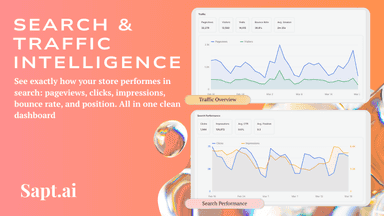
- Analytics you can't get anywhere else
All the numbers
Every figure, side by side
A green dot marks the app ahead on a measured figure. Estimates, gaps and apps that leave no storefront trace never take the lead.
Adoption
| Measure |  Automatic SEO |  Sapt |
|---|---|---|
| Detected stores | Not published | Not published |
| Net store change, 28 days | 0 | 0 |
| Stores added, 28 days | Not enough data | Not enough data |
| Big-brand share | Not enough data | Not enough data |
| Top store categories | Not published | Not published |
| Top store countries | Not published | Not published |
Reviews
| Measure | Automatic SEO | Sapt |
|---|---|---|
| App Store rating | Not published | Not published |
| App Store reviews | Not published | Not published |
| New reviews, 28 days | Not enough data | Not enough data |
| Reviewers a year or more in | Not enough data | Not enough data |
Pricing
| Measure | Automatic SEO | Sapt |
|---|---|---|
| Free plan | Yes | Yes |
| Lowest paid monthly plan | $49/month | $29/month(ahead) |
| Longest free trial | 14 days | Not listed |
| Plans listed | 2 | 3 |
Listing
| Measure | Automatic SEO | Sapt |
|---|---|---|
| Shopify category rank | #831(ahead) | #1190 |
| Shopify App Charts | Not on this week’s charts | Not on this week’s charts |
| Built for Shopify | No | No |
| Launched | Sep 29, 2025 | May 1, 2026 |
| Languages | 1 | 1 |
| Developer | Automatic SEO | Sapt |
FAQ
Automatic SEO and Sapt: common questions
- Is Automatic SEO or Sapt cheaper?
- Both list a free plan. Paid plans start at $49/month for Automatic SEO and $29/month for Sapt. Shoplist compares base prices only between monthly plans in the same currency; usage charges and annual plans vary, so check each plan’s limits.
- What features does each app list that the other doesn’t?
- Automatic SEO lists 5 the others don’t mention, such as ALT text, Analytics, Automations, Keyword analysis. Sapt lists 5 the others don’t mention, such as Breadcrumbs, Competitor analysis, Conversion tracking, Tracking. A feature missing from a listing may still be supported; this compares what each App Store listing says.
- Where does this comparison’s data come from?
- Shoplist crawls Shopify storefronts to detect which apps each store runs, and reads each app’s Shopify App Store listing for reviews, pricing, features and integrations. Store counts are as of Oct 13, 2026 for Automatic SEO, Oct 14, 2026 for Sapt; estimated figures are labeled.
How Shoplist compares apps
Store counts come from Shoplist’s crawl of Shopify storefronts, which detects the apps each store runs; they are as of Oct 13, 2026 for Automatic SEO, Oct 14, 2026 for Sapt. Reviews, ratings, plans, features and integrations come from each app’s Shopify App Store listing. 28-day figures are labeled when estimated, and a figure that is missing or estimated never decides who leads. Read the methodology.