

AutoFlow vs Ripple: AI Email Marketing
Two Shopify apps, side by side: detected stores, momentum, reviews, plans, listed features and who runs each. Store counts as of Oct 13, 2026 for AutoFlow, Nov 9, 2026 for Ripple.
The short answer
- Only AutoFlow lists a free plan.
- Ripple lists 20 features AutoFlow’s listing doesn’t mention, including Abandoned cart, APIs and webhooks, Automations.
Head to head


- United States
- Australia
- Canada
Momentum
New reviews each month
Review pace is the clearest public read on how fast an app is winning new merchants.
Free plan
- · 15 Email Template Generator
- · 150 Send Contacts
- · 5 Email Campaign
- · AI Powered Email Template
Lite plan
- · 1.500 Send Contacts
- · 15 Email Campaign
- · 50 Email Template Generator
- · Advanced Analytics
- · Custom Themes
- · Everything in the Free plan, plus:
Standard plan
Coverage counts what each App Store listing names. Every feature, checked off app by app, is in Shoplist.
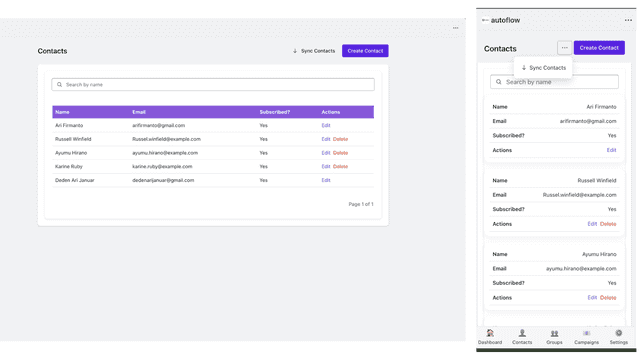
See every featureAutoflow helps merchants create email campaigns more efficiently by generating product-aware content using AI. It reduces time spent writing copy, supports consistent communication, and adapts messages to different customer segments. By automating repetitive tasks, Autoflow helps teams maintain regular marketing activity and focus on other areas of their business.
Ripple works like a full email marketing team inside your store. Tell it what you're running and it plans your calendar, builds on-brand campaigns from your real products and reviews, and sends them to Klaviyo in one click. Its journeys go further than static flows — every email is written fresh for each customer at the moment it sends, based on what they've actually bought. Popups grow your list on autopilot.
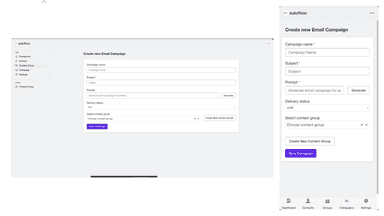
- Email campaign generation using AI
- Sync your existing customer into our contact management
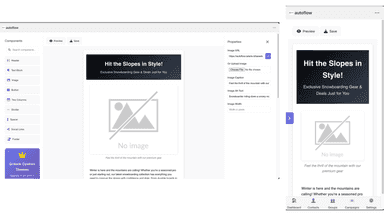
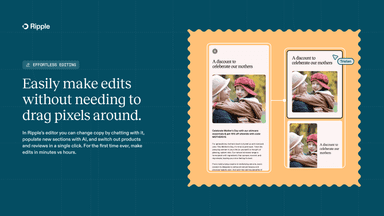
- Email builder with drag and drop UI with existing component
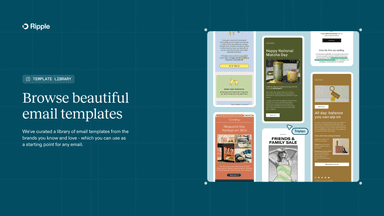
- Browse conversion optimized email templates from the best brands.
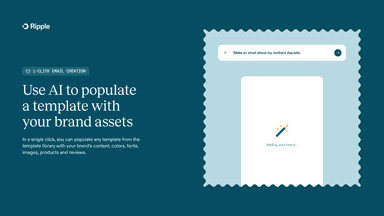
- Use AI to populate and template with your brand assets.
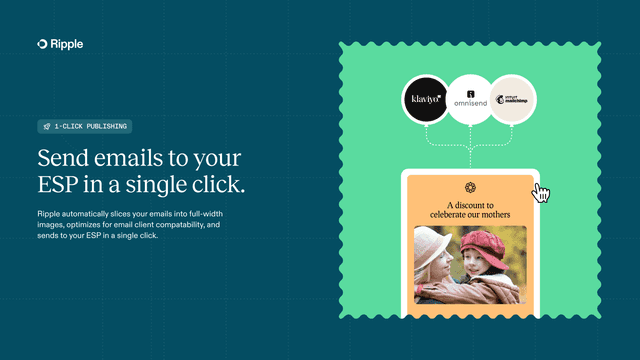
- Send Ripple emails to Klaviyo in a single click.



All the numbers
Every figure, side by side
A green dot marks the app ahead on a measured figure. Estimates, gaps and apps that leave no storefront trace never take the lead.
Adoption
| Measure |  AutoFlow |  Ripple |
|---|---|---|
| Detected stores | Not published | 12 |
| Net store change, 28 days | 0 | +2 |
| Stores added, 28 days | Not enough data | 2 |
| Big-brand share | Not enough data | Not enough data |
| Top store categories | Not published | Apparel & Accessories, Baby & Toddler, Electronics |
| Top store countries | Not published | United States, Australia, Canada |
Reviews
| Measure | AutoFlow | Ripple |
|---|---|---|
| App Store rating | Not published | 4.0 ★ |
| App Store reviews | Not published | 20 |
| New reviews, 28 days | Not enough data | Not enough data |
| Reviewers a year or more in | Not enough data | Not enough data |
FAQ
AutoFlow and Ripple: common questions
- Is AutoFlow or Ripple cheaper?
- Only AutoFlow lists a free plan. Shoplist compares base prices only between monthly plans in the same currency; usage charges and annual plans vary, so check each plan’s limits.
- What features does each app list that the other doesn’t?
- Ripple lists 20 the others don’t mention, such as Abandoned cart, APIs and webhooks, Automations, Back-in-stock emails. A feature missing from a listing may still be supported; this compares what each App Store listing says.
- Where does this comparison’s data come from?
- Shoplist crawls Shopify storefronts to detect which apps each store runs, and reads each app’s Shopify App Store listing for reviews, pricing, features and integrations. Store counts are as of Oct 13, 2026 for AutoFlow, Nov 9, 2026 for Ripple; estimated figures are labeled.
How Shoplist compares apps
Store counts come from Shoplist’s crawl of Shopify storefronts, which detects the apps each store runs; they are as of Oct 13, 2026 for AutoFlow, Nov 9, 2026 for Ripple. Reviews, ratings, plans, features and integrations come from each app’s Shopify App Store listing. 28-day figures are labeled when estimated, and a figure that is missing or estimated never decides who leads. Read the methodology.