
ATB: Attribution Reports vs Trackity
Two Shopify apps, side by side: detected stores, momentum, reviews, plans, listed features and who runs each. Store counts as of Nov 4, 2026.
The short answer
- ATB is detected on 9.3× as many Shopify stores as Trackity: 28 vs 3 as of Nov 4, 2026.
- ATB lists 10 features Trackity’s listing doesn’t mention, including AI insights, Cohort analysis, Custom dashboards.
Head to head

Multi-touch attribution and affiliate tracking for your store


- United States
- Canada
- United Kingdom
- Netherlands
Momentum
New reviews each month
Review pace is the clearest public read on how fast an app is winning new merchants.
Pro Plan
- · 1 Store
- · 5 Attribution Models
- · 5 Custom Reports
- · All Ad Connectors
- · Email Support
- · Klaviyo Integration
Coverage counts what each App Store listing names. Every feature, checked off app by app, is in Shoplist.
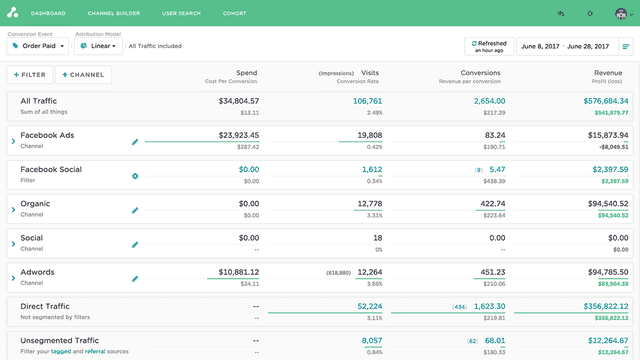
See every featureAttribution tracks the real cost of acquiring each Shopify customer by pulling spend data from ad platform APIs and binding it to individual visitors. The result: deduplicated ROAS that matches your actual Shopify revenue, not inflated platform numbers. See which channels acquire new customers vs re-engage existing ones. Know when each channel's spend breaks even with cohort payback. Ask your data anything via AI.
Get complete visibility into your customer journey with real-time attribution tracking. Our app ensures accurate conversion tracking, even with ad blockers and privacy settings. You can optimize ad spend, improve targeting, and make data-driven decisions with precise insights from every touchpoint. Automated reconciliation eliminates data gaps, while seamless Shopify integration makes setup easy.
- Connect all major ad platforms including Meta, Google, Pinterest and TikTok
- Cost, ROAS, and LTV available down to the keyword or ad level for all your ads
- Customizable multi touch models and reports give you complete control
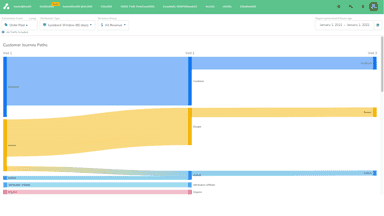
- Real-time attribution – Track customer journeys across all touchpoints.
- Ad blocker resilience – Capture data even with privacy-focused browsers.
- Automated reconciliation – Ensure accurate analytics with data matching.


All the numbers
Every figure, side by side
A green dot marks the app ahead on a measured figure. Estimates, gaps and apps that leave no storefront trace never take the lead.
Adoption
| Measure |  ATB | |
|---|---|---|
| Detected stores | 28(ahead) | 3 |
| Net store change, 28 days | 0 | 0 |
| Stores added, 28 days | Not enough data | Not enough data |
| Big-brand share | Not enough data | Not enough data |
| Top store categories | Business & Industrial, Food, Beverages & Tobacco, Apparel & Accessories | Apparel & Accessories, Business & Industrial, Home & Garden |
| Top store countries | United States, Canada, United Kingdom | Netherlands |
Reviews
| Measure | ATB | |
|---|---|---|
| App Store rating | 4.8 ★ | Not published |
| App Store reviews | 9 | Not published |
| New reviews, 28 days | 0 | Not enough data |
| Reviewers a year or more in | Not enough data | Not enough data |
FAQ
ATB and Trackity: common questions
- Which is more popular, ATB or Trackity?
- ATB is detected on 9.3× as many Shopify stores as Trackity: 28 vs 3 as of Nov 4, 2026.
- What features does each app list that the other doesn’t?
- ATB lists 10 the others don’t mention, such as AI insights, Cohort analysis, Custom dashboards, Custom reports. Trackity lists 4 the others don’t mention, such as Activity tracking, Checkout analytics, GDPR compliance, Purchase tracking. A feature missing from a listing may still be supported; this compares what each App Store listing says.
- Where does this comparison’s data come from?
- Shoplist crawls Shopify storefronts to detect which apps each store runs, and reads each app’s Shopify App Store listing for reviews, pricing, features and integrations. Store counts are as of Nov 4, 2026; estimated figures are labeled.
How Shoplist compares apps
Store counts come from Shoplist’s crawl of Shopify storefronts, which detects the apps each store runs; they are as of Nov 4, 2026. Reviews, ratings, plans, features and integrations come from each app’s Shopify App Store listing. 28-day figures are labeled when estimated, and a figure that is missing or estimated never decides who leads. Read the methodology.