

Citd vs CitedSEO
Two Shopify apps, side by side: detected stores, momentum, reviews, plans, listed features and who runs each. Store counts as of Oct 13, 2026.
The short answer
- Only Citd lists a free plan. Paid plans start at $75/month for Citd and $19.99/month for CitedSEO.
- CitedSEO lists 13 features Citd’s listing doesn’t mention, including Audits, Broken links, Bulk editing.
Head to head


Free
- · 5 active prompts
- · AI Visibility analysis
- · ChatGPT tracking
- · Unlimited users
- · Weekly Tracking
Starter
- · 15 AI Feed articles /mo
- · 50 active prompts
- · 50 product updates /mo
- · AI Catalog diagnostics
- · ChatGPT and Gemini tracking
- · Daily Tracking
Growth
- · 150 active prompts
- · 250 product updates /mo
- · 30 AI Feed articles /mo
- · AI Catalog diagnostics
- · ChatGPT and Gemini tracking
- · Daily Tracking
Pro
- · AI crawler log + MCP agent access
- · Content decay, cannibalization, internal
- · Rank tracker + AI Search Score
Agency
- · Everything in Pro, unlimited
- · White-label client reports + Fleet View
Coverage counts what each App Store listing names. Every feature, checked off app by app, is in Shoplist.
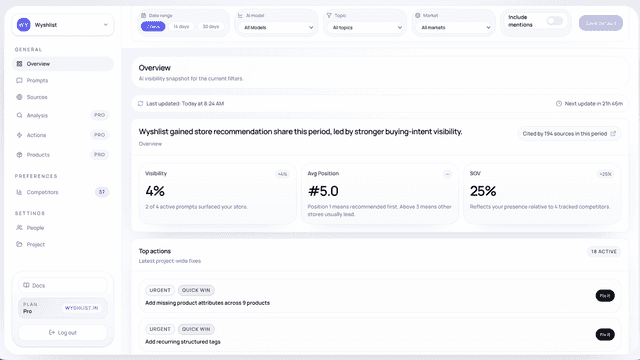
See every featureCitd helps Shopify stores improve visibility in AI search and shopping answers. Track buyer prompts, competitors, and cited sources, then find GEO gaps across products, collections, metadata, schema, and content. Approve enriched catalog updates and push them to Shopify. With AI Feed, generate SEO/GEO blog articles from visibility gaps and auto-publish approved posts to your Shopify blog.
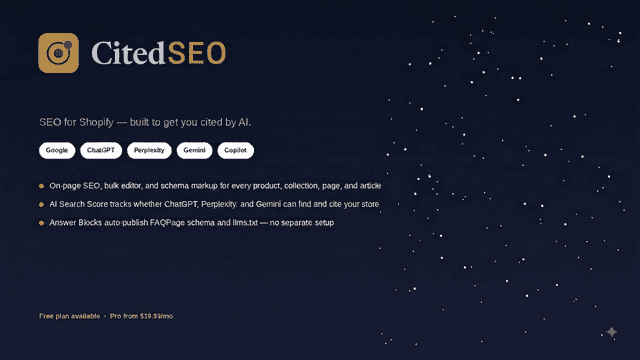
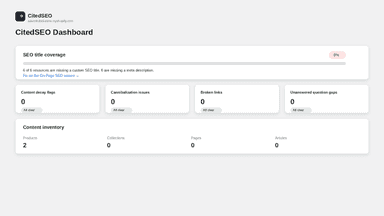
CitedSEO manages both traditional search optimization and visibility in AI answer engines from one dashboard. It edits meta titles, descriptions, alt text, and schema markup, fixes redirects and broken links, and audits your sitemap and llms.txt file. It also tracks how AI crawlers like ChatGPT and Perplexity access your store, flags aging or thin content, and generates FAQ schema that AI engines can cite directly.
- Track AI shopping visibility by prompt, topic, and market
- Compare your store against brands in the same responses
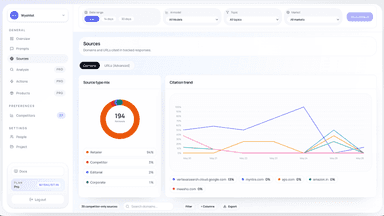
- See cited domains and URLs behind each recommendation
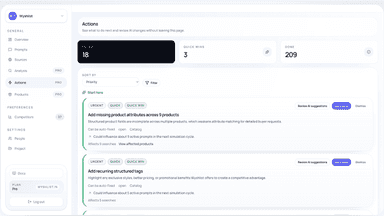
- Find catalog, schema, content, and authority gaps
- AI Search Score tracks visibility across ChatGPT, Perplexity, and Gemini
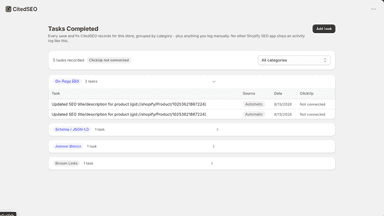
- Task manager for every task completed will be recorded under a relevant category
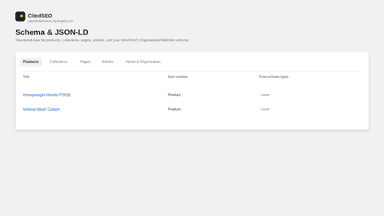
- Auto-generates schema markup and FAQ blocks AI engines can cite directly
- Logs every AI crawler hit - GPTBot, ClaudeBot, PerplexityBot, and more
All the numbers
Every figure, side by side
A green dot marks the app ahead on a measured figure. Estimates, gaps and apps that leave no storefront trace never take the lead.
Adoption
| Measure |  Citd |  CitedSEO |
|---|---|---|
| Detected stores | Not published | Not published |
| Net store change, 28 days | 0 | 0 |
| Stores added, 28 days | Not enough data | Not enough data |
| Big-brand share | Not enough data | Not enough data |
| Top store categories | Not published | Not published |
| Top store countries | Not published | Not published |
Reviews
| Measure | Citd | CitedSEO |
|---|---|---|
| App Store rating | Not published | Not published |
| App Store reviews | Not published | Not published |
| New reviews, 28 days | Not enough data | Not enough data |
| Reviewers a year or more in | Not enough data | Not enough data |
FAQ
Citd and CitedSEO: common questions
- Is Citd or CitedSEO cheaper?
- Only Citd lists a free plan. Paid plans start at $75/month for Citd and $19.99/month for CitedSEO. Shoplist compares base prices only between monthly plans in the same currency; usage charges and annual plans vary, so check each plan’s limits.
- What features does each app list that the other doesn’t?
- Citd lists 4 the others don’t mention, such as AI generation, Automations, Backlinks, Competitor analysis. CitedSEO lists 13 the others don’t mention, such as Audits, Broken links, Bulk editing, Content optimization. A feature missing from a listing may still be supported; this compares what each App Store listing says.
- Where does this comparison’s data come from?
- Shoplist crawls Shopify storefronts to detect which apps each store runs, and reads each app’s Shopify App Store listing for reviews, pricing, features and integrations. Store counts are as of Oct 13, 2026; estimated figures are labeled.
How Shoplist compares apps
Store counts come from Shoplist’s crawl of Shopify storefronts, which detects the apps each store runs; they are as of Oct 13, 2026. Reviews, ratings, plans, features and integrations come from each app’s Shopify App Store listing. 28-day figures are labeled when estimated, and a figure that is missing or estimated never decides who leads. Read the methodology.